
This Vietnam travel guide 2026 for 2026 covers more than a list of names most travelers arrive with.
Hanoi. Ha Long Bay. Hoi An. Da Nang.
A list is not an itinerary.
Vietnam is a country of 1,650 kilometers end to end. Each region operates on its own logic - different pace, different cost, different character. String the wrong cities together in the wrong sequence, and the trip becomes a commute.
String them correctly, and it becomes a system.
This Vietnam 7-day itinerary begins in Hanoi and is built on that logic.
Hanoi anchors the north - history, architecture, controlled chaos. Ninh Binh offers the countryside antidote, often skipped and deeply underrated. Da Nang delivers the coast, the hills, and the bridge you've seen in every photo. Hoi An closes with something quieter - lanterns on water, centuries-old lanes, the kind of afternoon that makes you wish you had one more day.
Seven days. Two cities as bases. Zero wasted transit.
It is a structured sequence of experiences - each day building on the last.
Arrival. First Contact with the Capital.
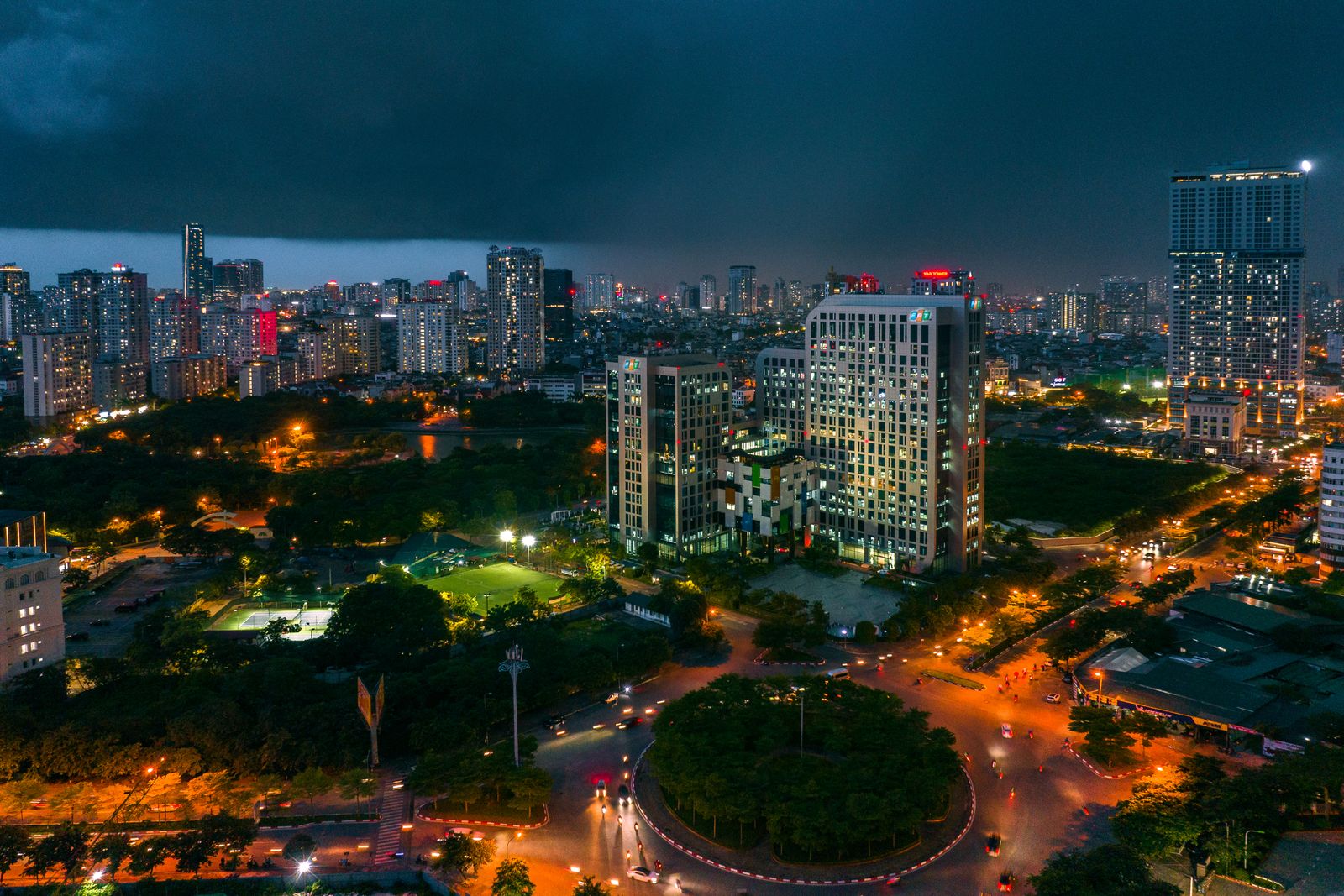
Hanoi does not ease you in.
From the moment you step outside Noi Bai International Airport, the city announces itself - motorbikes, street vendors, colonial facades that have outlasted empires. It is chaotic on the surface. Structured underneath.
After check-in at Dolce by Wyndham Hanoi Golden Lake, the afternoon opens up the 36 ancient streets of the Old Quarter. These streets have been commercially active for over 700 years - each lane historically dedicated to a single trade. Walking them is a compressed history of Vietnamese urban commerce.
What This Day Covers:
Hanoi Old Quarter · Mua Caves area · Tam Coc Bich Dong · Thai Vi Temple · Bich Dong Pagoda · Hoa Lu Temples (Dinh & Le Dynasties) · Hanoi Opera House · Hanoi Train Street - where a working railway passes within arm's reach of residential doorways, an experience that should not exist and does.
Skip the Ha Long Bay Cruise. Trang An Delivers the Same Karst Landscape by Bamboo Boat.
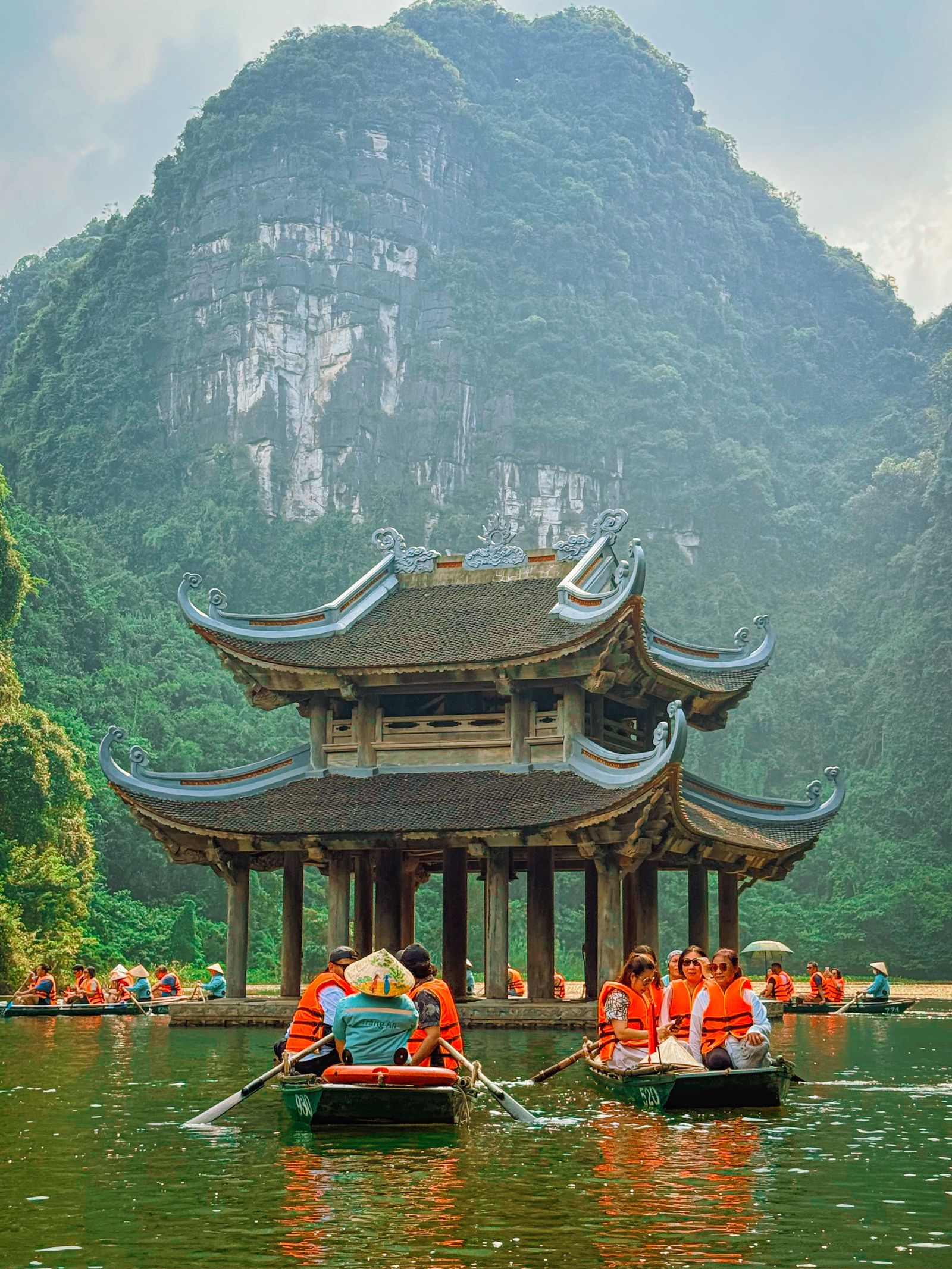
Most travelers spend three days and a cruise to reach Ha Long Bay. Trang An delivers the same karst landscape - limestone peaks, emerald water, cave systems - in a single day, from Hanoi, by road.
It is not a substitute. It is a different experience entirely. Quieter. More intimate. And significantly underpriced.
The day begins at Hoa Lu, Vietnam's first imperial capital - predating Hanoi as the political center of the country. Between 968 and 1010, this was where the Dinh, Le, and early Ly dynasties governed. The temples remain. The silence around them is deliberate.
Trang An follows - a 1.5-hour bamboo boat passage through paddy fields, river bends, and a cave system where the geology overhead feels structurally improbable.
The Weight of History. Then, the View from Above.
Day three operates on two registers: ground level in the morning, sky level in the afternoon.
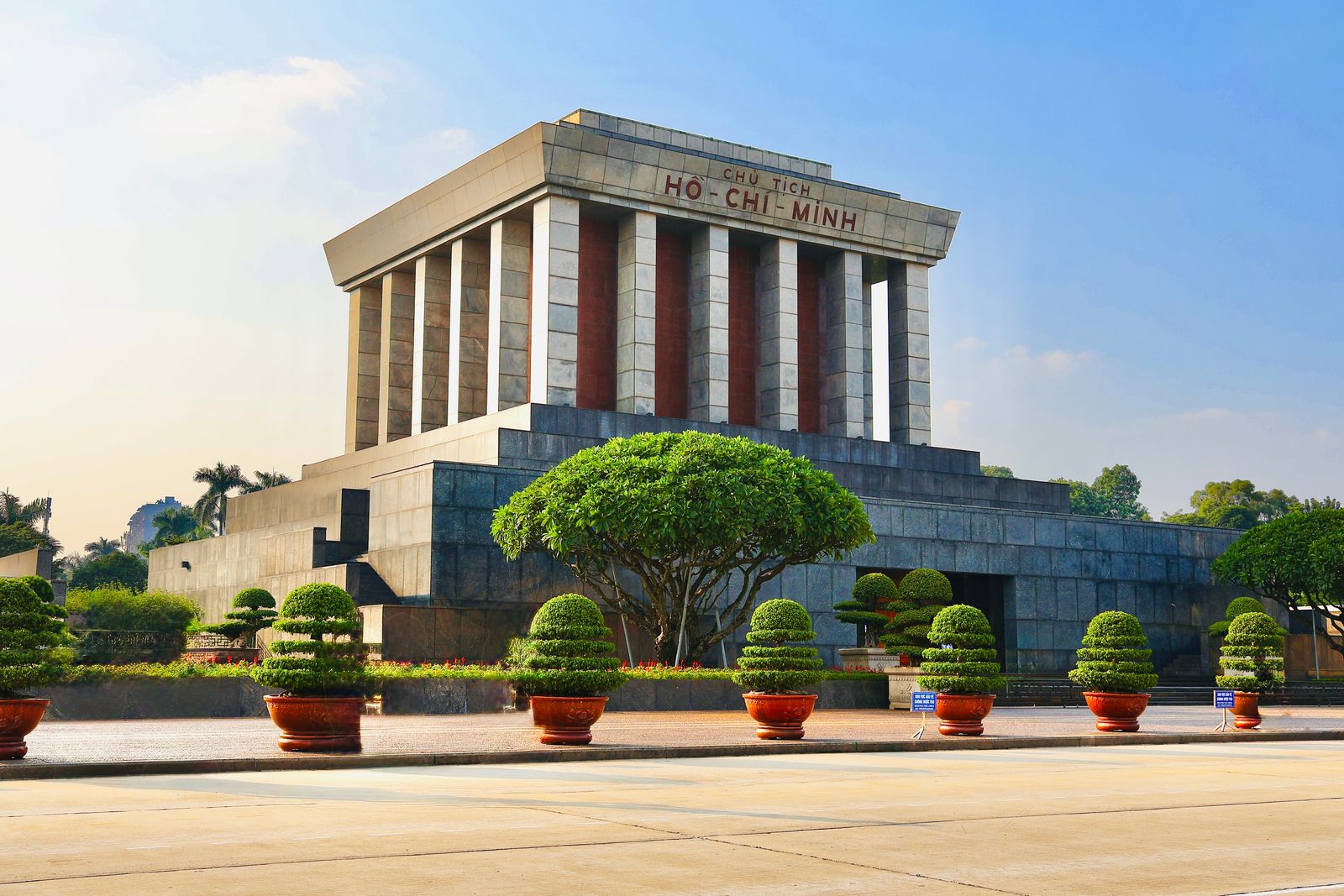
The Ho Chi Minh Mausoleum Complex is the most visited site in Hanoi - and the most misunderstood by those who treat it as a photo stop. This is where Vietnam's founding leader rests. The complex holds the Presidential Palace, the Stilt House where Ho Chi Minh lived and worked by choice - deliberately modest - and the One Pillar Pagoda, a singular architectural statement rising from still water.
It asks for stillness. Give it that.
The afternoon inverts the perspective entirely. The Lotte SkyDeck sits on the 65th floor of Hanoi's second-tallest tower - 267 meters above ground. The elevator is the fastest in the city. The view is a full recalibration of scale. Hanoi, from here, becomes geography.
The day closes at Tran Quoc Pagoda - the oldest pagoda in northern Vietnam - positioned on West Lake, where the sunset light behaves the way travel photographers claim it always does.
The North Closes. The Coast Opens.
One flight. One hour. An entirely different country within the same country.
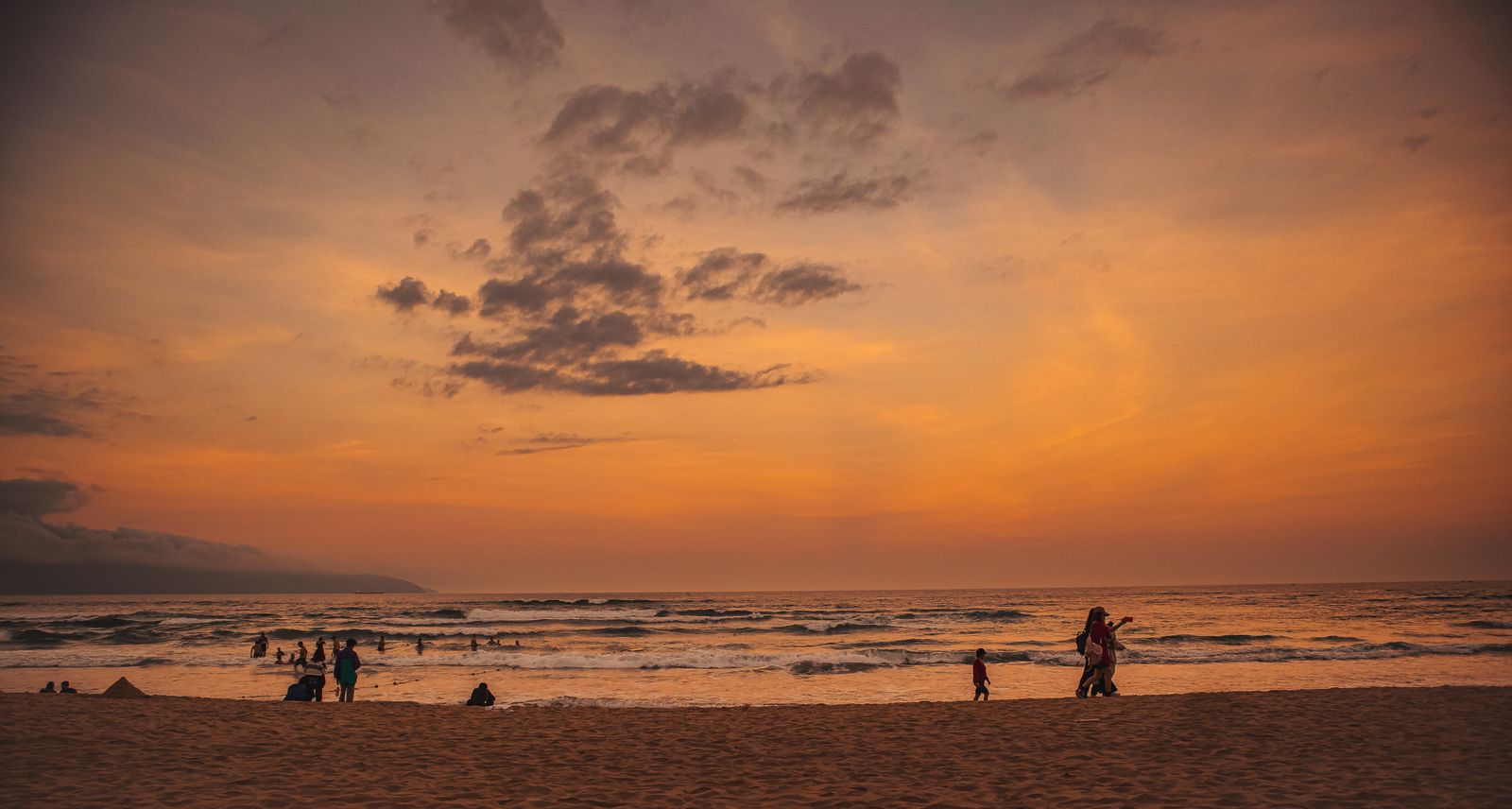
Da Nang sits where Central Vietnam meets the South China Sea. The architecture shifts. The temperature rises. The energy - slower, coastal, deliberate - is a structural reset after three days in Hanoi's density.
After check-in at Radisson Hotel Da Nang, the afternoon is uncomplicated by design. Walk to the beach. The ocean is there. Use it.
Evenings close with Indian cuisine - a deliberate comfort provision after days of full immersion. Rest is not inefficiency. It is logistics preparation for what comes next.
The Golden Bridge. Four World Records. One Mountain.
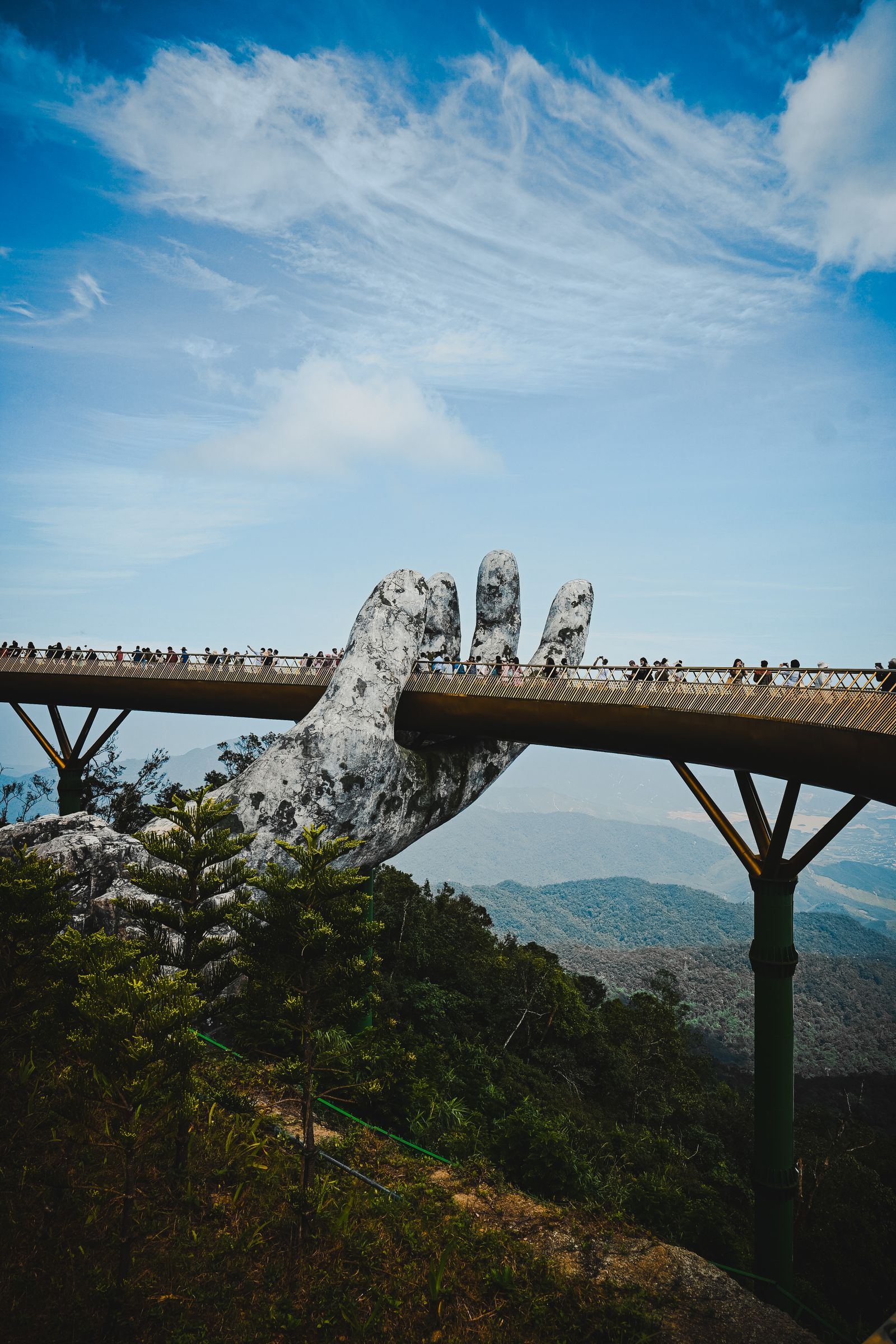
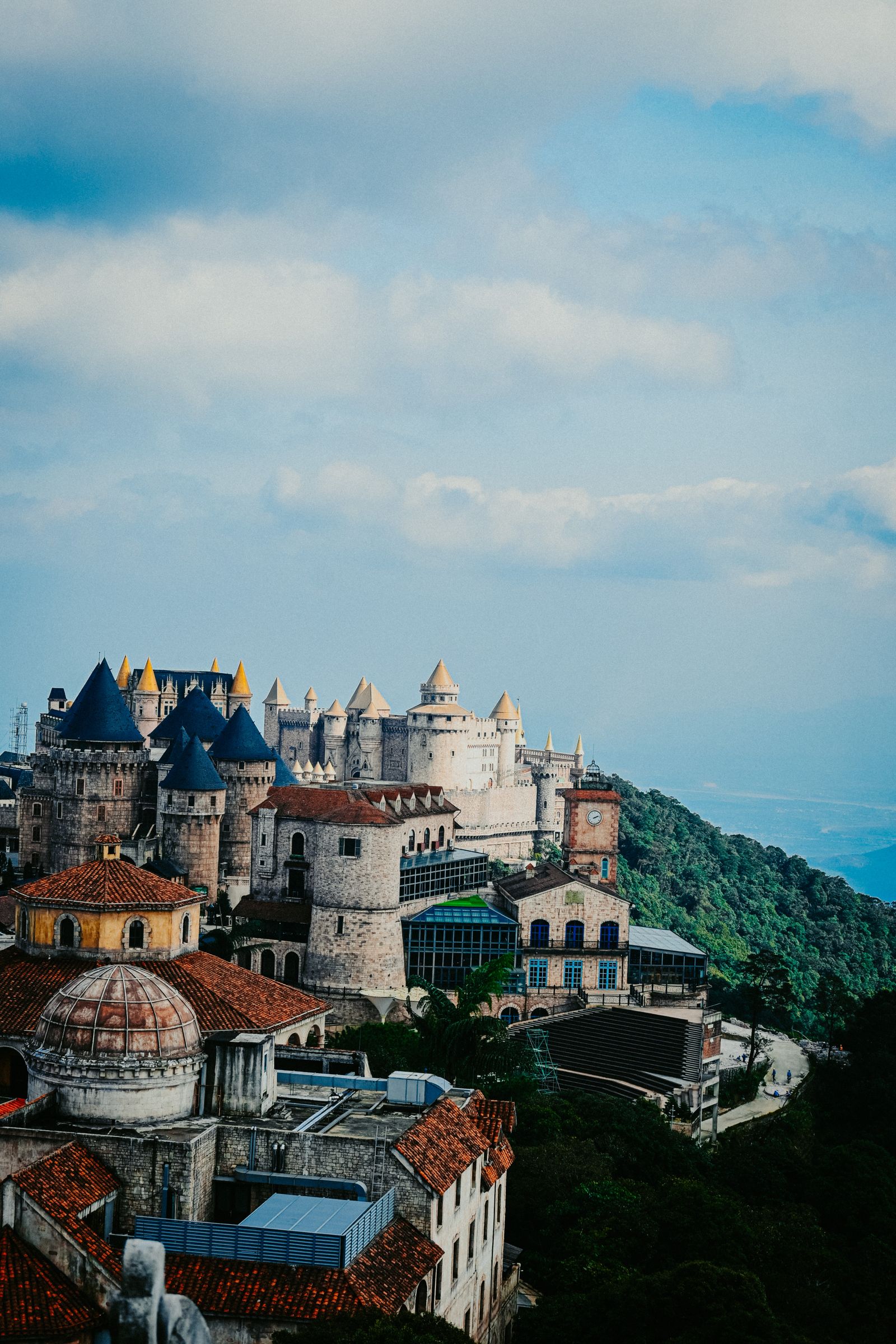
Ba Na Hills is the most photographed place in Central Vietnam. There is a reason for that - and it is not the cable car, though the cable car itself holds four world records.
The Golden Bridge is the reason. Suspended 1,400 meters above sea level, held aloft by two giant stone hands emerging from the mountain face, it sits inside a cloud layer that most mornings refuses to lift completely. You walk through the mist. Below you is Da Nang, reduced to abstraction.
This is not a theme park attraction. It is a genuinely strange and beautiful piece of landscape architecture that has no parallel anywhere in the world.
The rest of the day fills with equal weight: Le Jardin D'Amour, the 27-meter Shakyamuni Buddha at Linh Ung Pagoda, the French Colonial Village - a preserved quarter of European architecture transposed onto a Vietnamese mountain summit - and Fantasy Park, an indoor amusement complex with 4D and 5D attractions.
Stone, Silk, and Lanterns on Water.
The morning is free. Keep it that way.
By afternoon, the itinerary accelerates through three distinct experiences - each one a different texture, none of them interchangeable.
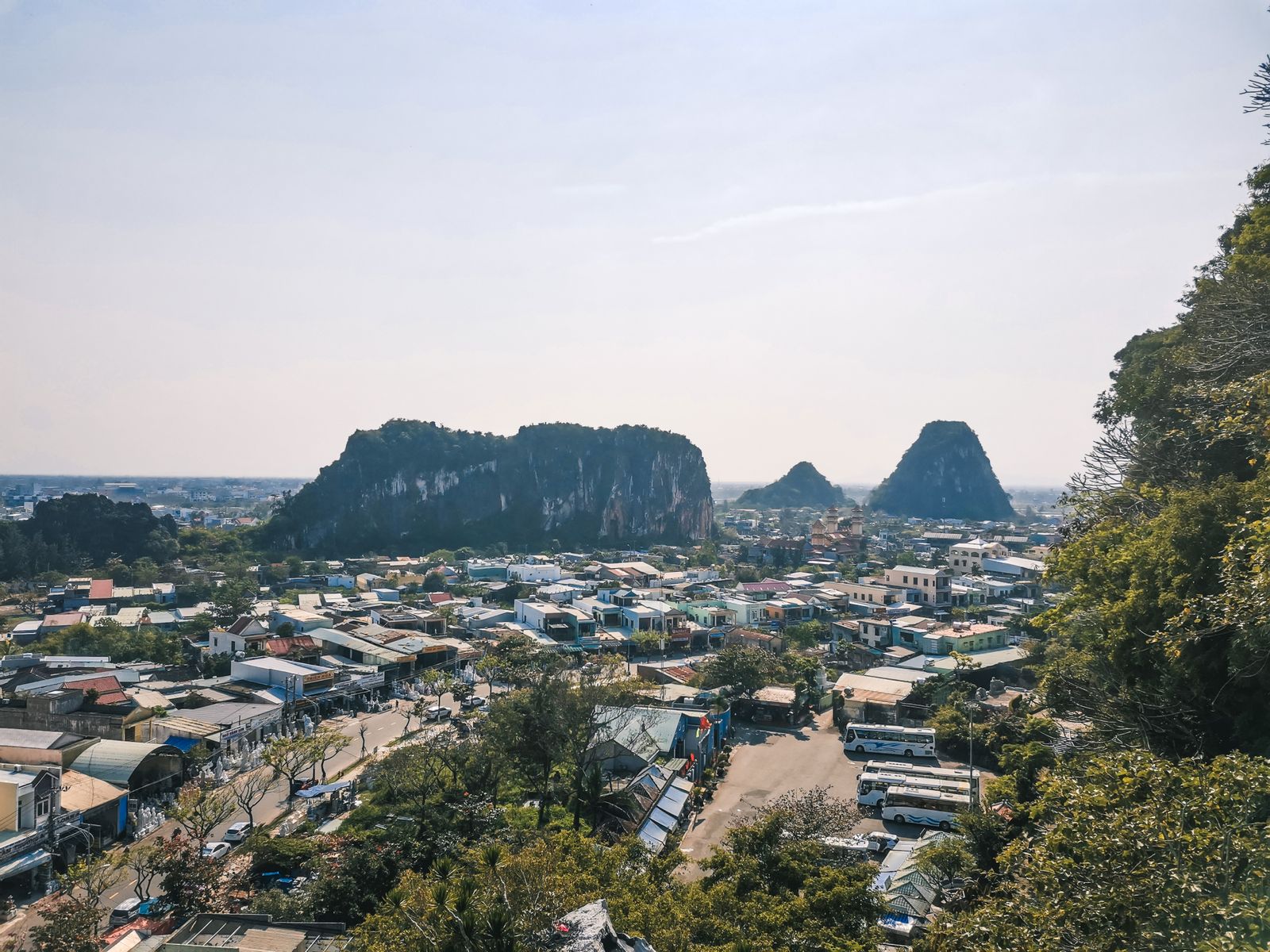
The Marble Mountains come first - five limestone and marble hills overlooking the Pacific, each named after a classical element. At their base, Non Nuoc Stone Carving Village has operated for centuries. The craftsmanship is not decorative. It is architectural. The work sold here ends up in temples and government buildings across Vietnam.
Then, Hoi An Ancient Town.
UNESCO designation is frequently overused. In Hoi An, it is accurate. This former trading port compressed four centuries of Chinese, Japanese, French, and European commercial architecture into lanes narrow enough to touch both walls simultaneously. The 400-year-old Japanese Covered Bridge is still structurally sound. The Phuc Kien Assembly Hall still operates as a place of worship. The tailors along the main street will custom-make a garment overnight.
The day closes with a lantern-making class - hands-on, guided by local artisans - and a private floating lantern boat ride on the Hoai River. Releasing a lantern onto the water at night in Hoi An is one of the few experiences in travel that delivers on its own mythology.
No hyperbole required.
One Last Morning. Then the Airport Finds You.
The final morning belongs to you.
No guided transfer. No schedule overhead. Walk the Da Nang seafront. Have breakfast without a departure time in the back of your mind.
In the afternoon, private transfer to Da Nang International Airport.
Seven days. Two anchor cities. One through-line: every experience was placed where it was because it belongs there - not because it fit the itinerary, but because the itinerary was built around it.
That distinction matters.