
Russia does not operate on a single frequency.
St. Petersburg was built by Peter the Great as a deliberate provocation - a European capital on a Baltic swamp, designed to announce that Russia had decided to enter the Enlightenment on its own terms and on European architectural principles. The result is a city of 342 bridges, gilded domes, and a museum that holds more paintings than any human can reasonably process in a lifetime.
Moscow is its direct opposite. Where St. Petersburg was designed from scratch by a single imperial vision, Moscow accumulated across nine centuries of contested history - the Kremlin expanding as each ruler added to what the previous one built, the city sprawling outward in concentric rings that the Soviet planners widened into avenues broad enough to parade military hardware down. The two cities share a country. They share very little else.
This itinerary covers both - five nights in the imperial city, three in the Soviet one, connected by a bullet train that crosses 700 kilometres in under four hours. A Moscow St Petersburg itinerary built this way puts the palaces and the action on the same trip. The palaces are there. So is the tank driving. So is the shooting range. Russia, in full, is not one thing. This itinerary does not pretend it is.
This one refuses to.
Peter the Great Built This City to Shock Europe. It Still Works.
Private transfer from Pulkovo International Airport to AC Hotel by Marriott St. Petersburg. Check in. Rest.
St. Petersburg was founded in 1703 on a swamp at the mouth of the Neva River. Peter the Great wanted a window to Europe - a port city that could receive Western ships, Western ideas, and Western architects. He imported Italian, French, and Dutch craftsmen and forced the Russian nobility to move here from Moscow. The result is a city that looks like Amsterdam and Paris had a child and raised it on Russian ambition and Baltic weather.
Tomorrow, the itinerary begins in full. Tonight, the Moika Embankment and a Russian dinner are sufficient introduction.
The Hermitage Has 3 Million Objects. You Have One Day. Choose Well.
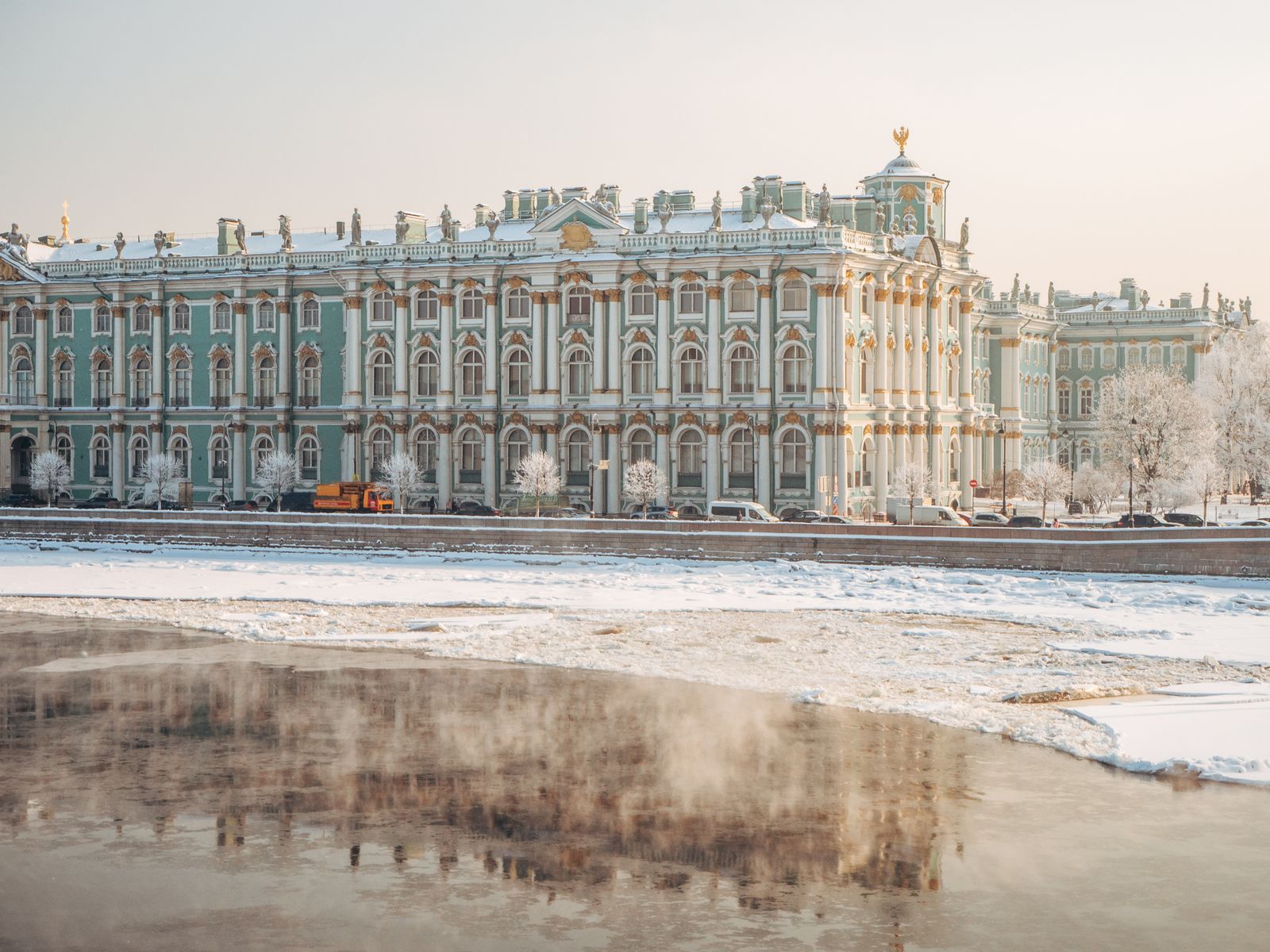
The Hermitage Museum contains 3 million objects displayed across 365 rooms in the Winter Palace and five connected buildings. A Hermitage Museum tour here holds Rembrandts, Raphaels, da Vincis, and an Egyptian collection spanning 5,000 years of civilization. Walking every room at a pace of 30 seconds each would take 11 years.
Early entry is the correct approach. The Hermitage fills by 10:00 with groups that reduce the Rembrandts to background. Before that hour, the halls are navigable at a pace that allows the paintings to register as paintings rather than obstacles between the entrance and the exit.
Palace Square follows - the vast ceremonial space in front of the Winter Palace where the 1905 revolution began, where the Bolsheviks stormed the provisional government in 1917, and where the Alexander Column (the world's tallest freestanding monolith, erected in 1834 without any fastening at its base) has been standing on its own weight for 190 years.
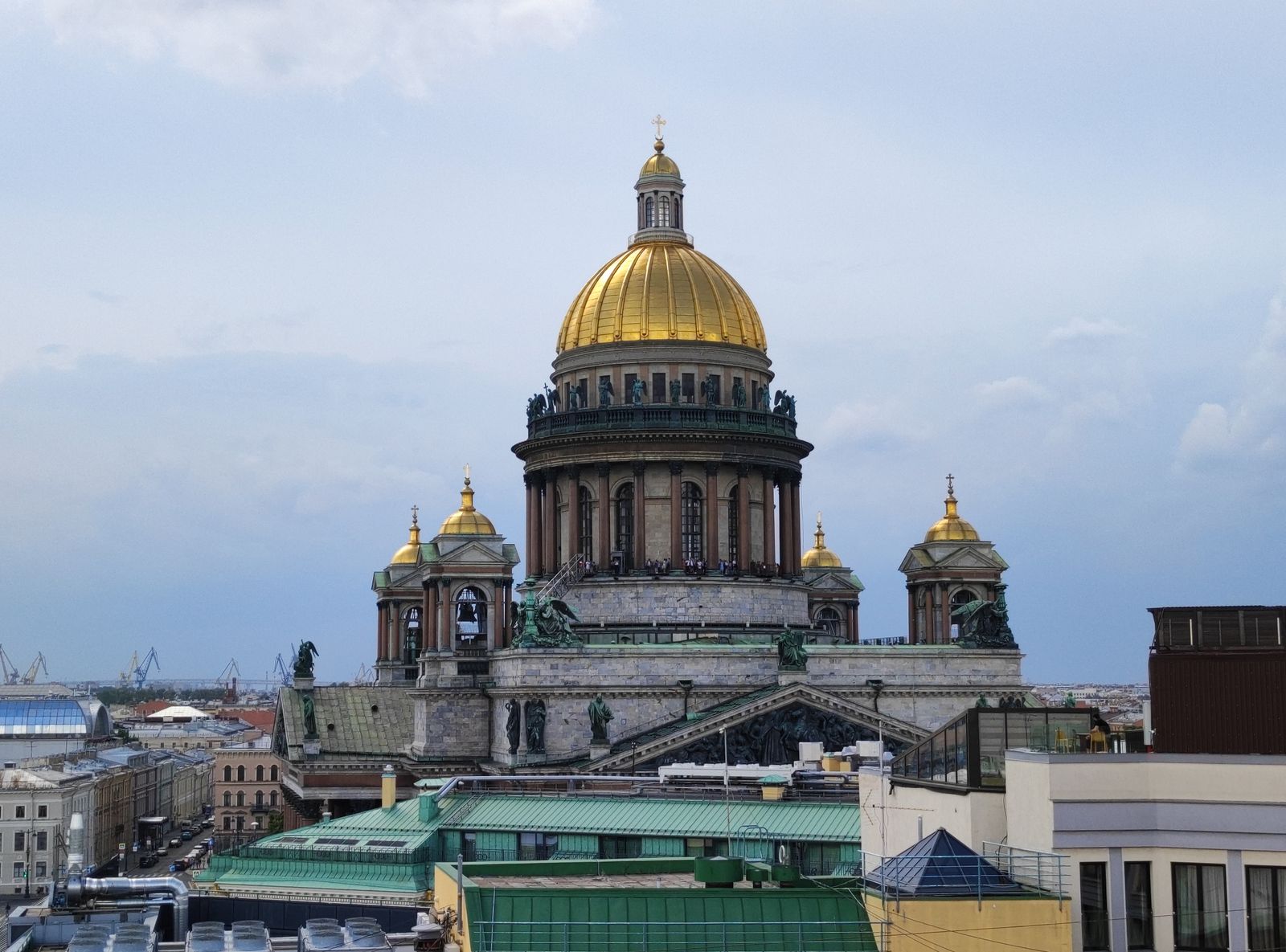
St. Isaac's Cathedral in the afternoon: the golden dome visible from most of the city is 21.8 metres in diameter and covered in 100 kilograms of gold. The colonnade at the dome's base provides the best unobstructed 360° view over St. Petersburg that exists at accessible height. The Admiralty needle and the Bronze Horseman complete the afternoon - the equestrian statue of Peter the Great that Pushkin made the central image of Russian literature.
Dinner near the Moika Embankment where the last chapter of Pushkin's life ended and where the architecture along the canal banks makes the case for St. Petersburg as the most beautiful city in Russia without requiring any argument.
The Hydrofoil. Then 64 Fountains Running on 18th-Century Engineering.
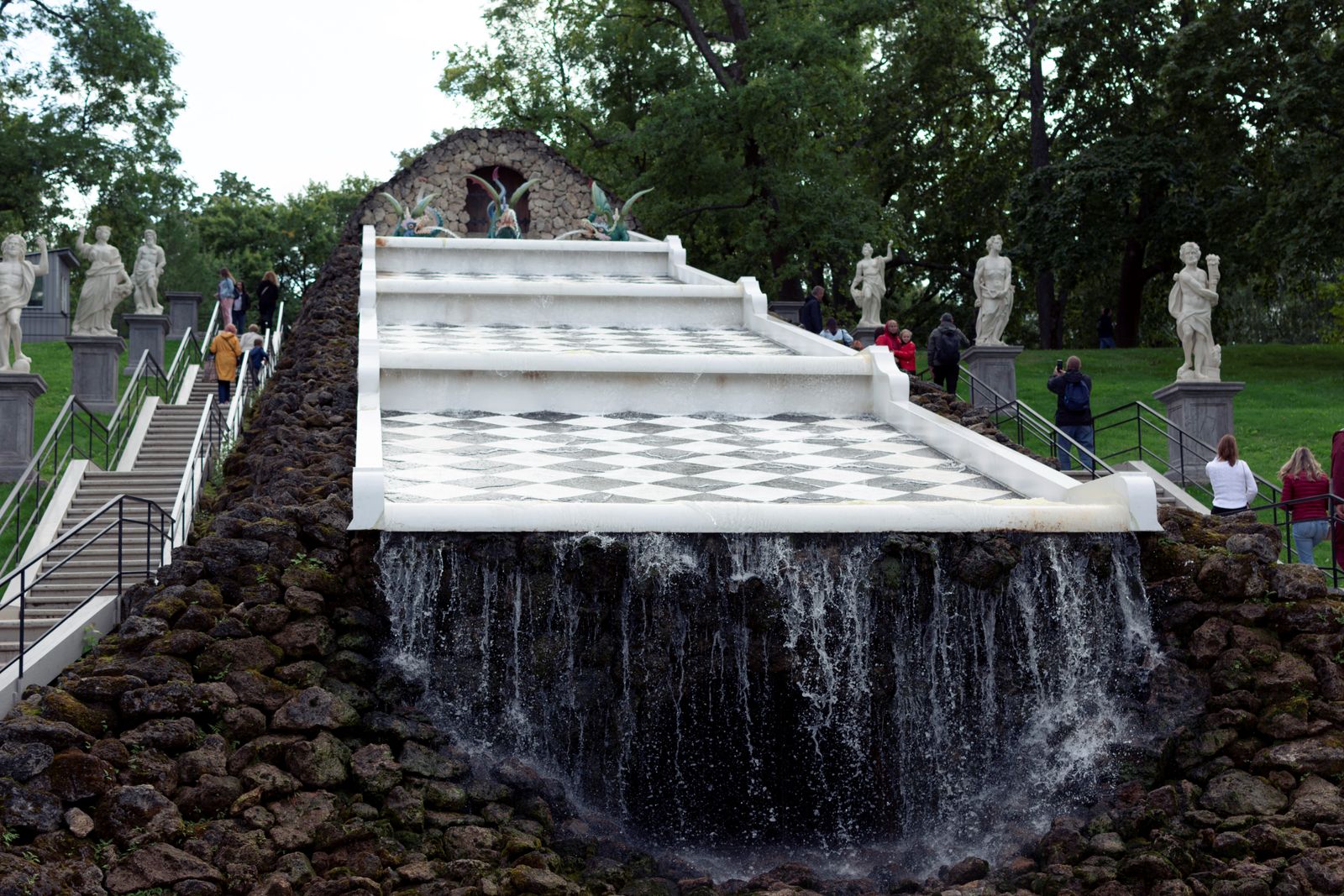
The hydrofoil from St. Petersburg to Peterhof crosses the Gulf of Finland in 30 minutes. It is the correct way to arrive - the same approach the Russian court used, the palace appearing above the Lower Gardens from the water before the scale of the cascade becomes legible from land.
Peter the Great built Peterhof between 1714 and 1723 as Russia's answer to Versailles. The comparison is made often enough that it is worth examining: Versailles uses ornamental fountains as decoration. Peterhof uses 64 fountains, 255 gilded bronze sculptures, and a Grand Cascade running on gravity-fed hydraulics - no pumps, only channels designed by Peter himself from natural springs 22 kilometres away - as the primary architectural statement. The system has been running continuously since 1721, interrupted only by the Nazi occupation between 1941 and 1944 when the retreating German forces destroyed the statues. Every gilded figure currently visible was recreated from historical records after the war.
The Lower Gardens run for 102 hectares between the palace and the Gulf. The fountains run from May to October on a fixed schedule. The scale is not readable in photographs. It is barely readable in person.
A Soviet Tank on a Mud Track. A Kalashnikov in Your Hands. Day 4 Does Not Apologise.
Drive to the military activity park outside St. Petersburg. The facility operates on the principle that the equipment of Soviet military history - tanks, rifles, artillery - should be handled rather than merely observed. It is a specific and entirely Russian hospitality proposition.
The T-72 or T-34 tank drive takes place on a dedicated forest and mud track. The vehicle weighs between 26 and 44 tonnes depending on the model. The controls are not intuitive. This is part of the experience.
The shooting range follows: AK-47 (the Kalashnikov assault rifle that has been in continuous production since 1947 and is the most manufactured firearm in human history), additional automatic and semi-automatic options available depending on the day's programme. Supervised throughout. The instruction is in Russian, delivered with the confidence of people who have been doing this for years.
Return to the city by evening. Light dinner. The itinerary does not require Day 4 to be intellectually processed before Day 5 begins. Rest is the correct response.
Catherine Palace. The Amber Room. The Most Expensive Interior in Reconstruction History.
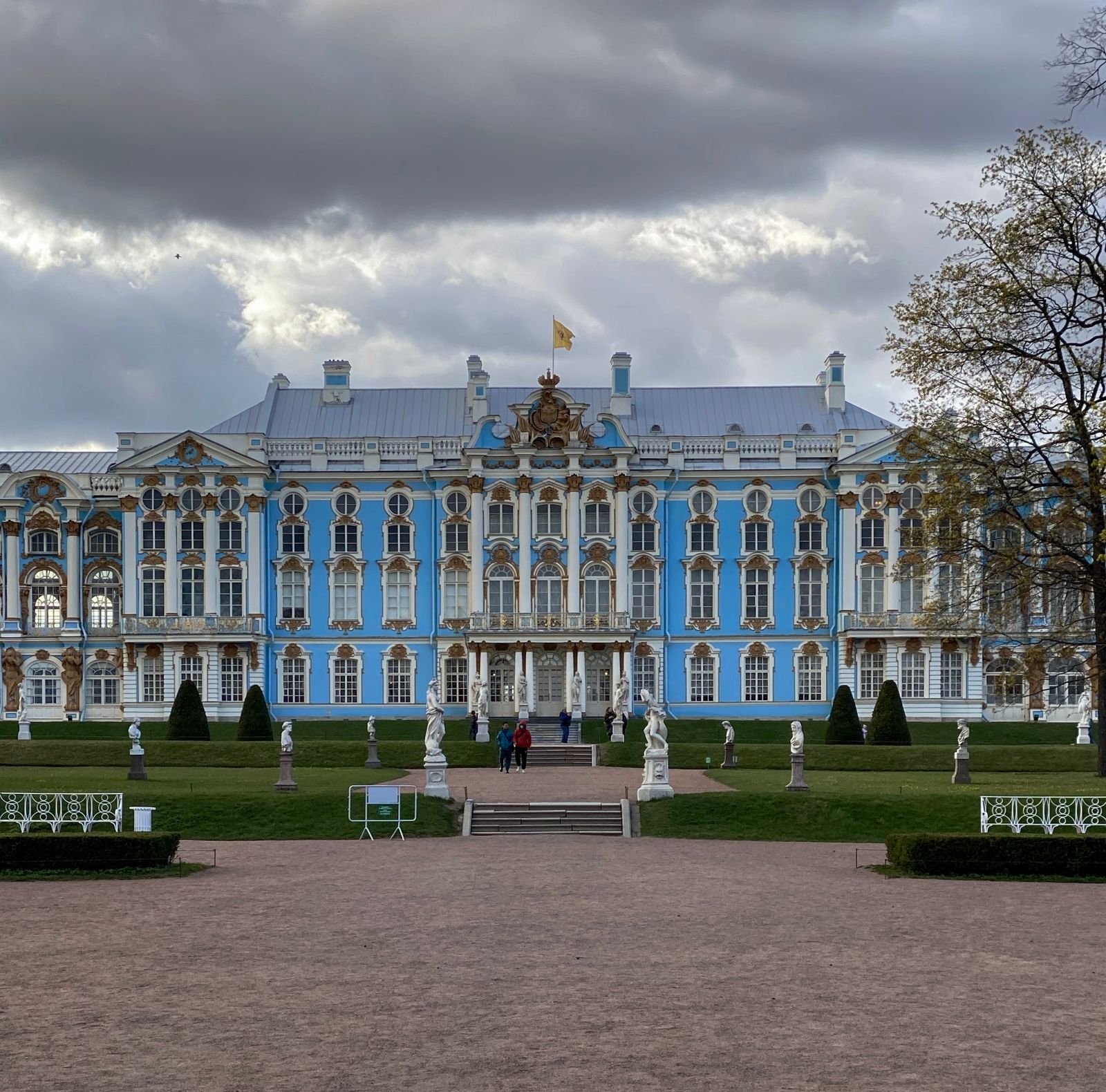
Tsarskoye Selo - the Tsar's Village - sits 25 kilometres south of St. Petersburg. Catherine the Great used the palace here as her summer residence, which meant that the 325-metre Baroque facade in cerulean blue and gold was considered the casual option relative to the Winter Palace in the city.
The Amber Room is the reason most visitors come. It was created between 1701 and 1711 from six tonnes of amber panels backed with gold leaf and mirrors - the "eighth wonder of the world" by the estimate of those who saw it before it was dismantled by Nazi forces in 1941 and disappeared. No one has definitively established what happened to it. The current Amber Room is a reconstruction completed in 2003 after 24 years of work and $11 million in cost. It is the most expensive recreation of a destroyed artwork in history. Whether it counts as the original room is a philosophical question the tour does not resolve.
The Alexander Park surrounds the palace grounds - 300 hectares of landscaped gardens, lakes, and follies that the Russian Imperial court used as a retreat from the already relatively relaxed formality of the Summer Palace.
Return by afternoon for souvenir shopping at local markets. The matryoshka dolls, amber jewellery, and Soviet military memorabilia that line the market stalls near the Nevsky Prospekt represent 300 years of Russian visual culture compressed into a 200-metre stretch of pavement.
700 Kilometres in Four Hours. Then Red Square. The Contrast Is Immediate and Intentional.
The Sapsan (Peregrine Falcon) operates at 250 km/h and covers the distance between Russia's two largest cities faster than the drive and without the airport. The landscape between them - flat, forested, occasionally industrial - is central Russia. It is not the Russia of either city. It is the Russia that both cities were built to be different from.
Check in at La Quinta Inn & Suites by Wyndham Moscow Pullman. Then Red Square - the 73,000 square metre cobblestone plaza that has been the functional and symbolic centre of Russia since the 15th century. St. Basil's Cathedral closes the south end: the nine domed church commissioned by Ivan the Terrible in 1555 to commemorate his military victories, its onion domes in patterns that no two architectural historians have ever explained using the same set of words. GUM Department Store runs along the east side - a 19th-century shopping arcade that the Soviet era converted to a state store and the post-Soviet era converted back to luxury retail, retaining the iron-and-glass roof that makes it worth entering regardless of the shopping intentions.
The Kremlin in the Morning. A Sniper Rifle in the Afternoon. The Moscow River at Night.
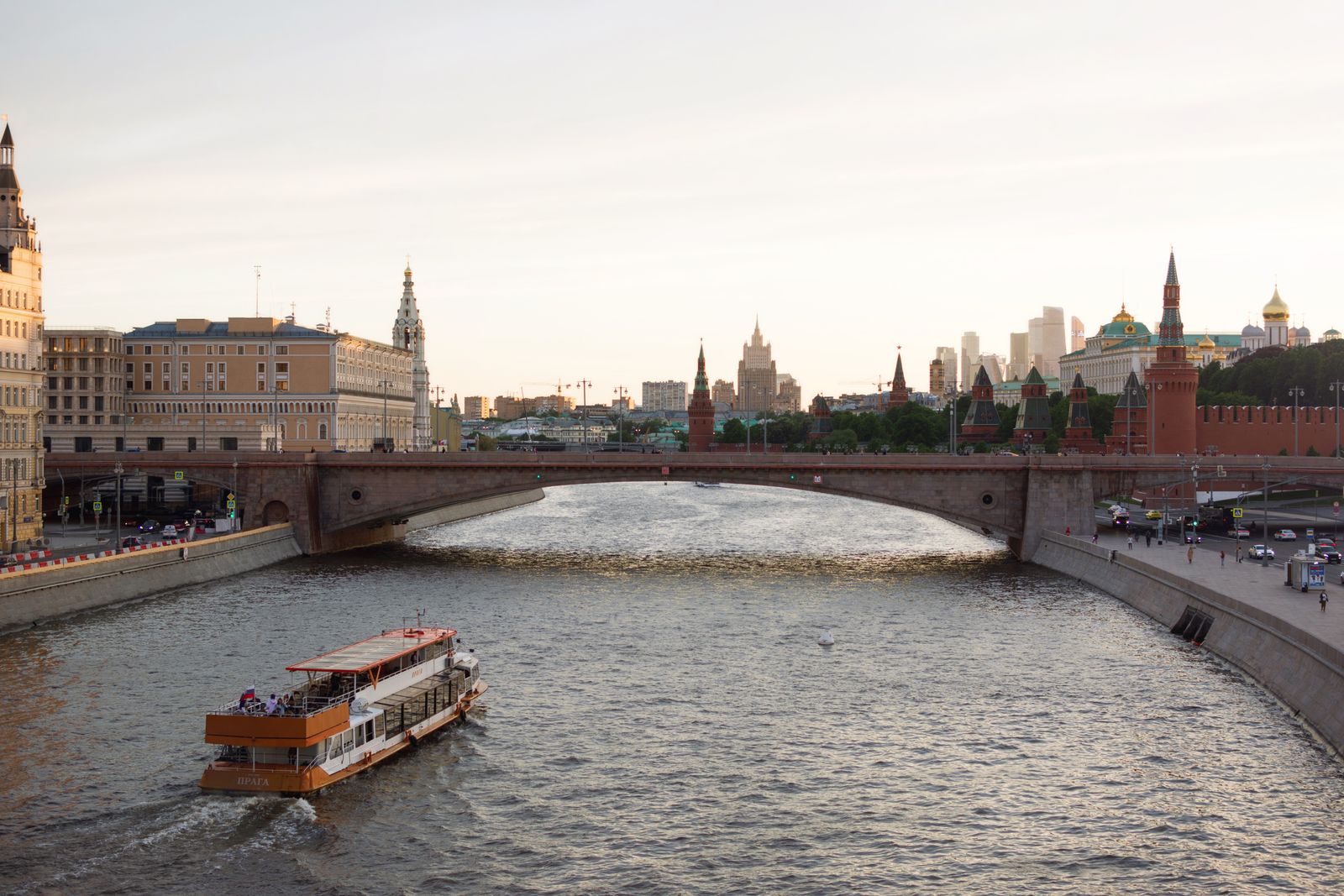
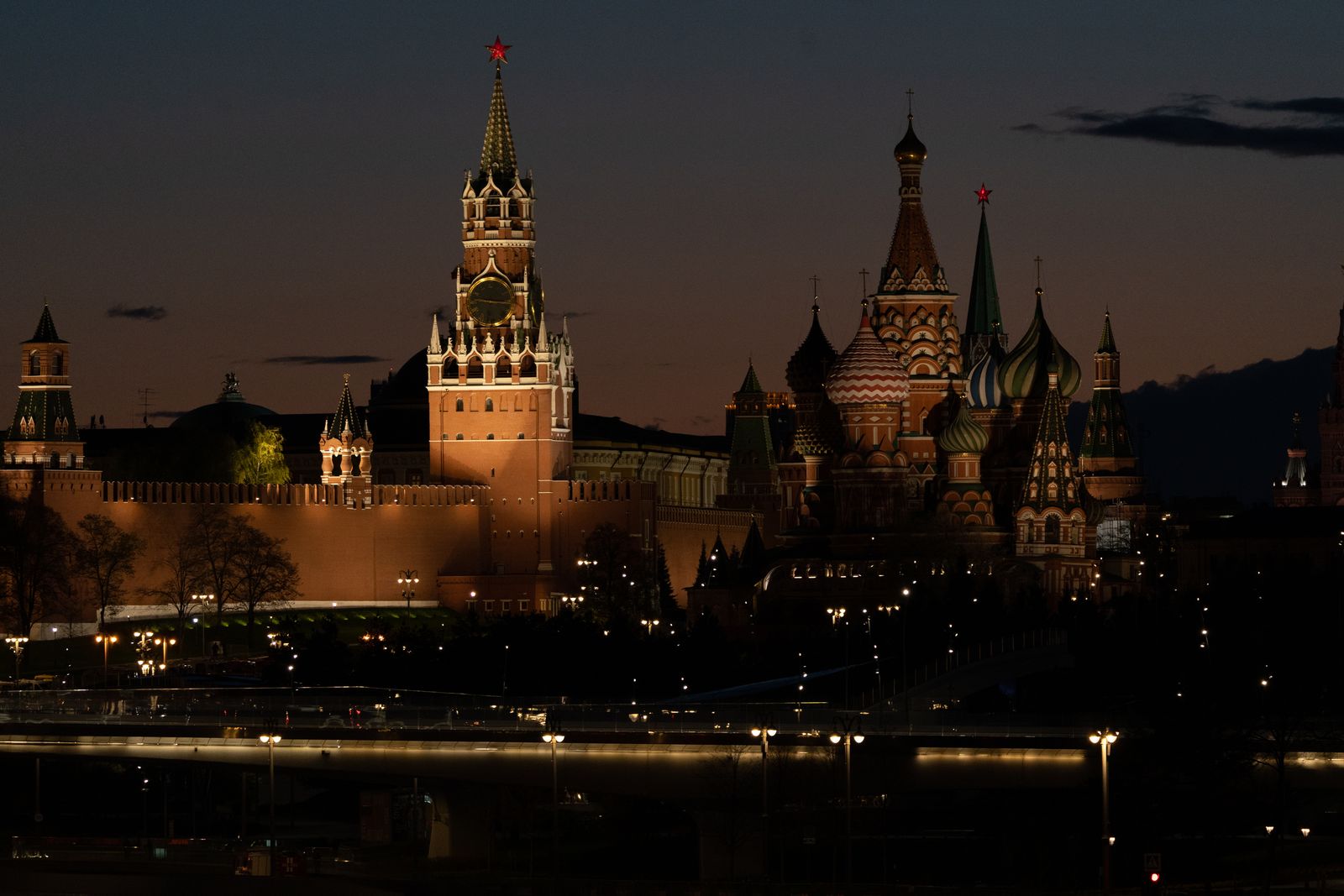
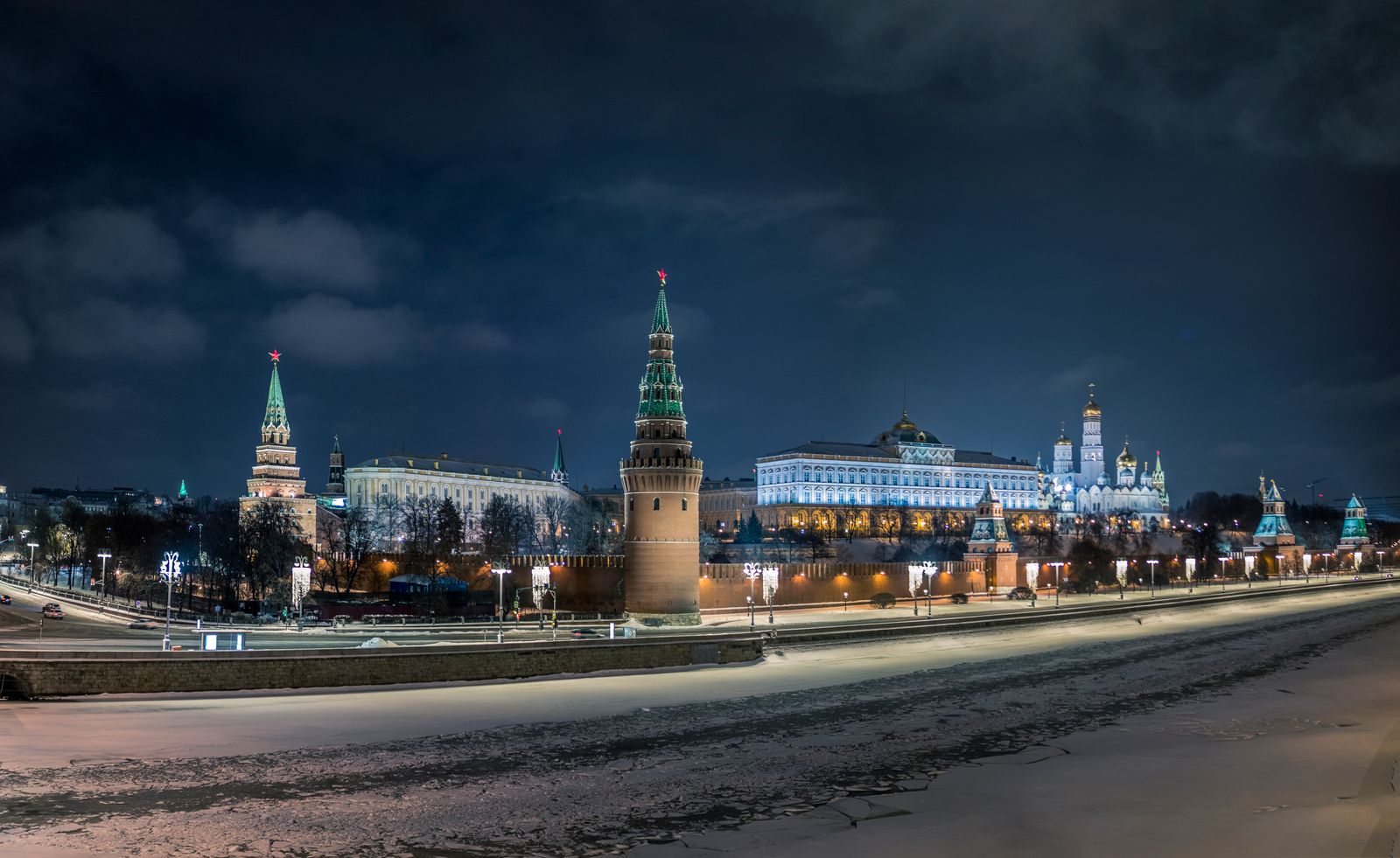
The Kremlin is not one building. It is a walled citadel of 28 hectares containing five palaces, four cathedrals, the official residence of the Russian President, the largest bell in the world (the Tsar Bell, 202 tonnes, cracked before it was ever rung), and the largest cannon in the world (the Tsar Cannon, 39 tonnes, never fired). The guided Moscow Kremlin tour of the grounds and cathedrals takes three to four hours and covers 600 years of Russian political architecture in sequence.
The afternoon shifts registers completely.
The Moscow shooting range facility offers a broader arsenal than the St. Petersburg experience: AK-47 Kalashnikov, Dragunov SVD sniper rifle, Makarov pistol, and additional options depending on the programme. Fully supervised. The Dragunov was the standard Soviet and Russian military sniper rifle from 1963 onwards and fires a 7.62mm round designed for targets at 600 metres. The experience of firing it at a paper target 50 metres away is instructive about the gap between what a weapon was designed for and what a tourist range provides. Both pieces of information are useful.
The Moscow River dinner cruise closes Day 7 - the Kremlin walls passing on the right bank at the hour the floodlights come on, the water reflecting the towers and the red stars and the onion domes of the cathedrals above the wall. The distance between the shooting range and the dinner cruise is 40 minutes by taxi. The tonal distance is considerably greater. That is the itinerary's structural point.
The Monastery That Survived the Mongols, the Bolsheviks, and Five Centuries of Russian History.
Sergiev Posad sits 70 kilometres northeast of Moscow. The Trinity Lavra of St. Sergius - the monastery at its centre - is Russia's most important Orthodox pilgrimage site and a UNESCO World Heritage site. St. Sergius of Radonezh founded a hermitage here in 1337. The wooden church he built became a stone complex as successive Russian rulers added to it in gratitude for military victories the saint was believed to have influenced.
The blue and gold Cathedral of the Assumption dates from 1585. The Trinity Cathedral from 1422. The bell tower - at 88 metres the tallest in Russia when it was completed in 1770 - was designed by the same architects who worked on St. Petersburg's imperial commissions. The monastery operated continuously through the Soviet period, when the state officially suppressed religion, because closing it would have provoked a response the Soviet government judged not worth provoking. Some institutions are larger than the political systems that attempt to contain them.
Lunch at a countryside Russian café - borscht, pelmeni, black bread, and the specific quality of Russian provincial hospitality that the city does not replicate. Return to Moscow by evening.
Check Out. Transfer. Nine Days of Russia Leave with You.
Hotel check-out. Private transfer to Sheremetyevo or Domodedovo Airport.
Nine days. Two cities. The complete range of what Russia produces when it decides to make an impression - the gold domes of Peter the Great's imperial ambition, the gravity-fed fountains that have been running since 1721, a tank on a forest track, the Kremlin at night from a river, a UNESCO monastery that outlasted the Soviet Union, and the particular silence that follows 600 years of Russian political history delivered in an afternoon inside a walled citadel.
Royalty. Rifles. Russia. The itinerary delivered what it promised.