
Portugal has a sequencing problem - and it works entirely in your favour.
Every location in this itinerary is a different argument for why the country is worth the flight. Lisbon operates on seven hills above the Tagus estuary, a city of trams and azulejo tiles and the specific melancholy of a nation that once commanded the largest empire on earth and has been quietly confident about that fact ever since. Porto is Lisbon's direct opposite - rougher, steeper, darker, built on the Douro's north bank and producing the wine that carries its name to every serious cellar in the world, which is exactly why a Douro Valley wine tour earns its own full day in this plan.
Then Madeira intervenes: a volcanic island in the Atlantic where the Portuguese explorers stopped before crossing to the Americas, where the roads cling to cliffs above an ocean that has no landmass between this island and Brazil - Madeira Portugal travel that feels like a different country entirely. And finally the Algarve - the south coast, where 300 days of annual sun has been sculpting orange sandstone cliffs into arches, grottoes, and sea caves that the Atlantic has been commissioned to produce over the last million years.
Eight days. The country in full.
This itinerary is the evidence for that claim.
The City Is Already Asleep. The Itinerary Starts Tomorrow. Both Are Fine.
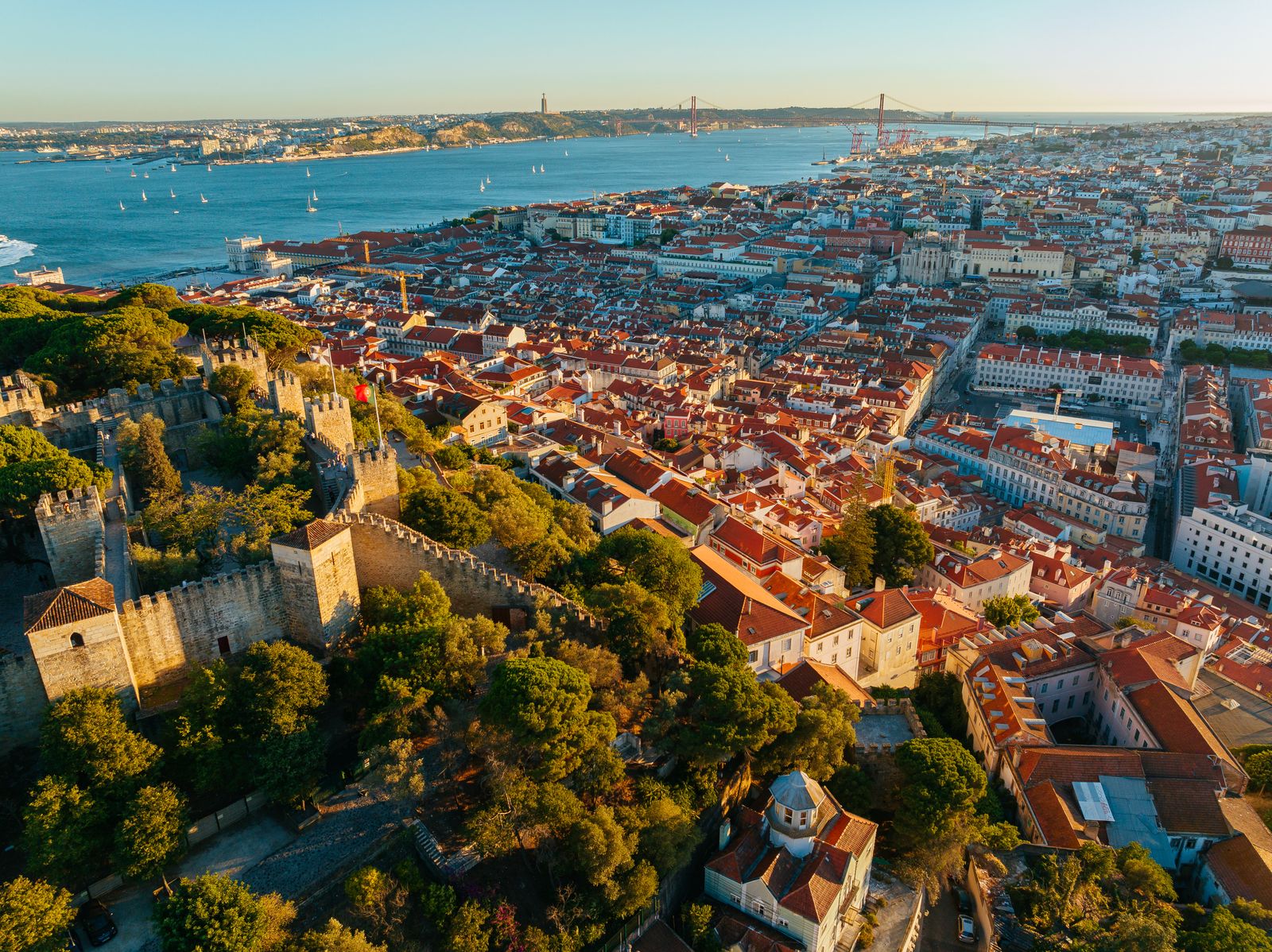
Flight EK752 lands at 22:00. The hotel is 300 metres from the terminal. This is not a compromise - it is the correct decision for a late arrival into a city that deserves to be encountered properly, not through the window of an airport taxi at midnight.
Lisbon will earn its day tomorrow. Tonight, the only requirement is sleep.
What is waiting: a capital built on seven hills that the Moors fortified, the Christians reconquered, the Marquis de Pombal rebuilt after the 1755 earthquake destroyed most of it, and that has been adding azulejo tiles and Fado music to every surface and evening ever since. The city is 3,000 years old by some accounts and shows the evidence of most of them simultaneously.
Porto Earns Its Reputation Before You've Finished the First Glass.
The drive north from Lisbon covers approximately 315 kilometres on the A1 motorway - three hours of central Portugal that delivers rolling terrain, eucalyptus forests, and the slow northward shift from Lisbon's warm palette to Porto's darker, cooler stone.
Scenic alternative: add 45 minutes via Coimbra - Portugal's medieval university city, worth the detour if the schedule allows.
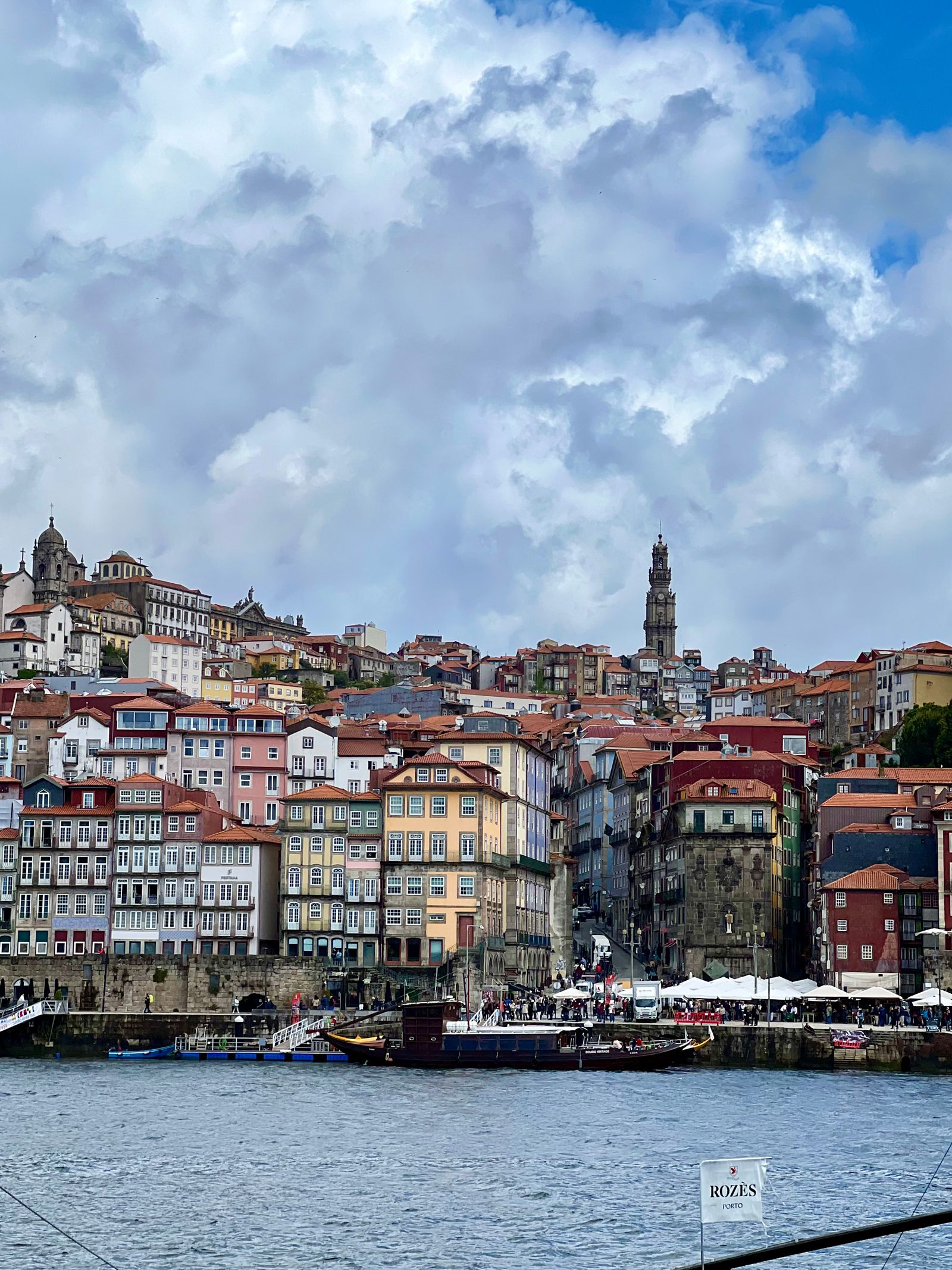
Porto from the Ribeira is one of the most concentrated visual arguments in European urban geography: a UNESCO-listed waterfront of six-storey azulejo-tiled buildings stacked up the hillside above the Douro, connected to the port wine lodges of Vila Nova de Gaia by the Luís I bridge that Gustave Eiffel's company engineered in 1886. The upper deck carries pedestrians at 45 metres above the river. The lower deck carries trams. Both carry the view.
The evening Porto Walking Food Tour covers the city's culinary argument: the francesinha (a bread, meat, and cheese construction submerged in a spiced tomato and beer sauce that the city invented in the 1950s and has been defending as a lifestyle choice ever since), pastel de nata from the bakeries on Rua de Santa Catarina, and the port wine that the Douro Valley has been sending downriver to age in these lodges since the 17th century.
Dinner at DOP by Chef Rui Paula at 20:30 closes Day 2 in the register that Porto's food scene has been building since Rui Paula received his Michelin recognition - contemporary Portuguese cuisine that treats local ingredients as the point, not the constraint.
The Valley That Made the Wine. Then the River That Carries It Home.
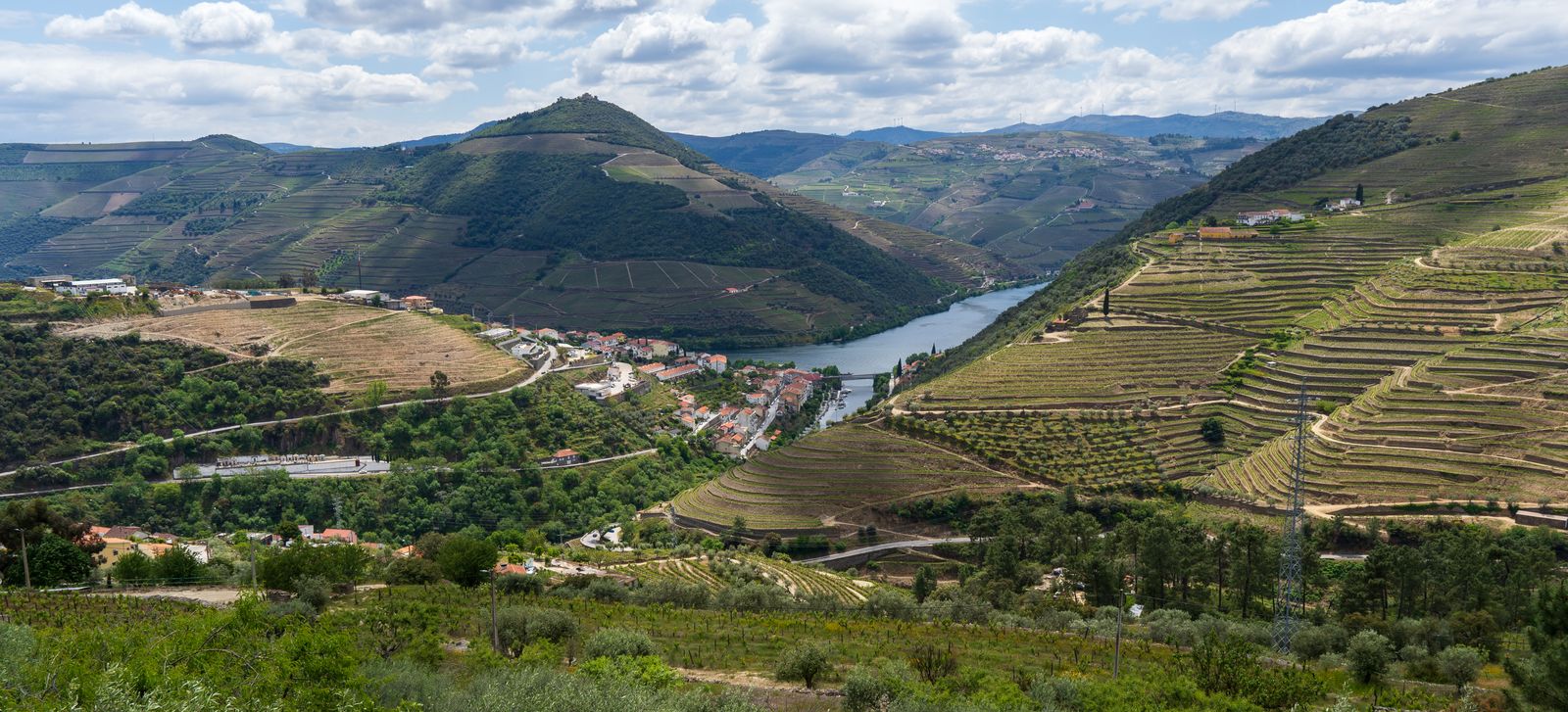
The Douro Valley sits 100 kilometres east of Porto. The drive into it crosses the transition between coastal Portugal and the interior - greener, steeper, older, the schist terraces climbing the valley walls at gradients that the mechanized vine cultivation used elsewhere in Europe cannot navigate.
The valley was demarcated in 1756 - making it the world's oldest protected wine region by about a century. The port wine produced here travels downriver to the lodges in Vila Nova de Gaia to age. What remains in the valley, drunk locally, is the unfortified Douro red that Portugal's wine scene has been promoting internationally for the last two decades as the country's most important argument beyond port.
An Atlantic Island That Has No Equivalent Elsewhere. The Portuguese Knew That First.
Return the rental van in Porto. Fly to Funchal.
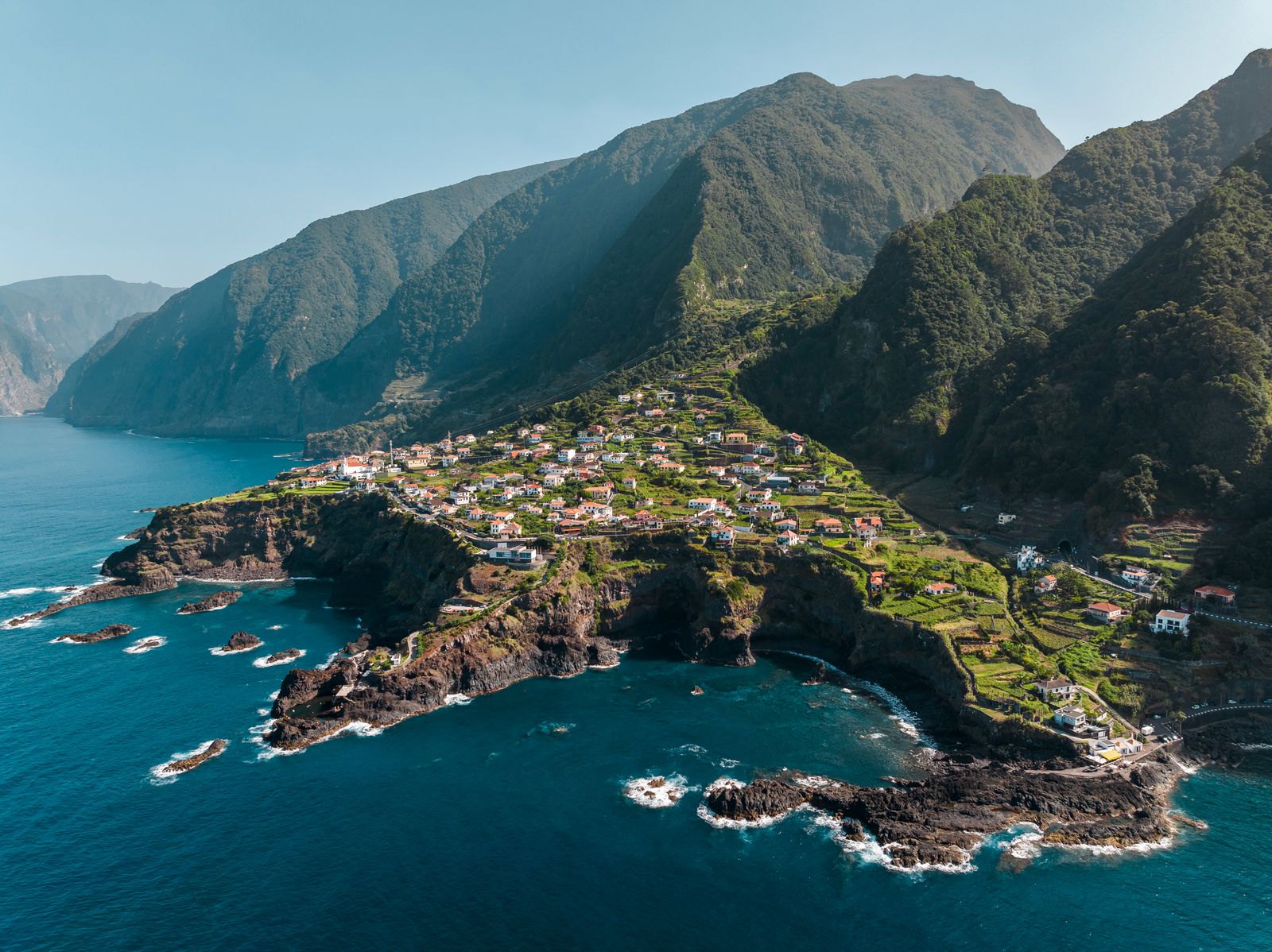
Madeira is a volcanic island 978 kilometres from Lisbon and 520 kilometres from the African coast. The Portuguese discovered it in 1419 - the first major discovery of the Age of Exploration - and used it as the supply base for every subsequent Atlantic voyage. Henry the Navigator planted sugar cane here. The wine that carried Madeira's name to Napoleonic-era dinner tables was fortified specifically to survive the equatorial heat of the crossing to America.
The island's geography is immediately legible from the air: a mountain emerging from the Atlantic with cliffs on three sides and the capital, Funchal, built on the sheltered south coast. The highest point, Pico Ruivo, reaches 1,862 metres. The coastline at the base of those peaks is the result of the same volcanic processes that built Iceland - here conducted at a slower, warmer, more floral pace.
Dinner by the bay at 20:00. One night only on Madeira is not enough. It is, however, enough to understand precisely why it is not enough.
Lisbon on No Schedule. The Best Way to Meet a Capital.
Fly back to Lisbon. Pick up a new rental van from the airport. Check in to the hotel.
The afternoon is unstructured - and Lisbon earns unstructured time better than almost any European capital. The Alfama district, below São Jorge Castle, is the city's oldest quarter: steep alleys, Moorish street patterns, tiled facades, and the specific geography of a neighbourhood that the 1755 earthquake failed to destroy because the bedrock here held. Fado - the music of longing that the Portuguese call saudade - was born in these streets and is still performed in the small restaurants that operate on the principle that dinner and live music are not separate propositions.
The evening belongs to Vasco da Gama Mall if shopping is required, or to Lisbon's waterfront if it is not. The city's restaurant scene along the Cais do Sodré and in Bairro Alto operates until late on the logic that dinner at 22:00 is normal and 20:00 is early.
Benagil. The Cave That Exists Inside a Cliff. The Speedboat Gets You There.
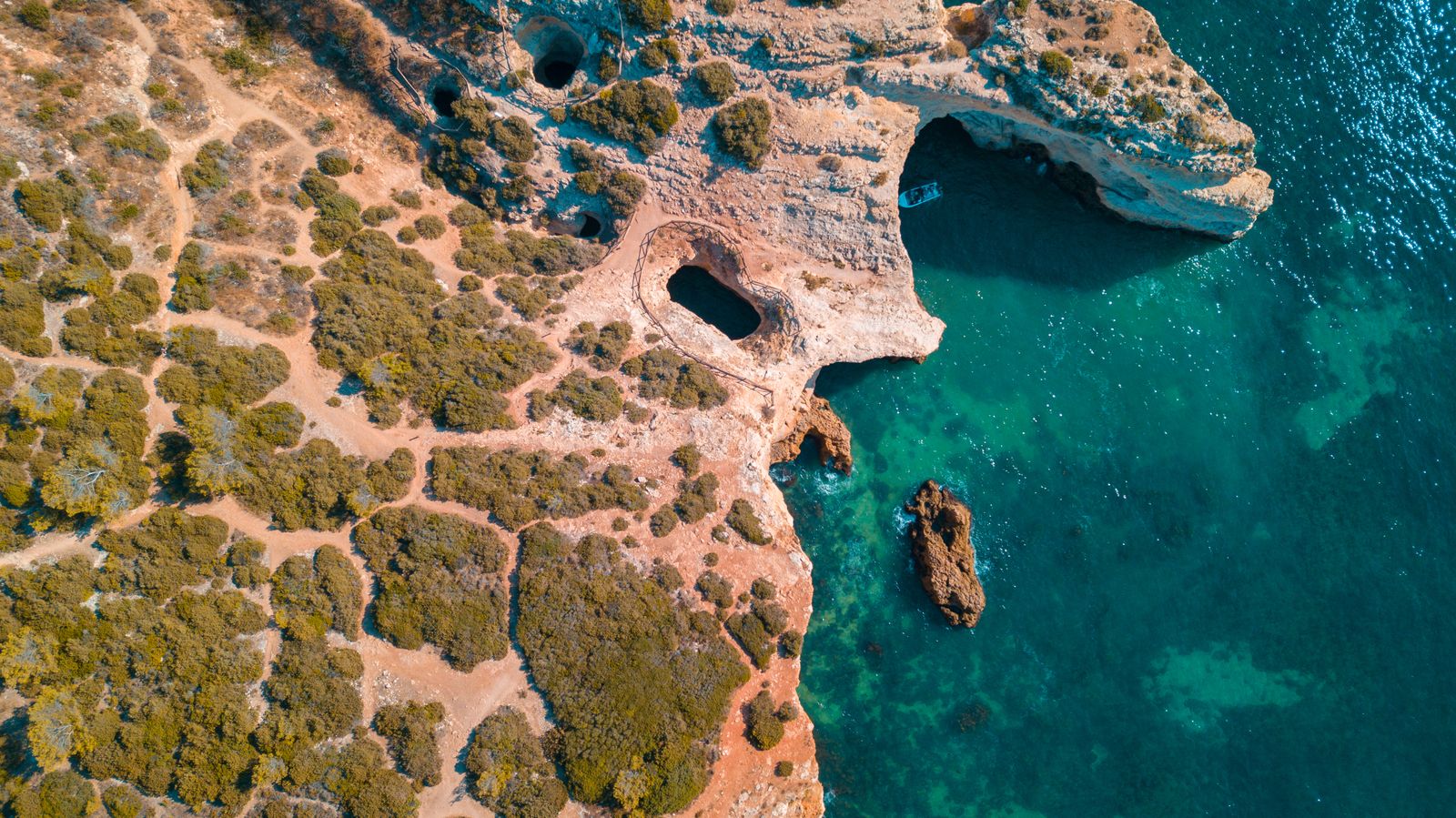
Drive south from Lisbon on the A2. The landscape transitions across 280 kilometres from the Tagus valley's green complexity to the Alentejo's flat cork oak plains to the Algarve's sudden coastal drama - orange cliffs dropping into turquoise water with an abruptness that the motorway does not prepare you for.
Check in at Four Seasons Vilamoura - positioned for beach and marina access, the correct base for two days in the central Algarve.
Benagil Cave is the defining image of the Algarve and one of the most photographed geological formations in Portugal. A dome of sandstone collapsed over a sea cave approximately 20,000 years ago, leaving a circular oculus open to the sky and a beach at the cave's floor accessible only by water. A Benagil Cave boat tour reaches it from Albufeira - covering the coastline's caves, arches, and grottoes en route - and allows time inside the cave before the tide and the tourist volume make the access complicated.
The Algarve Has No Obligations Today. That Is a Deliberate Choice.
The Algarve's value is not just what it offers. It is the pace at which it offers it.
The south coast operates on a register that the previous six days - driving, flying, wine touring, city-navigating - do not. A morning with nothing to reach by a fixed time. A beach or a pool. The particular quality of light on orange limestone at 10:00 when the morning haze has cleared and the sky is the specific shade of blue that 300 days of Algarve sun produces without fail.
Afternoon: spa, beach, or pool. The decision belongs entirely to the traveller.
Dinner at Evaristo Restaurant - oceanfront, on the cliff above Praia de Evaristo, where the menu operates on the principle that fresh fish eaten above the water it came from requires no further justification.
One Last Drive North. Belém If the Schedule Allows. Flight EK194 Home.
Drive north from Vilamoura to Lisbon. The return on the A2 covers the same 280 kilometres in reverse - the coast giving way to the Alentejo plains and then the Tagus valley, the city appearing on the horizon across the river the same way Vasco da Gama would have seen it returning from the Indies in 1499.
Return the rental van at Lisbon Airport. Check in for Flight EK194 back to Mumbai.
Eight days. Portugal from the airport hotel to the Atlantic cliffs, through the wine valley, across to an island that the explorers used as their launch pad, and back through the capital to the south coast. Every day structurally different. Every location earning its position in the sequence.