
Every photograph you have ever seen of Greece is accurate.
That is the trap. The images - white cubic houses above a cobalt sea, windmills against an orange sky, ancient columns holding up the same sky they held up 2,500 years ago - have been reproduced so many times that the expectation arrives fully formed before the plane lands. You assume the reality will be slightly less.
It is not slightly less.
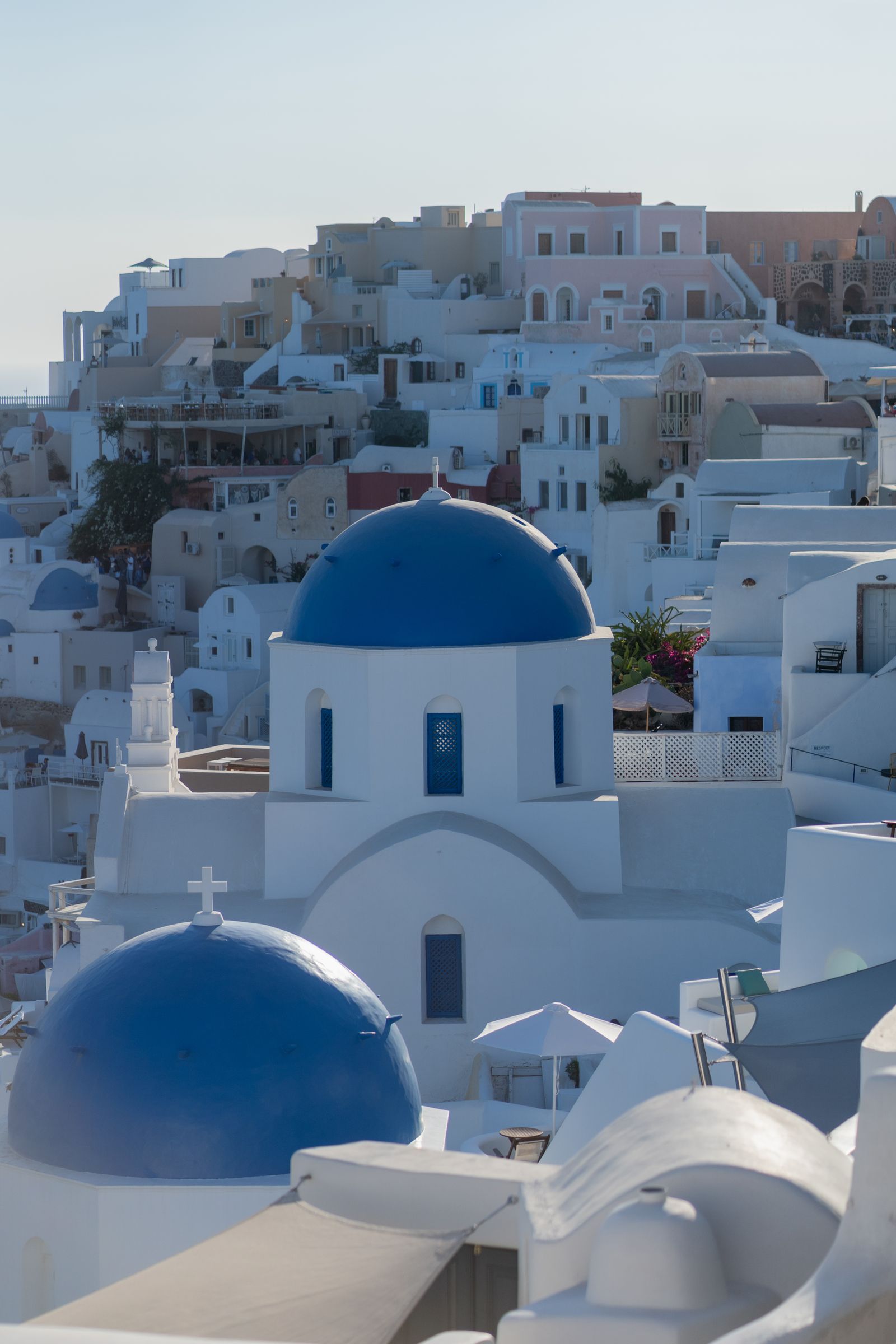
Santorini's caldera, viewed from the edge of Oia sunset Santorini at the moment the sun drops below the horizon, is exactly what the photographs describe - and then, in the way that all genuinely extraordinary things operate, it delivers something the photographs cannot: the warmth of the stone, the smell of the sea 300 metres below, the specific quality of silence that falls over a crowd of people who have all stopped talking at the same moment.
This eight-day itinerary moves through three of Greece's most distinct registers - island romance, island energy, and the city where Western civilization decided to become itself - in the sequence that makes each one land at full force.
It is exactly what you expect - and then, without warning, it is more.
The Caldera Arrives Before You Are Ready. Good.
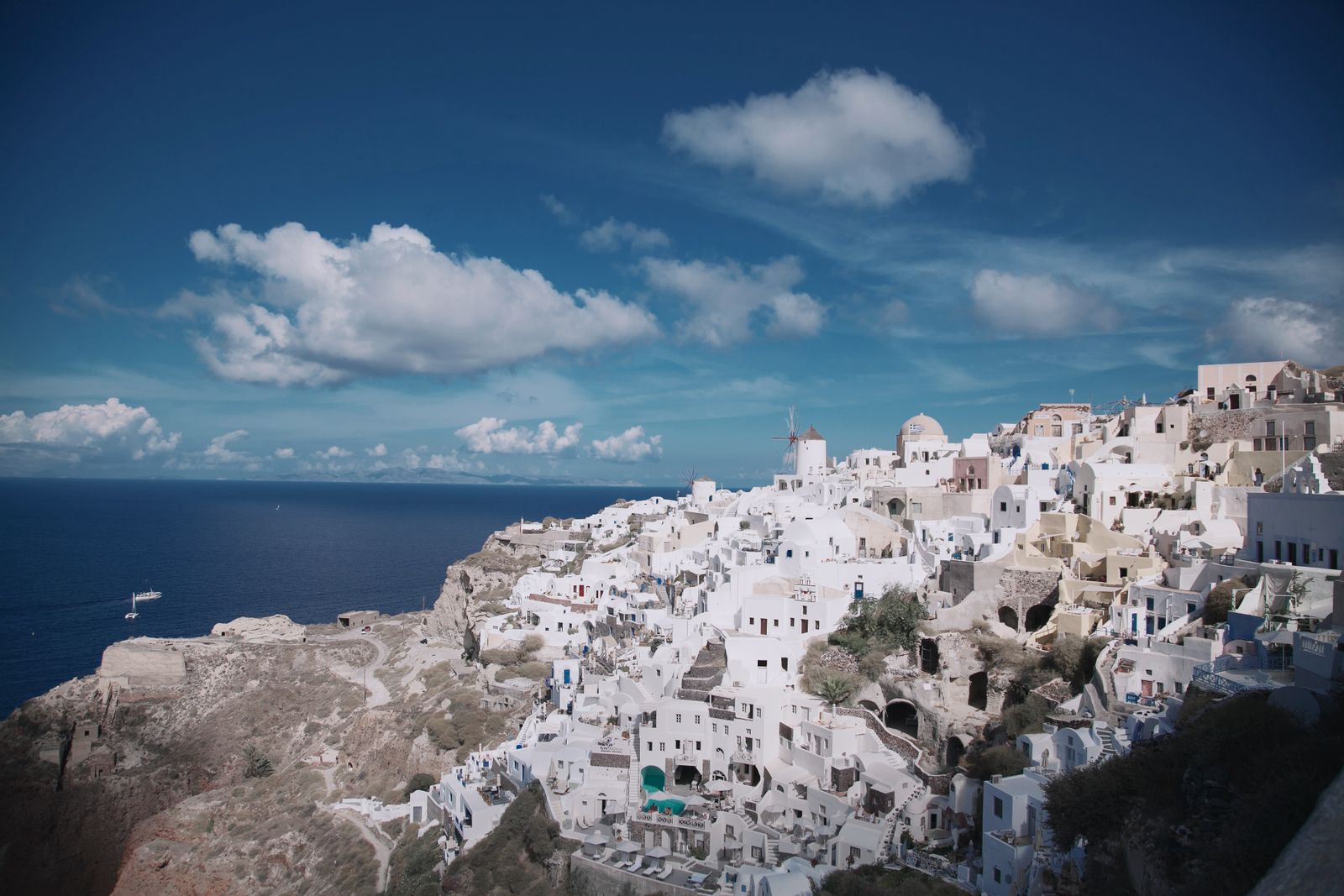
The approach to Santorini by air delivers the caldera from above before the wheels touch down: a flooded volcanic crater 12 kilometres across, rimmed by 300-metre cliffs with a cluster of white villages on top and a still-active volcano sitting in the middle of the water.
The island is the ruins of an eruption. The most powerful volcanic event in recorded human history - approximately 1,600 BCE - collapsed the centre of what was previously a circular island, flooded it with the Aegean, and created the caldera that the white villages of Oia, Fira, and Imerovigli now perch on the rim of. The geography is catastrophe made beautiful over three thousand years.
Day one carries no obligations beyond arrival. Transfer to Anteliz Suites, check in, and let the island calibrate the senses on its own terms. The evening is unscheduled. That is the correct decision. Santorini at dusk, approached without a tour or a timetable, introduces itself more honestly than any programme can.
Wine From Volcanic Soil. Then Oia at the Hour the Photographs Are Taken.
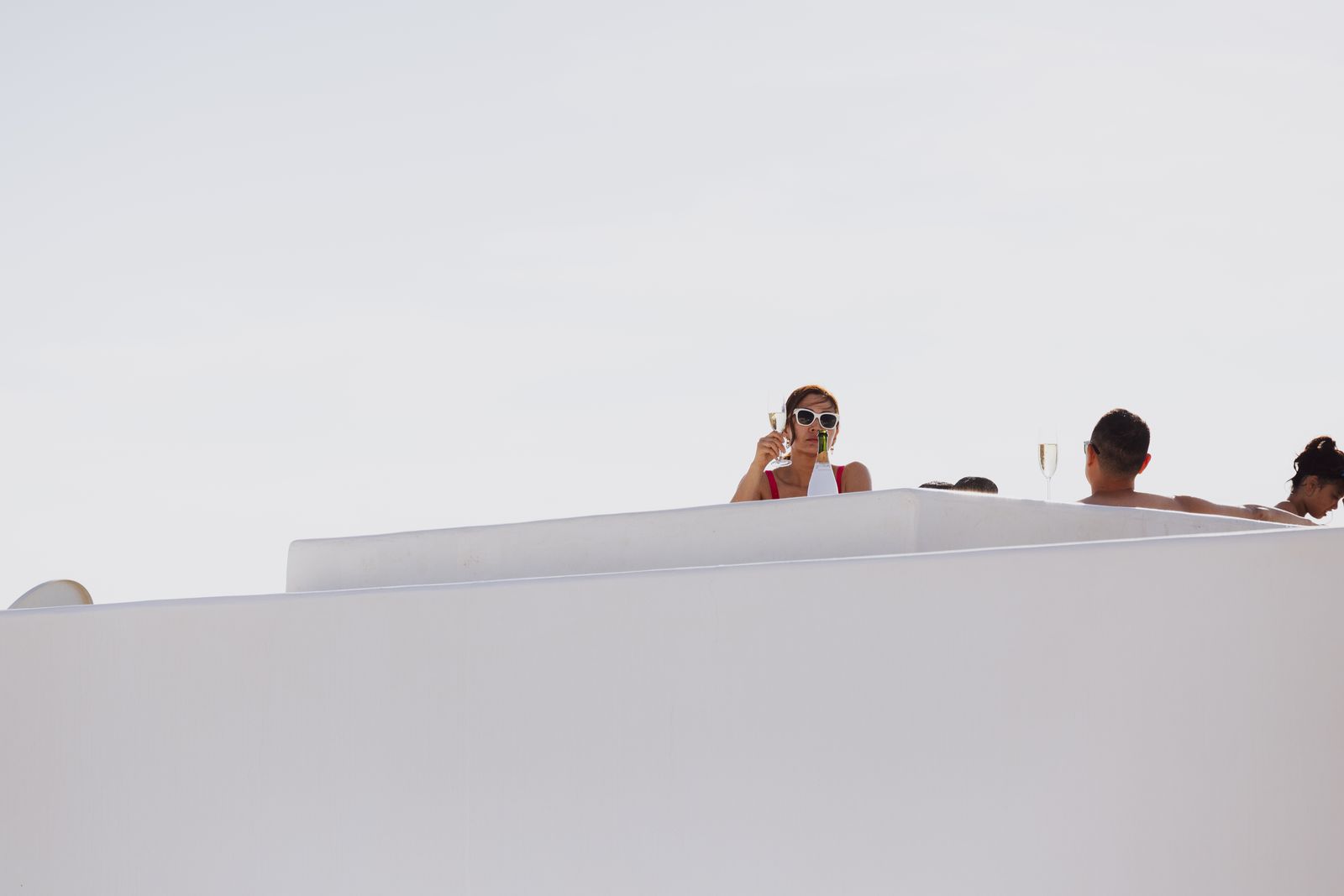
Santorini's wine is not incidental to the island's identity. It is structural.
The Assyrtiko grape has been grown in Santorini's volcanic ash for approximately 3,500 years. The vines are trained into basket shapes low against the ground - a technique developed to protect them from the Meltemi winds - and the soil they grow in is almost entirely pumice and lava. The wine that results from this environment tastes mineral, dry, and precise in a way that no other terroir replicates. The wine tasting included in the Santorini Highlights Tour is not an add-on. It is one of the day's primary encounters.
The tour departs at 11:00 and covers the island's essential geography - the volcanic beaches, the village of Pyrgos, the caldera-edge streets of Fira - before arriving in Oia for the sunset that has made the village the most photographed location in Greece. The crowd that assembles on the castle walls every evening to watch the sun set is significant. The sunset renders the crowd irrelevant.
Eight hours. The island in full. The day earns its length.
The Caldera Cruise. The Volcano Is Not a Metaphor. It Is Still Active.
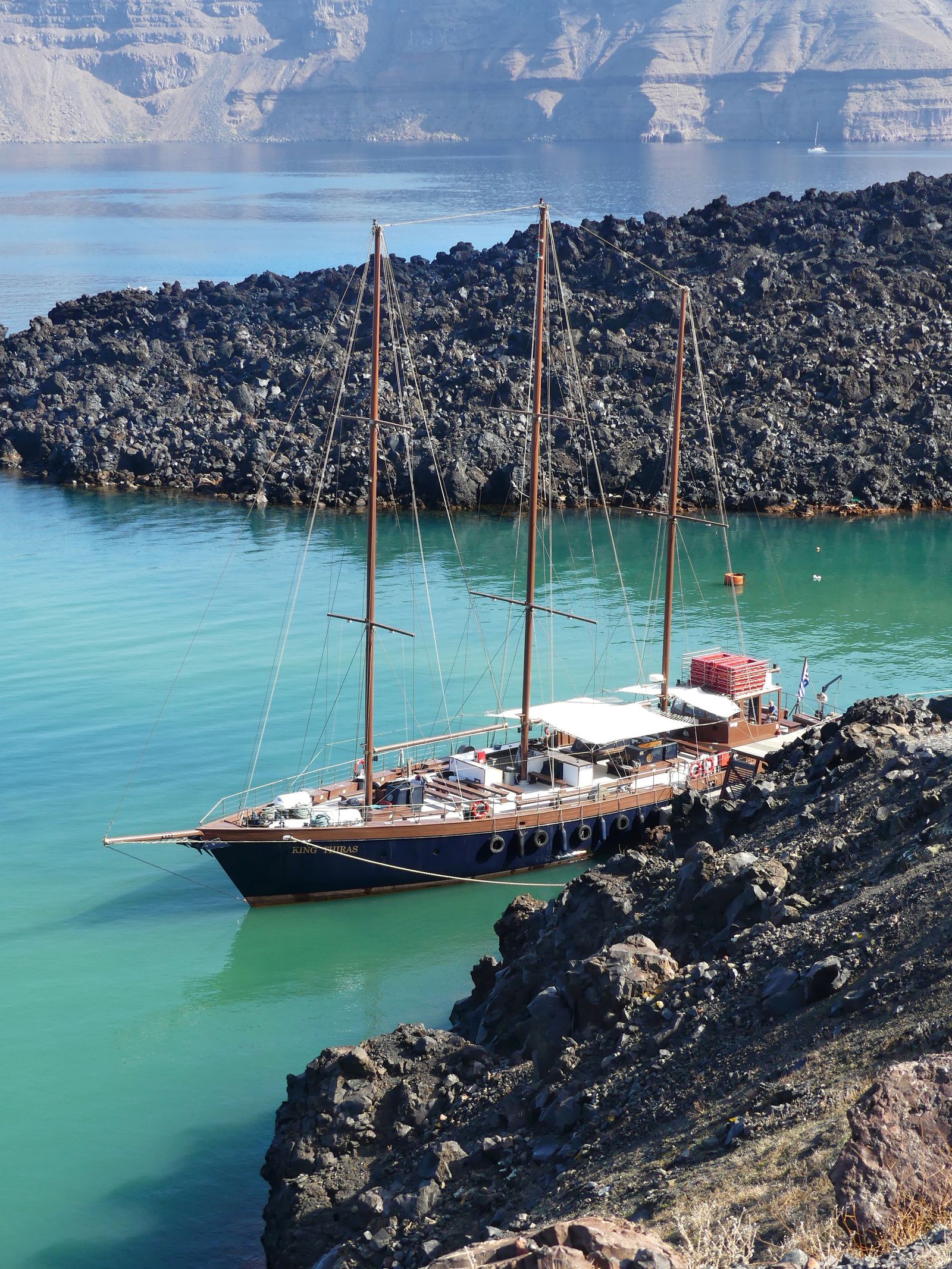
Santorini looks different from the water. From the caldera, the cliff face that the villages sit on becomes fully vertical - 300 metres of compressed volcanic layers, white buildings stacked on the rim above, the sea 300 metres below. The view from Oia's terrace is extraordinary. The view of Oia from a sailboat in the caldera is the other half of the same image.
The traditional caldera cruise departs at 15:30 and operates for five hours across the volcanic geography that the island's land-side experience does not reach.
The Ferry North. A Different Island, A Different Argument Entirely.
Santorini is introspective. It turns inward - toward the caldera, toward the volcano, toward the layer of geological violence under the white architecture and the wine.
Mykonos is the opposite.
The island faces outward - toward the Aegean, toward the crowds, toward the noise and the energy and the particular exuberance that comes from a place that has decided its job is to make sure everyone is having a good time simultaneously. The two islands are 130 kilometres apart. They are, in atmosphere, a different planet.
Hotel transfer on arrival · Check-in and settle in before the afternoon begins
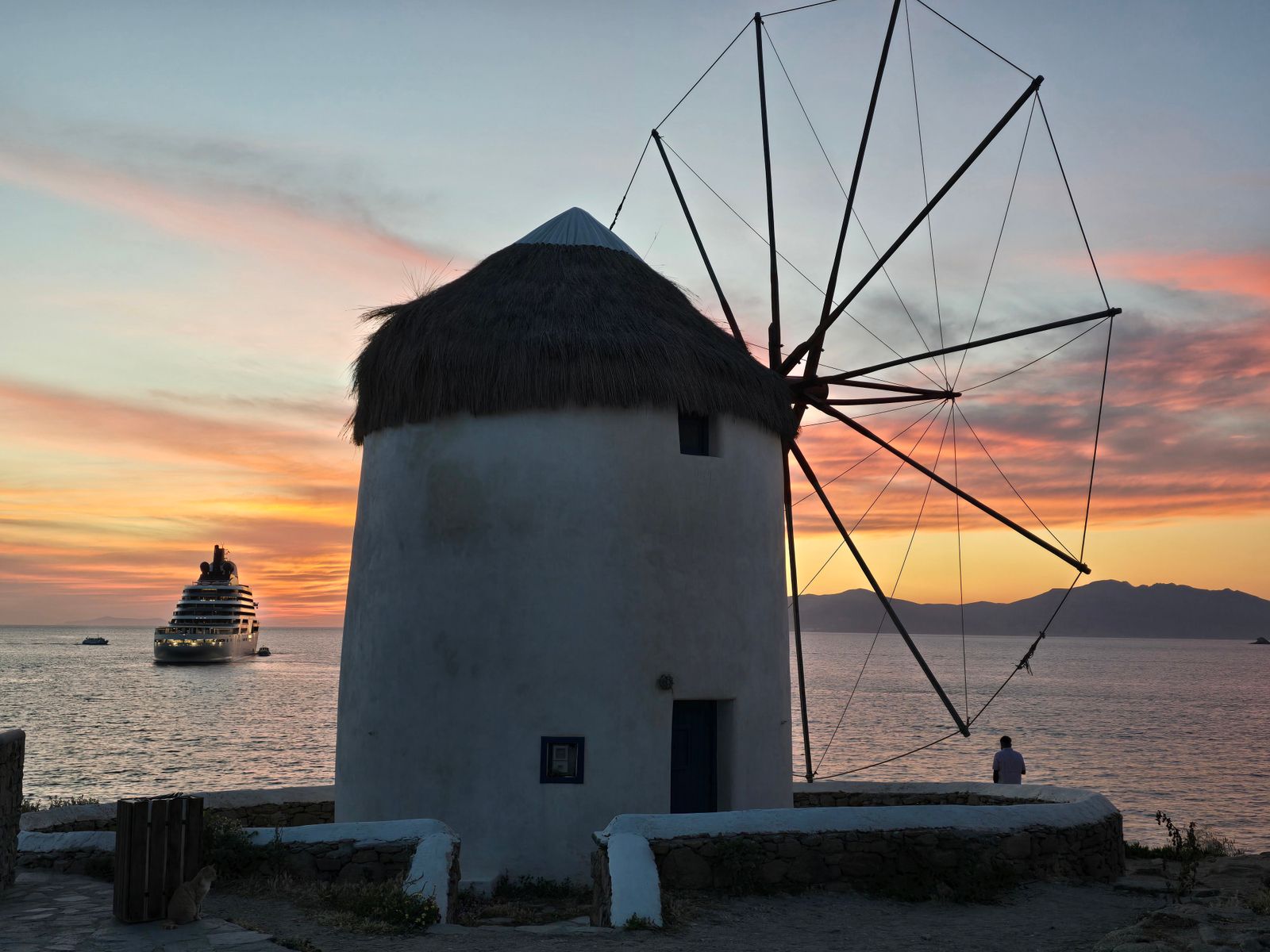
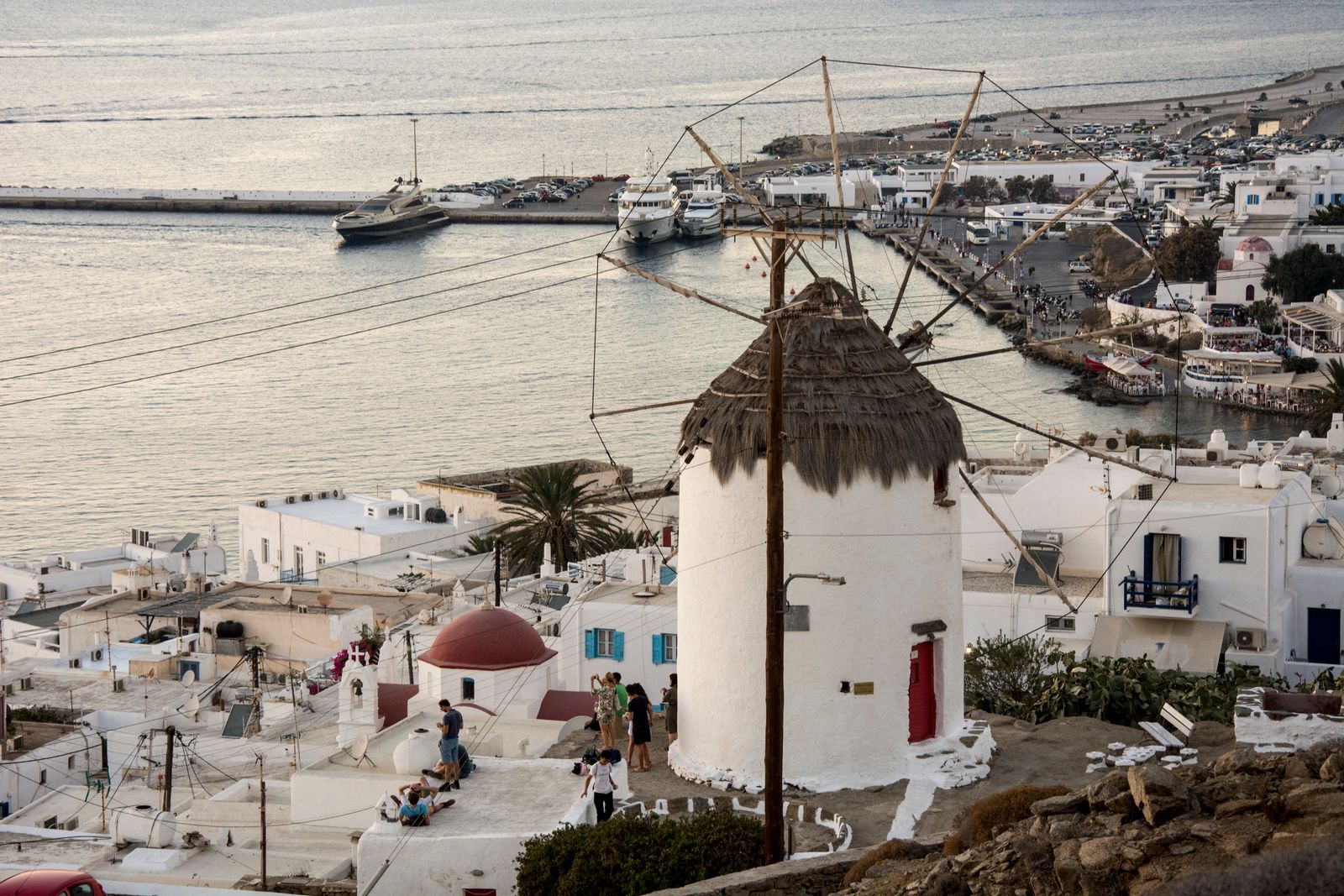
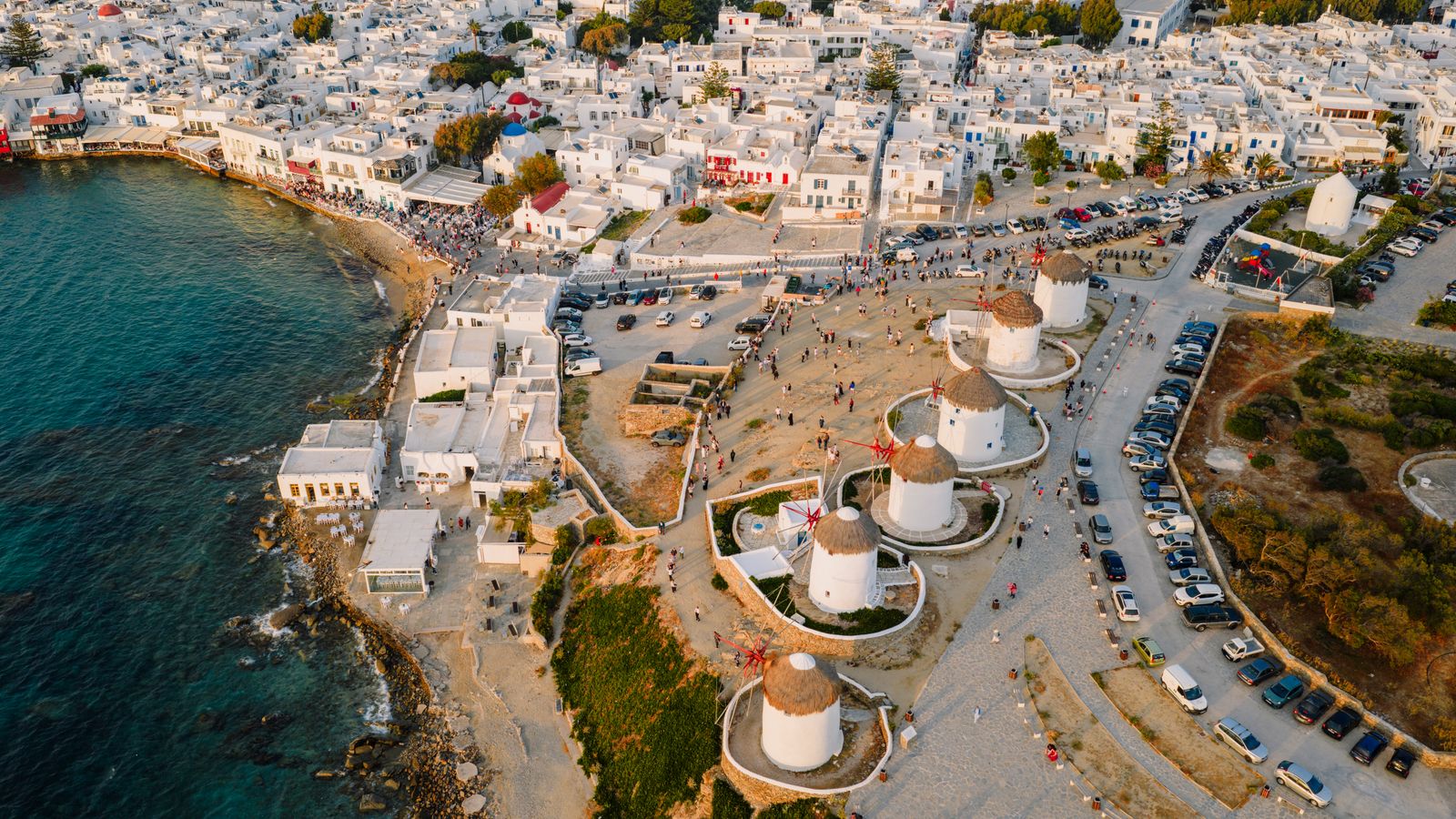
The Mykonos Sunset Cruise at 15:30 is the correct first encounter with the island from the water. The five windmills on the Kato Mili hill - built by the Venetians in the 16th century, used to mill grain carried by the Aegean trade routes - turn against the orange sky. Little Venice's balconies overhang the water below. The cruise delivers Mykonos in the register the island operates in naturally: unhurried, golden, and aware of exactly how good it looks.
Half a Day. The Whole Island. The Tour That Does the Navigation for You.
Mykonos Town - Chora - was deliberately designed to disorient.
The narrow alleys that wind between white cubic houses, the dead ends, the sudden openings onto small squares with chapels, the streets that double back without warning: this was not poor urban planning. It was defensive architecture, designed to confuse pirates navigating from the harbour. It still works on tourists.
The Half-Day Mykonos Highlights Tour at 10:15 cuts through the confusion and delivers the island's structure: the five windmills, Little Venice (the row of houses built directly over the water that Venetian merchants constructed in the 16th century), Matoyianna square, the Archaeological Museum, Paradise Beach and Super Paradise Beach for the afternoon's coastline context.
What the morning tour makes navigable:
Once the geography is legible, Mykonos becomes an entirely different experience. The alleys that were a maze become a pleasure. The afternoon is free - and now it can be used.
A Birthday on the Best-Looking Island in the Aegean. No Schedule Required.
The beaches alone constitute a full day's decision tree: Psarou for refined ease, Nammos for the spectacle of it, Elia for length and quiet, Paradise for the energy that made the island's reputation in the 1960s and has not significantly diminished since.
Mykonos's tavernas operate on the principle that good food, good wine, and a table with a view of the Aegean are sufficient. They are correct. The shopping - the winding alleys of Chora are lined with boutiques that range from local craft to international designers - fills whatever hours the beaches leave unclaimed.
The birthday belongs to the island. The island is prepared for this responsibility.
The Ferry to the Mainland. A City With 2,500 Years of Evidence. Then Dancing.
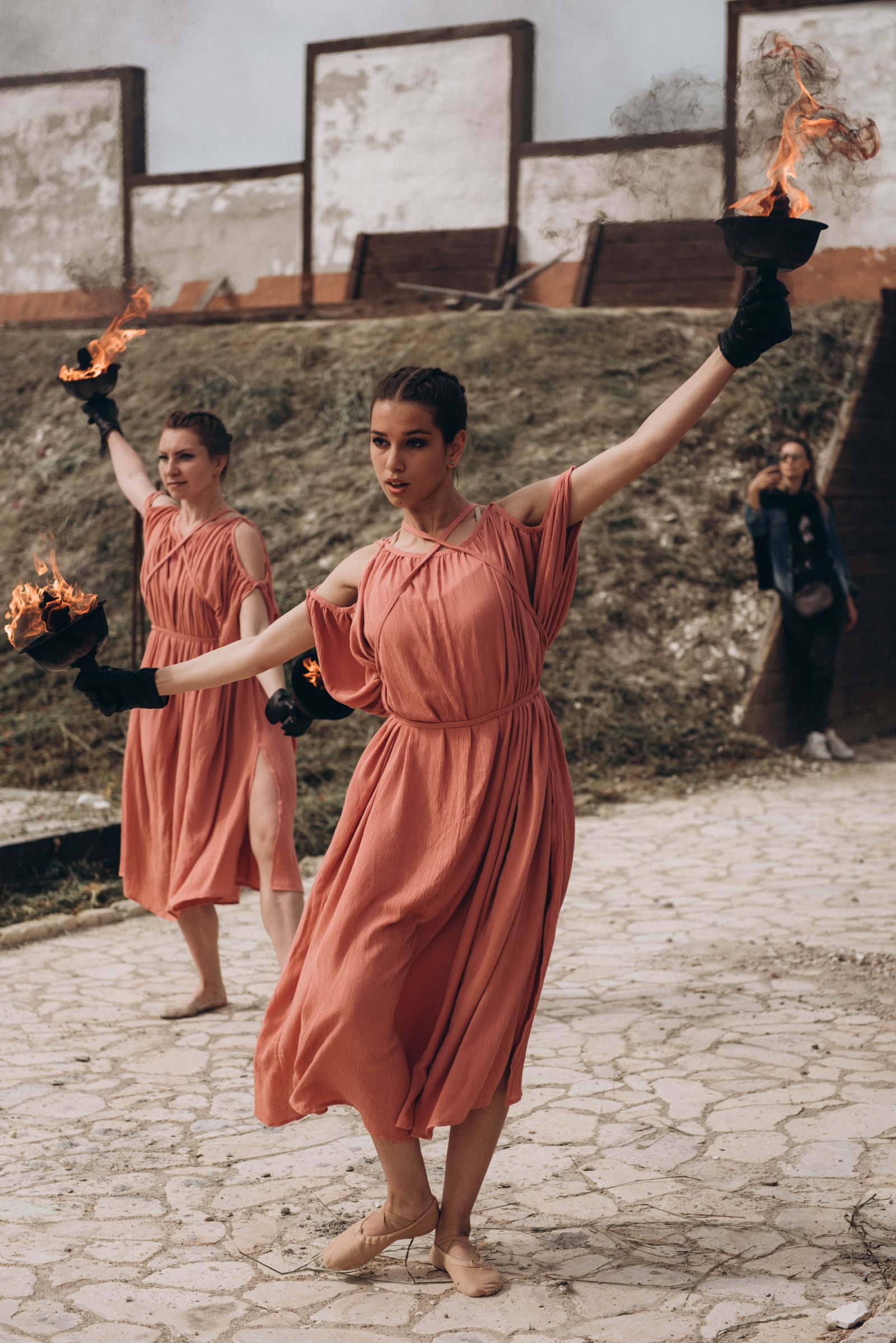
The transition from Mykonos to Athens is the itinerary's final pivot - from island time to city weight.
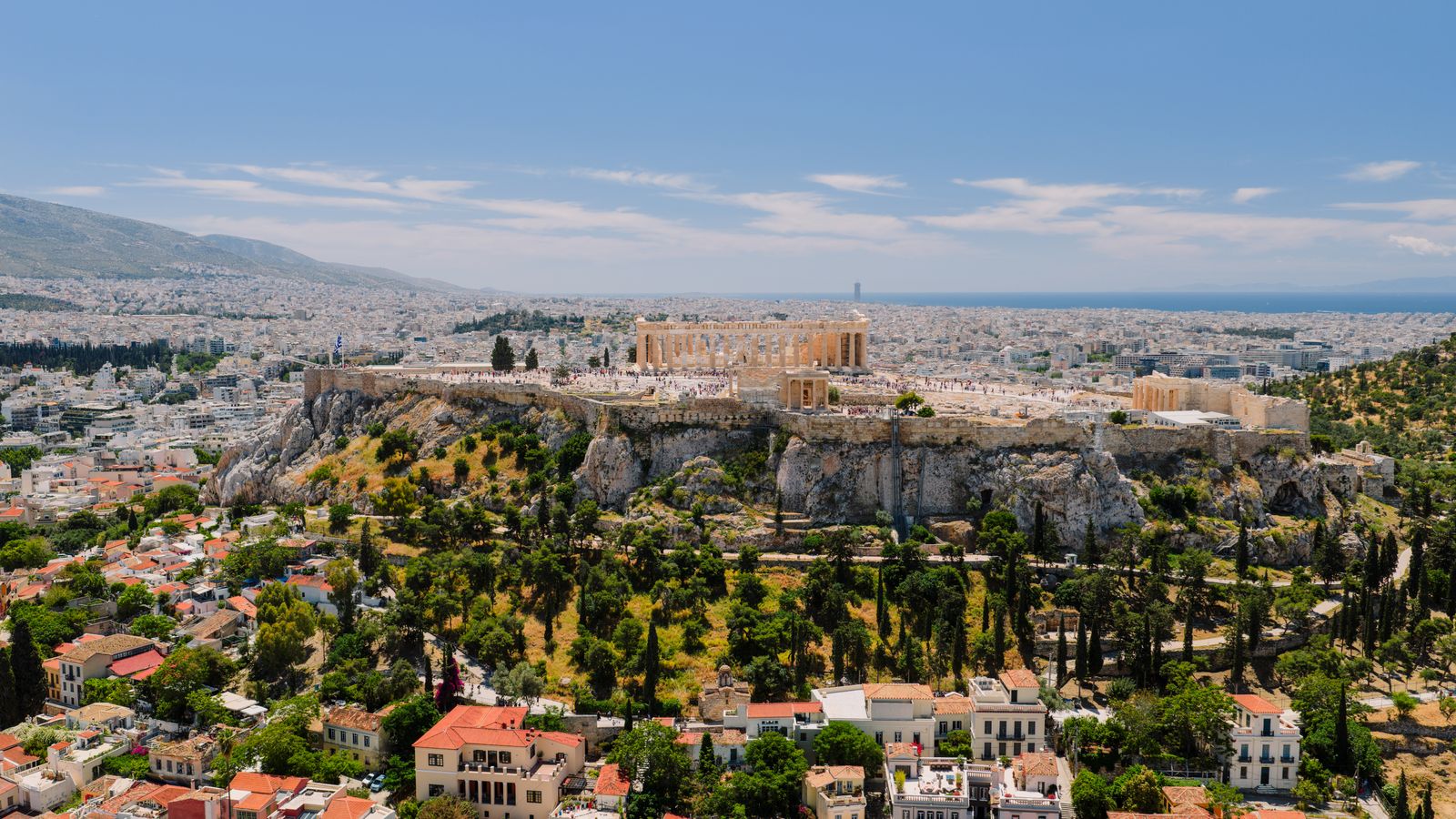
Athens holds the evidence of Western civilization's foundational decisions. The Parthenon on the Acropolis was completed in 438 BCE as a statement about what a city owed its goddess and what architecture owed its ambition. The Agora below it is where Socrates taught, where Athenian democracy was practiced, where the philosophical tradition that shaped the next 2,500 years of human thought was conducted outdoors in public as a civic activity. The city has not been modest about its own significance. It has not needed to be.
One Final Breakfast. Athens Keeps the Evidence. You Keep the Memory.
Check out after breakfast.
Transfer to the airport for the return flight.
Eight days through three of the most distinct locations in the Mediterranean - the volcanic island that turned catastrophe into one of the world's most beautiful pieces of geography; the Aegean's most accomplished host; the city where the West decided what it was going to be.
None of them are diminished by the others. Each one adds something the previous one could not have provided. That is what a sequenced itinerary delivers when it is built correctly.
Greece does not need to try. That is the point - and this is what eight days in it actually feels like.