
Most Europe itineraries are collections. A city here, a city there, stitched together by budget flights and optimistic train schedules. This is not that. This is a road trip - a single, continuous line from Paris through the French Alps, into Switzerland, north through the Black Forest, and back to Paris via Champagne country and Versailles.
Thirteen days. Three countries. One rental vehicle from pickup to drop-off. Every day builds on the last. The geography makes sense. The pace is deliberate. And by the time the flight home boards, you will have seen more of Europe's actual interior than most people see in three separate trips.
The route is the argument. Follow it.
Paris Doesn't Wait for Jet Lag. Neither Should You.
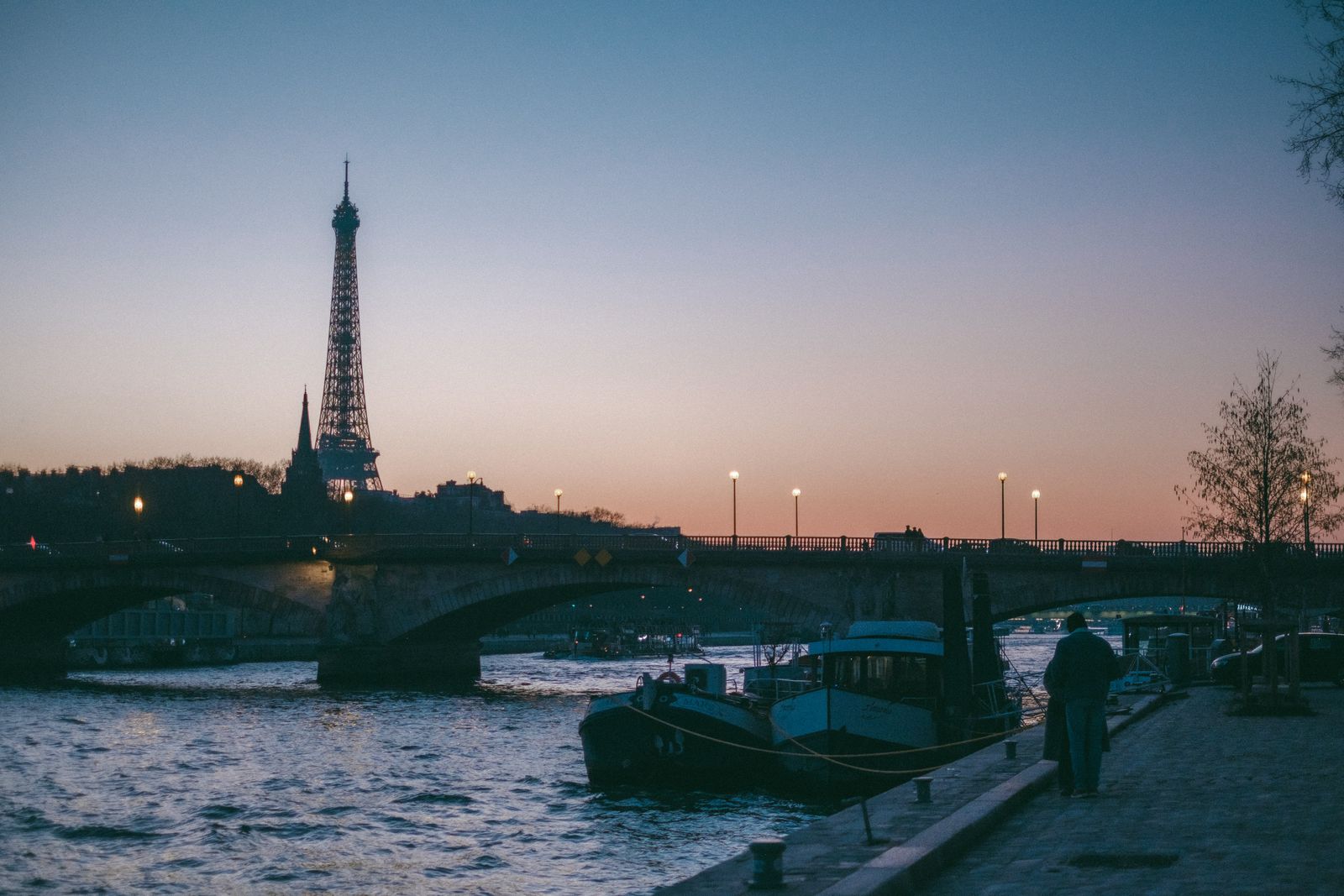
Emirates lands at Charles de Gaulle at 8:00 PM. Private transfer to the hotel - 30 to 45 minutes depending on how Paris feels about traffic that evening, which is a variable you account for, not fight.
The hotel is Mercure Paris Centre Tour Eiffel. The word "centre" is doing significant work in that name. A central Paris hotel means you walk to things instead of commuting to them - and in a city where Metro transfers eat 25 minutes and taxis run on hope and traffic, walking radius is the most valuable amenity on offer.
Check in. Drop the bags. If the energy holds, walk to the quay. The Eiffel Tower does its illumination sequence every hour on the hour after dark. Standing on the Pont d'Iéna when it happens costs nothing and settles every question about whether this trip was worth booking.
Sleeping Beauty's Castle. 40 Kilometres from the Louvre. Book the Early Entry.
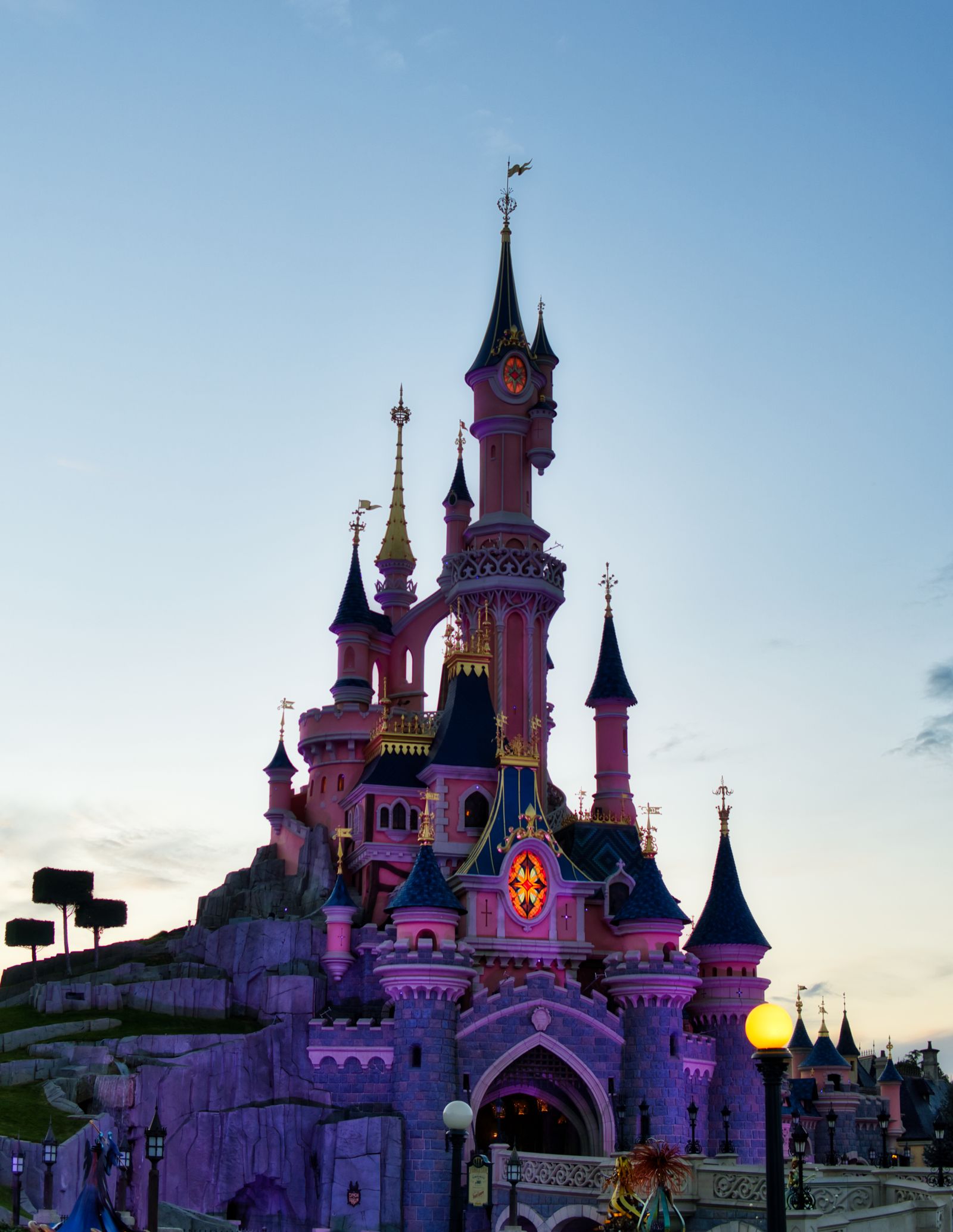
The ticket covers both parks: Disneyland Park and Walt Disney Studios. The rule is simple - arrive by 9:30 AM or spend the morning in queues that make the rides themselves feel like a relief.
The crowds at Disneyland Paris spike sharply around 10:30 AM. The travelers who arrive at opening, hit the three or four major rides before that spike, and then spend the afternoon at Walt Disney Studios - which draws a different crowd at a different pace - are the travelers who leave having done everything. The ones who arrive at noon are the ones who spend €150 to stand in lines.
Strategic Order:
Disneyland Park first - Big Thunder Mountain, Star Wars: Hyperspace Mountain, Pirates of the Caribbean - before the crowds fully form. Cross to Walt Disney Studios after lunch for Avengers Campus and Remy's Ratatouille Adventure. Stay for the evening Illuminations show over the castle. Leave immediately after. On a high note. Don't try to fit one more ride.
The Tower From the Top. The City From the Bus. The Evening on Foot.
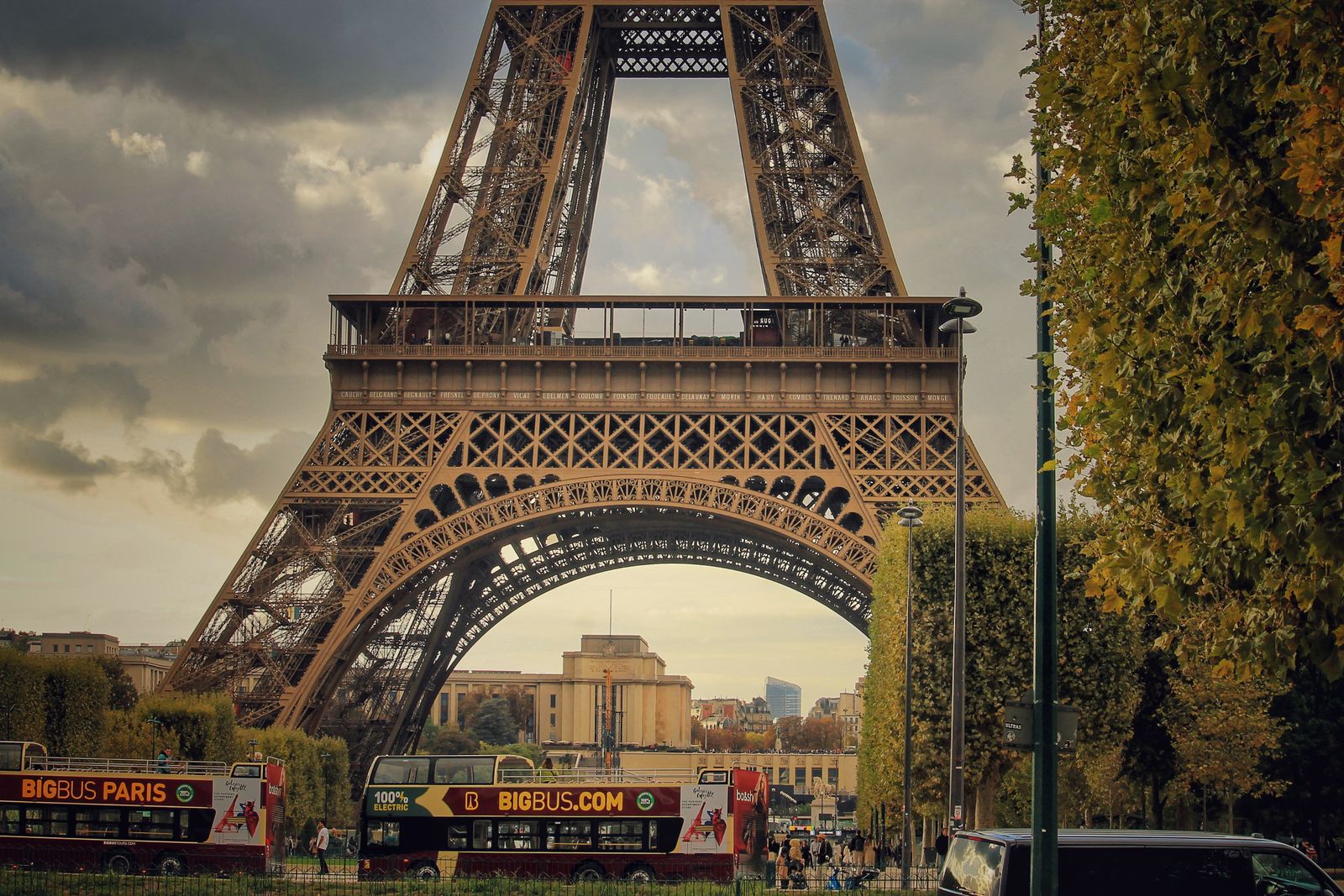
Paris has three scales. Street level - where you see the details. Bus level - where you see the structure. And from above - where the whole thing becomes legible as a designed system rather than an accumulated city.
Morning: the Eiffel Tower top floor by elevator. At 276 metres, the Haussmann grid below resolves into its intended geometry - twelve avenues radiating from the Arc de Triomphe, the Seine cutting diagonally, the Champ de Mars and the Invalides dome placed in deliberate visual dialogue. This is not sightseeing. It is urban literacy. Do it once and Paris makes more sense for the rest of the trip.
Afternoon: Big Bus Hop-On Hop-Off. The route covers the Louvre, Notre-Dame, the Marais, the Palais Royal, and Montmartre. Use the hop-off function - don't just ride it as a bus. Get off at the Marais and walk. Get off at Montmartre and climb. The Seine River Cruise option adds a third viewing angle that is specifically worth it between Notre-Dame and the Pont Alexandre III, which is the most photographed bridge in Paris and earns it.
Tomorrow is a 600-kilometre driving day. Sleep is part of the itinerary tonight.
600 Kilometres Southeast. A Medieval Village on the Lake. Then the Alps Fill the Windscreen.
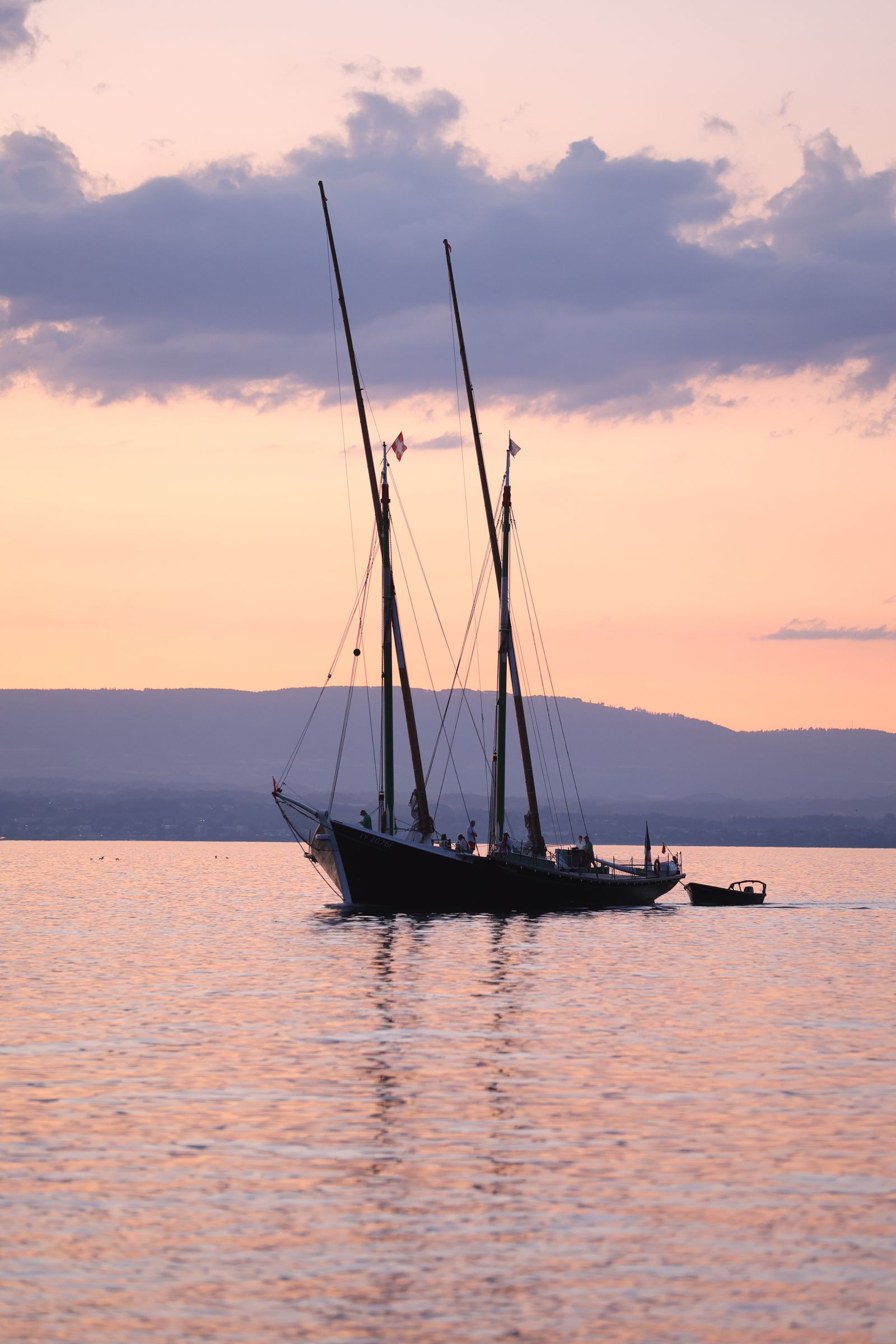
Collect the rental minivan early. This is the day the road trip becomes a road trip. Autoroute A40 southeast from Paris - 600 kilometres that descend from the French plateau through Burgundy, skirt Lyon, and enter the Alpine foothills with the mountains appearing on the southern horizon somewhere around Bourg-en-Bresse.
The stop is Yvoire. One of the officially designated Most Beautiful Villages of France - a certification with actual architectural and preservation criteria, not a tourism slogan. The 14th-century ramparts are intact. The stone and timber houses are original. The view from the village point across Lake Geneva to the Swiss Alps opposite is the kind of view that ends conversations.
Then, 30 minutes east to Évian-les-Bains. The town is best known for its water - the mineral springs that have been bottled and exported globally since the 19th century. Less known: the Belle Époque lakefront, the casino, the promenade that runs directly along the water with the Swiss Alps as a fixed backdrop. Check in. Walk the lakefront. The Alps across the lake are the same mountains you will be inside tomorrow. It helps to see them from the outside first.
A Glacier, a Suspension Bridge Between Two Peaks, and Grindelwald Beneath the Eiger.
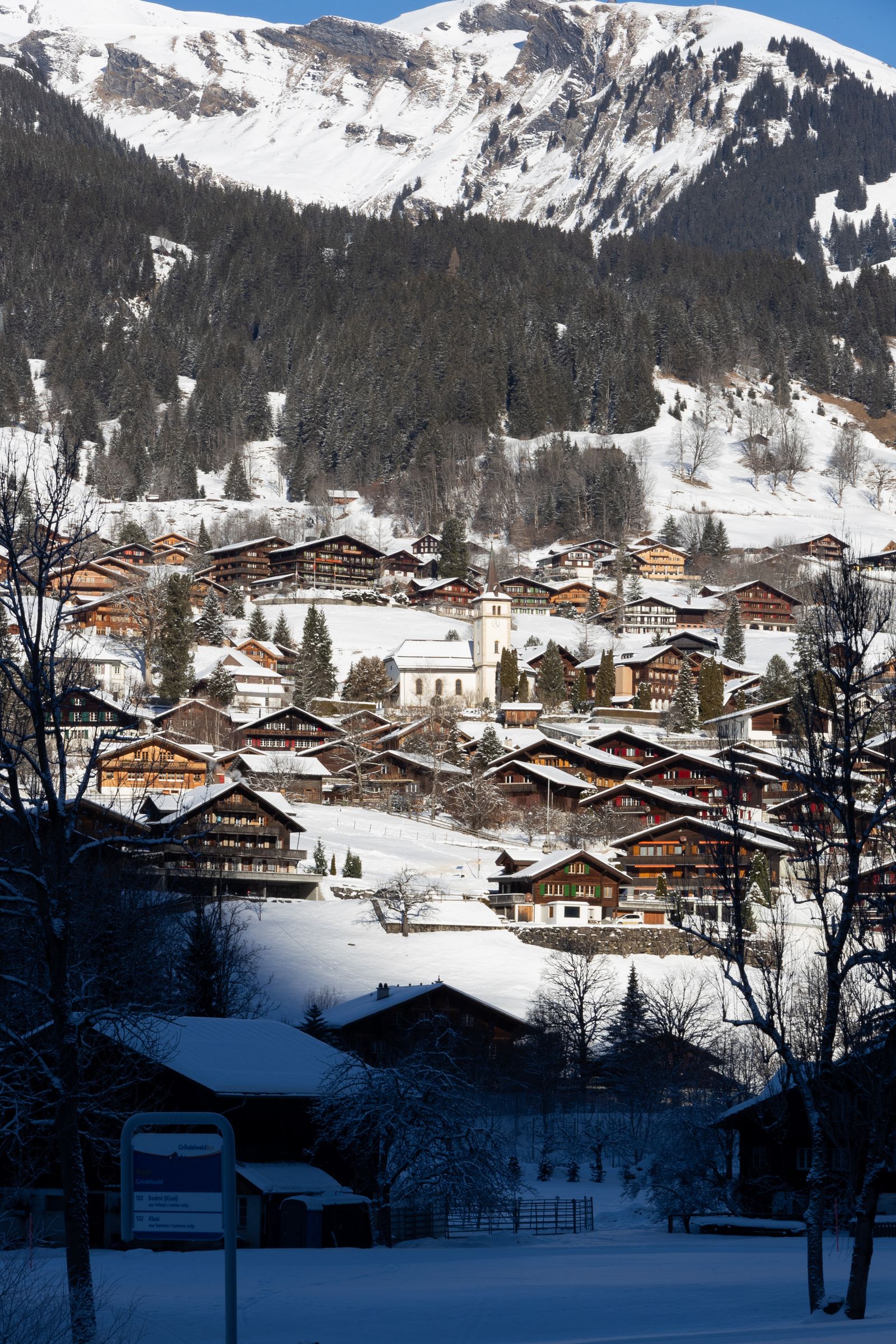
This is the mountain day. The route covers approximately 400 kilometres and six hours of driving - but the driving is not the point. The driving is how you access three of the most significant Alpine experiences on the continent in a single day.
Glacier 3000 comes first. The cable car ascent from Col du Pillon reaches 3,000 metres - permanent snowfield, 360-degree Alpine panorama, the Peak Walk suspension bridge connecting two mountain summits (the only one of its kind in the Alps), and the Alpine Coaster, which is a toboggan run on an active glacier and earns its price on the first descent alone. Allow three hours here minimum.
Then down and east to Interlaken. The Harder Kulm gondola provides the elevated viewing platform over the town - the Aare threading through it, Lake Thun to the west, Lake Brienz to the east, the Eiger visible on the ridge. It is the most efficiently achieved panoramic view in the Swiss Alps: 10 minutes up, full Bernese Oberland spread in front of you, 10 minutes back.
Finally, east to Grindelwald. The village sits directly beneath the north face of the Eiger - one of the most technically demanding rock faces in the world, visible from the main street of a village with good coffee and better cheese. Walk it. Breathe it. Drive back through the Bernese countryside as the light fades.
Gstaad or the Mountains. Either Way, You're Inside Something Beautiful.
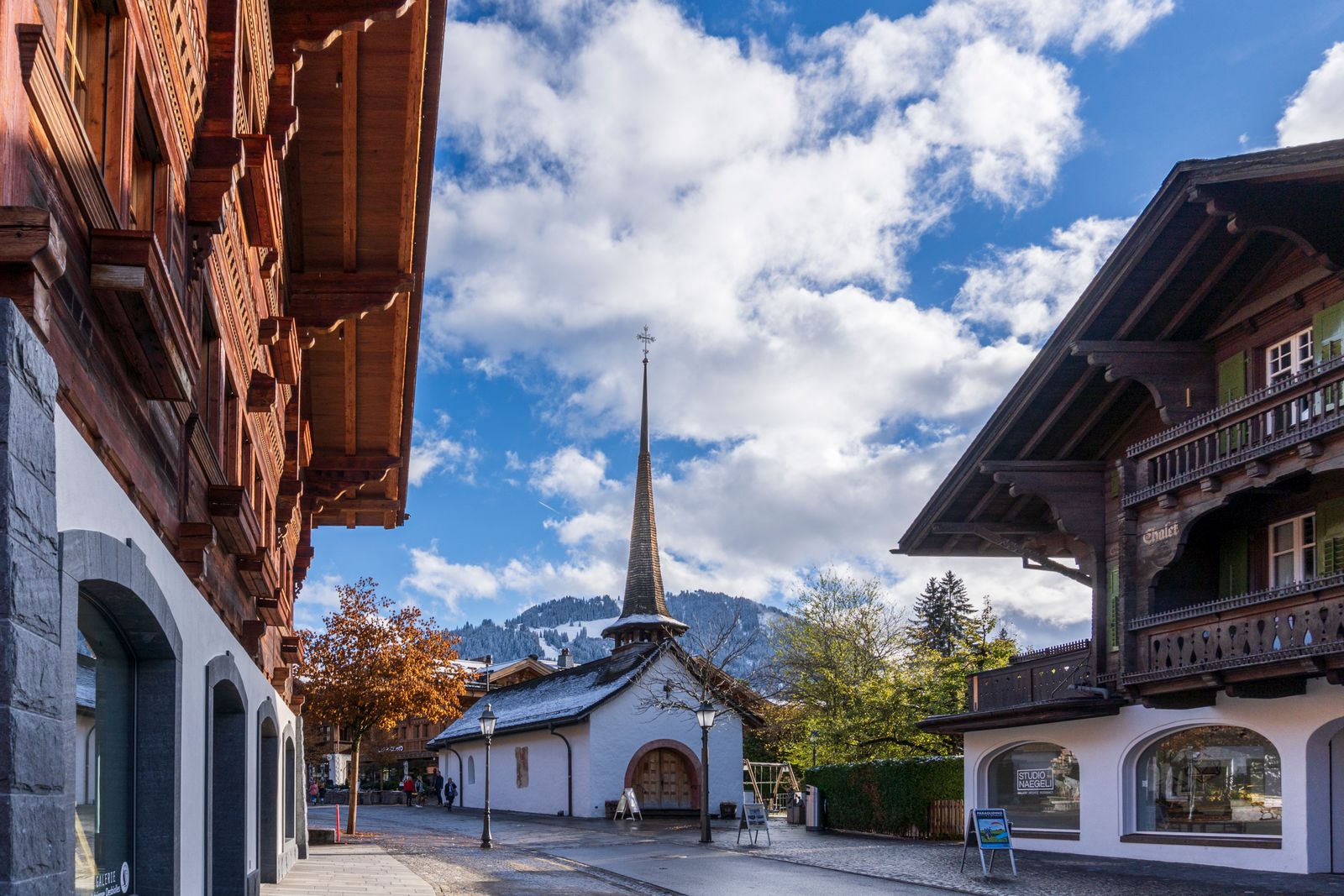
Day 6 is a choice, and the choice depends on what the previous day's mountains left you wanting more of.
Option A - Migros Hiking Sounds, Schönried: An open-air festival where live classical and contemporary music performances are staged at intervals along a mountain hiking trail. The concept is straightforward: you walk, and the music finds you. The Bernese Oberland backdrop does the rest. It runs on a specific schedule - confirm dates and programme before committing. If it aligns, it is one of the more unusual cultural experiences available in this part of Switzerland.
Option B - Gstaad: The more reliable choice. Gstaad is a mountain village that has managed, through deliberate planning and strict preservation laws, to remain a village while becoming one of the most recognized addresses in the world. The Promenade is 800 metres. Brunello Cucinelli operates from the ground floor of a 200-year-old wooden chalet. Moncler is next door to a bakery that has been there since 1890. The hiking trails off the main street lead to ridge viewpoints directly overlooking the Bernese Oberland. It is, in the most precise sense, a place that has made excellent decisions about itself.
Drive back through the Saanenland valley in the late afternoon. It is, at this hour and at this latitude, one of the most beautiful stretches of road in Europe. The Swiss don't advertise this. They don't need to.
A UNESCO Vineyard. A Castle on the Lake. Then the World's Best Chocolate, Sourced at Origin.
The route today traces the northern shore of Lake Geneva - one of the most consistently beautiful drives in Europe - then turns inland to the Fribourg Alps for the afternoon.
Montreux opens the day. The lakefront promenade runs for several kilometres with unobstructed views across to the French Alps. The Freddie Mercury statue is at the eastern end - Mercury lived and recorded here for the last 12 years of his life, produced some of his most significant work in the local studio, and found the combination of the lake and the mountain backdrop specific enough to stay. The statue explains why.
Chillon Castle, 3 kilometres east of Montreux, has been continuously occupied since the Bronze Age. The current structure dates from the 13th century. Byron carved his name into a dungeon column in 1816 and wrote a poem about it. The lake views from the castle battlements are the kind that make fortification seem, briefly, like a reasonable life arrangement.
Vevey gives access to the Lavaux vineyard terraces - a UNESCO World Heritage landscape where vineyards have been cultivated on steep hillsides above the lake since the 11th century. The hiking path through them is the correct way to understand why the designation is accurate.
Then inland to Gruyères and Maison Cailler - the chocolate factory tour that runs through the history of Swiss chocolate from the Aztec origin through the Nestlé era to the present. It is a factory experience that delivers considerably more craft and context than the format usually permits.
The Cleanest Lake in Europe. The Prettiest Old Town in the Alps. One Day to Do Both.
The final day based in Évian is the easiest drive of the week: 80 kilometres southwest through the Haute-Savoie to Annecy, returning the same evening.
Lake Annecy is the cleanest freshwater lake in Europe. This is a formal designation, not a marketing claim. A 1960s environmental programme removed all agricultural and industrial discharge from the watershed before most European countries had considered the concept. The result is water of a specific turquoise that photographs as implausible and appears, in person, even more so. Take a boat on it. Swim if the temperature cooperates. Paddle along the southern shore. The Château de Duingt, on a small promontory in the middle of the lake, appears in the water's reflection with a clarity that makes you question whether you're looking at something real.
The Vieille Ville - the Old Town - runs along the canals that drain from the lake into the town centre. The Palais de l'Isle sits in the middle of the Thiou canal on a limestone island, has served as a palace, a prison, a mint, and a court, and is currently the most photographed structure in the French Alps. Every photograph undersells it. The covered market arcades, the geranium-lined facades, the bridges over the canal - Annecy's Old Town is the kind of place that makes you understand why people move to France.
Drive back to Évian in the late afternoon. Tomorrow the road turns north toward Germany.
The Black Forest Waterfall. Then the Porsche Museum. Germany Introduces Itself on Its Own Terms.
The route today crosses back into France briefly, then enters Germany through the Rhine valley - 500 kilometres north, roughly 6 hours of driving with stops. Germany is toll-free for private cars. The entire drive costs only fuel.
The stop is Triberg, in the heart of the Black Forest. The Gutach waterfall here drops 163 metres across seven cascades - the highest waterfall in Germany and one of the few natural features in the country that requires no preamble. The surrounding Black Forest landscape - dense, dark, exactly as described - is also home to the original Black Forest gateau, which in Triberg is still made to the original recipe and available from the bakeries on the main street. Eat it here.
Then north to Stuttgart. The city is two things simultaneously: the capital of Baden-Württemberg and the birthplace of the automobile. The Porsche Museum on the northwestern edge of the city covers the full history of the brand from the original 356 through the 911 lineage to the current hybrid models. The engineering exhibitions are as substantial as the car displays. Even for travelers with no particular interest in motorsport, the Porsche Museum is a well-designed architectural and industrial history experience that earns its admission independently of the brand.
Mercedes-Benz and Heidelberg Castle. Engineering and Ruins. Germany, Both Faces.
Stuttgart holds two museums that are, each in their own way, the best example of what they attempt. In the morning, the Mercedes-Benz Museum - nine floors, 160 vehicles spanning 130 years of automotive history, architectural design by UNStudio that treats the building itself as an exhibit. The chronological spiral descent through the permanent collection is genuinely one of the most considered museum experiences in Germany. Allow three hours minimum.
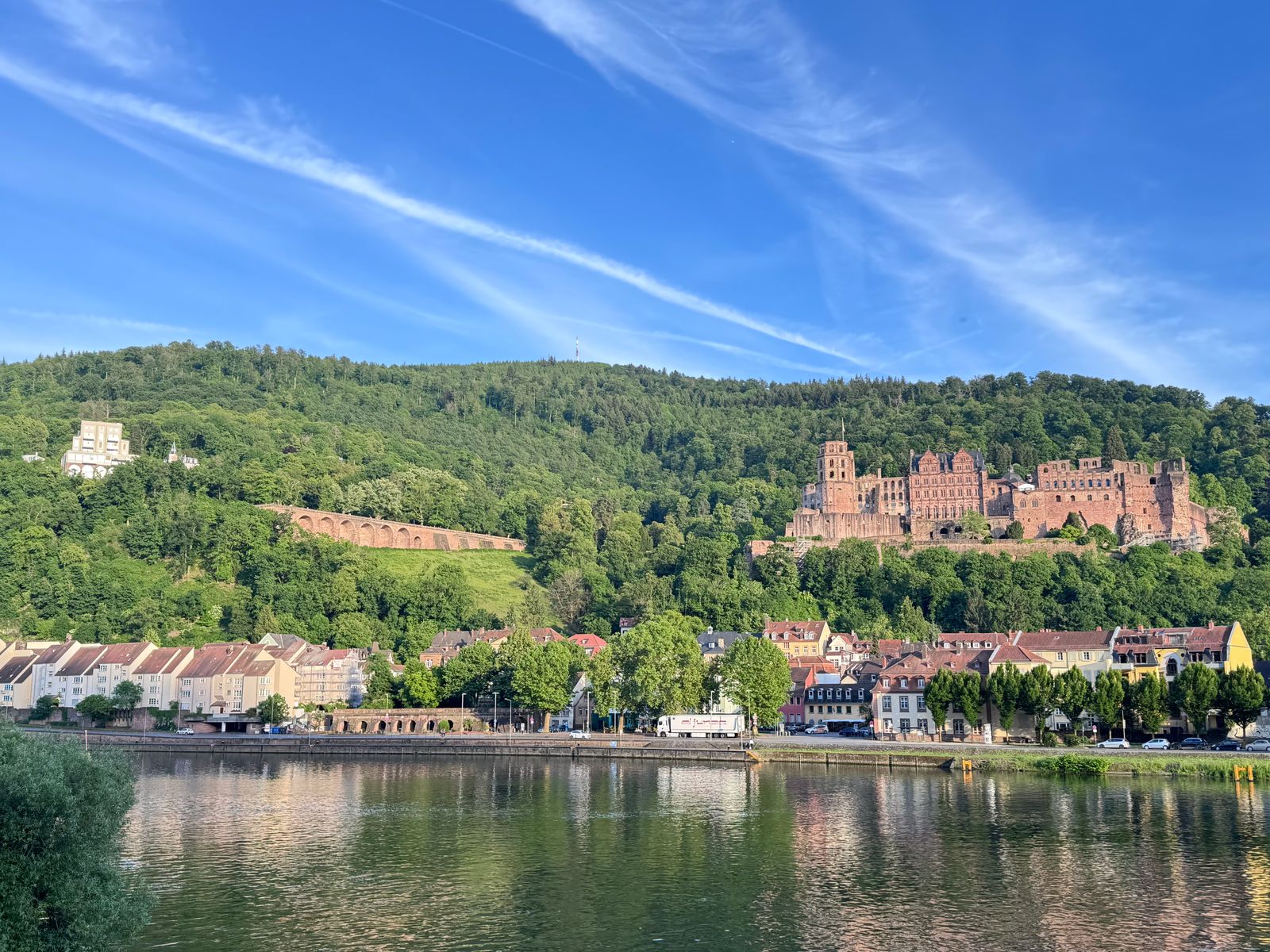
Afternoon: drive 80 kilometres north to Heidelberg. The city built its reputation on the university - founded in 1386, the oldest in Germany - and the castle, which sits above the old town on a red sandstone hill with the Neckar valley below it. The castle is a ruin. Deliberately so, in the sense that several reconstruction attempts were abandoned in the 19th century when it was recognized that the ruin was more beautiful than any restoration could be. The walk up through the Altstadt - the Old Town - is one of the more pleasurable climbs in German travel: cobblestone lanes, Baroque facades, the old bridge across the Neckar as a fixed reference point below.
400 Kilometres West. Then Champagne Caves. The Road Trip Earns Its Celebration.
Drive day. Stuttgart to Reims - 400 kilometres, approximately 5 hours on the motorway west through the Rhine plain, re-entering France via Strasbourg and continuing through the Champagne region. Tolls approximately €40. Fuel approximately €50.
Reims is not just the city where Champagne is made. It is the city where French kings were coronated for 1,000 years - the Cathédrale Notre-Dame de Reims hosted the crowning of 33 monarchs including Charles VII, with Joan of Arc present. The cathedral is a UNESCO World Heritage Site and the most significant Gothic structure in the Champagne region, arguably in France outside Paris.
But in the evening, the Champagne houses. Reims sits at the centre of the most productive Champagne appellation in the world, and the chalk cellars beneath the city - some of which date from Roman quarrying - hold the largest underground reserves of aged Champagne in existence. Taittinger, Veuve Clicquot, Pommery - the major houses offer cellar tours that run 45 to 90 minutes and end, correctly, with a tasting. Book in advance. The tours fill.
The Palace of Versailles on the Way to the Airport. Because Why Wouldn't You.
The final driving day is 150 kilometres: Reims southwest to Versailles, then 20 minutes northeast to Paris CDG. Tolls approximately €20. Fuel approximately €18.
The Palace of Versailles gets an early slot - the first admission window of the morning, before the tour buses arrive from Paris. This is not optional. Versailles with a crowd is a different experience from Versailles at 9:00 AM, when the Hall of Mirrors is still catching the morning light rather than filtering it through 3,000 other visitors. Book the skip-the-line guided palace tour and full access ticket in advance. The gardens are included. The gardens, in June, are the argument for the visit.
After Versailles, return the vehicle at CDG Airport. Check in to the airport hotel. The road trip is over. You have driven approximately 2,000 kilometres across three countries, covered an Alpine glacier, two Champagne caves, one UNESCO vineyard, a Disney castle, the Eiffel Tower summit, Heidelberg's ruin, and the cleanest lake in Europe.
That is not a holiday. That is a continental education.
Emirates to Delhi. The Road Is Behind You. The Memory Starts Now.
Shuttle from the airport hotel to CDG Terminal. Emirates departs for Delhi.
Thirteen days. Fourteen cities and villages. Three countries entered and exited without a single flight between them. The same vehicle, driven in a continuous loop that started and ended at the same airport - but not the same traveler.
France is not just Paris. Germany is not just Munich. Switzerland is not just Geneva. This route found all three in their interior - in the places that don't advertise, that don't need to, that simply are what they are and have been for centuries.
That's what 2,000 kilometres gets you. Not a collection of highlights. A comprehension of place.