
Croatia has a specific problem that no other European destination quite replicates.
Every single place on this itinerary is genuinely extraordinary. Not "worth a visit" extraordinary. Not "good for photos" extraordinary. The kind where you stand in front of something - the Dubrovnik city walls dropping into the Adriatic, the Plitvice waterfalls falling through autumn forest, the Roman columns of Split Diocletian Palace's Palace still standing after 1,700 years of continuous human occupation - and the gap between expectation and reality closes completely.
The challenge is not finding things to see. The challenge is sequencing them so that the intensity doesn't flatten into repetition.
This six-day itinerary solves that problem through contrast. The walled medieval city gives way to a border crossing and a different country entirely. The history of Split gives way to turquoise water and an afternoon on a boat. The Adriatic coast gives way to a landlocked forest of waterfalls that the coast could not have predicted.
Six days. Three base hotels. The Adriatic in full.
This itinerary was built on that understanding.
The Walled City. The Cable Car. The View That Ends the Debate.
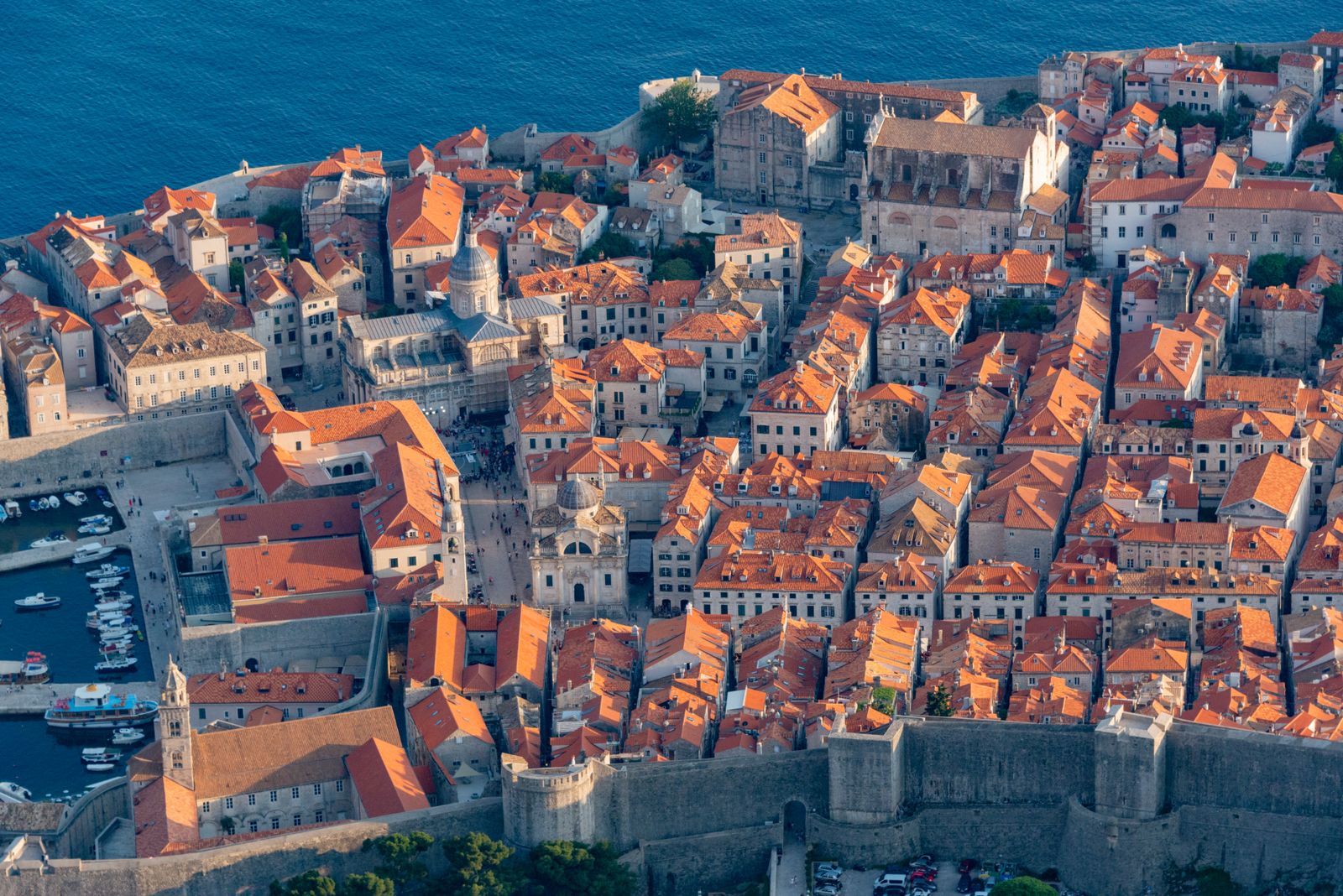
Dubrovnik's city walls are 1,940 metres long, up to 6 metres thick, and have been enclosing the same city since the 13th century. They are not a ruin. They are not a reconstruction. They are the original walls, maintained continuously, with the Adriatic Sea on one side and a living city on the other.
The cable car to Mount Srd delivers the overview before the street-level experience begins - and the logic of this sequence is not accidental. From 412 metres above the city, the spatial relationship between the walls, the Old Town grid, the harbour, and the open sea resolves into a single comprehensible image. The walking tour that follows moves through that image from the inside: Pile Gate, Stradun (the marble-paved main street polished smooth by centuries of foot traffic), Onofrio's Fountain, Rector's Palace, the Cathedral, the Church of St. Blaise.
Each one earns its place on the list. None of them requires a superlative. The city provides its own.
A Second Country in a Single Day. The Bay of Kotor Earns That Decision.
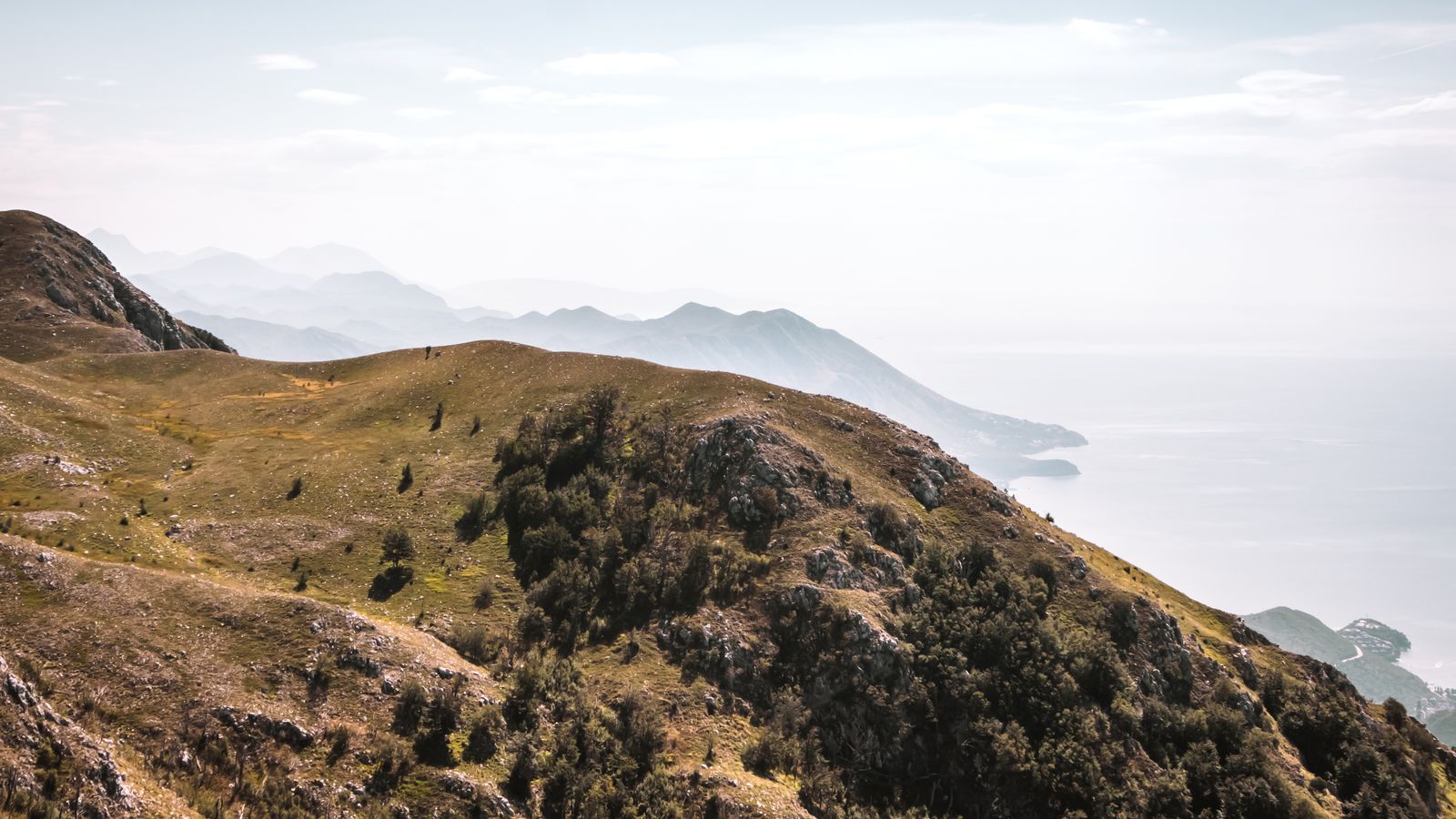
Montenegro is a 30-minute drive from Dubrovnik. It is also, in every meaningful sense, a different world.
The Bay of Kotor is one of the most dramatically formed bodies of water in Europe - a drowned river canyon that created a 28-kilometre inland sea surrounded by mountains that rise directly from the water's edge. The road hugs the bay's edge the entire length of the drive. There is no vantage point from which it stops being extraordinary.
Perast arrives first - a Baroque town of 16 churches and 17 palaces built by Venetian merchants who understood that the location warranted architectural ambition. The boat to Our Lady of the Rocks (optional, €10) crosses 150 metres of water to an artificial island that the town's fishermen built by throwing rocks into the bay for 500 years after a sailor reported a vision. The church built on top of it has been accumulating votive offerings since 1452.
Kotor follows. The medieval old town is enclosed by 4.5 kilometres of walls that climb the mountain behind the city. Free time here is not a gap in the schedule - it is the schedule.
Budva closes the day: Montenegro's most popular resort town, running on the logic that a 2,500-year-old settlement and a modern beach town can share the same address without contradiction.
The Bus North. Then a Roman Emperor's Palace - Still Occupied.
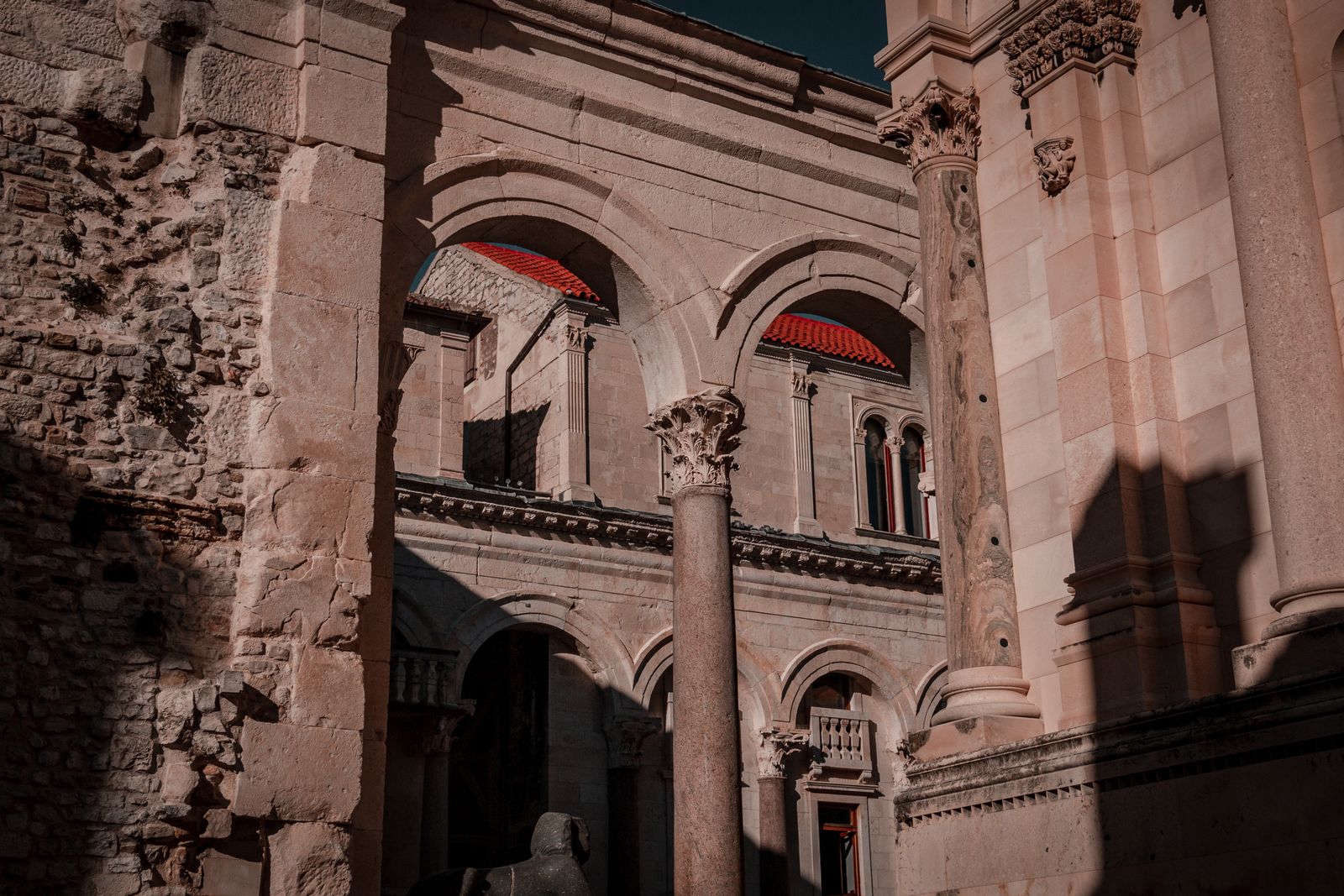
Diocletian built his palace as a retirement complex in 305 AD. He was the Roman Emperor who resolved a civil war, restructured the entire imperial administration, and then - uniquely in the history of the Roman Empire - voluntarily stepped down from power to grow cabbages in Dalmatia.
The palace he built for that retirement is not a ruin. It is a living city. Approximately 3,000 people currently live within the palace walls. Restaurants operate in spaces that were Roman granaries. Apartments occupy what was the imperial residential quarter. The Cathedral of Saint Domnius is built inside what was Diocletian's mausoleum - a theological irony that the Christians who converted it in the 7th century either found amusing or considered justice.
The walking tour at 17:00 moves through this compressed 1,700 years of continuous occupation: the Peristyle (the ceremonial courtyard, still functional as a public square), the Vestibulum (the domed entrance to the imperial apartments), the Grgur Ninski statue (whose left big toe has been polished to gold by the hands of everyone who has touched it hoping for luck since the sculpture was installed in 1929).
Eight Hours on the Adriatic. Three Islands. The Blue Lagoon Delivers.
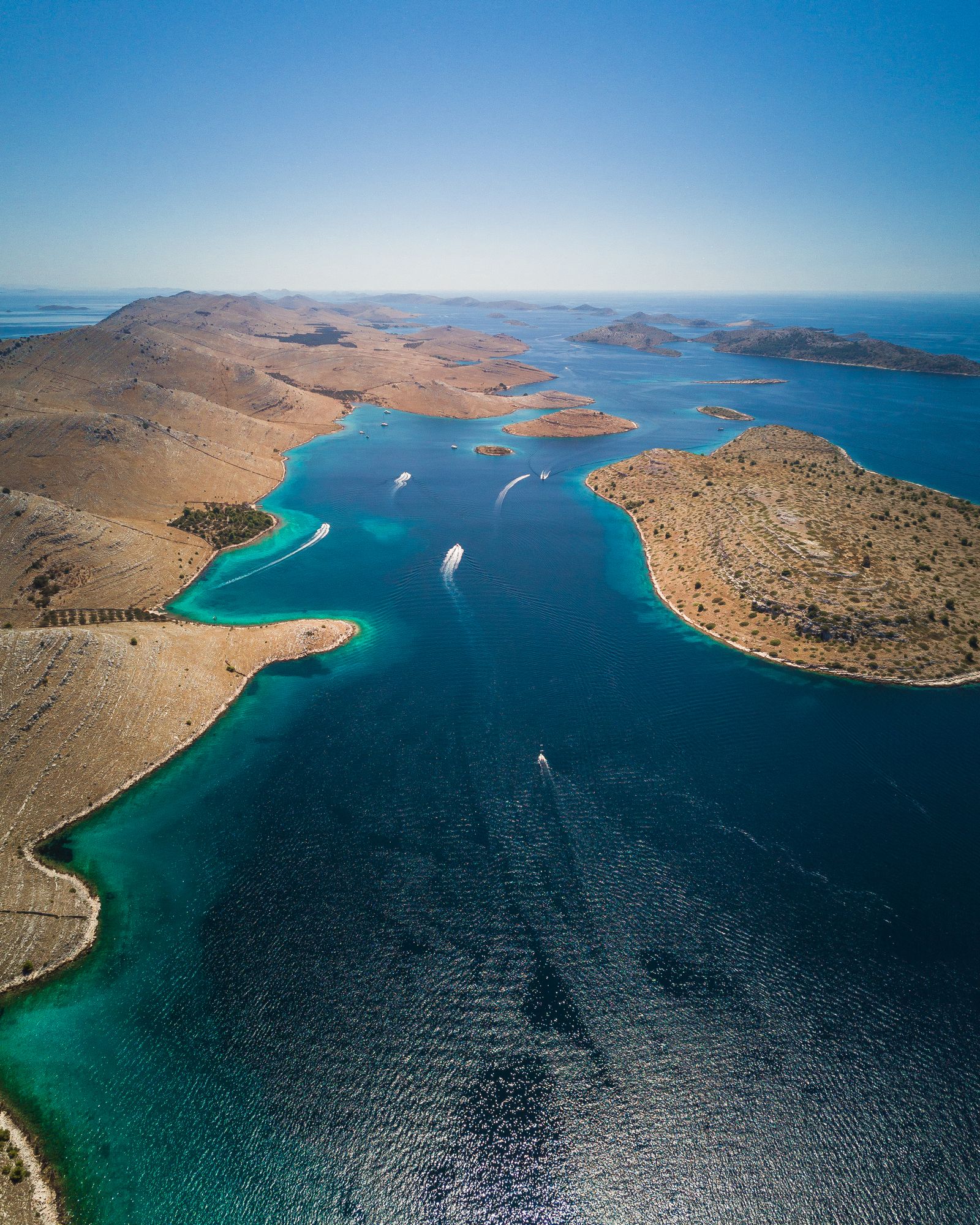
After two days of city history and stone streets, Day 4 does the opposite of everything that came before it.
The full-day cruise leaves Split at 09:00. It returns at 17:00. In between, the schedule operates as follows:
The Coast Ends. The Forest Begins. Neither Prepares You for the Other.
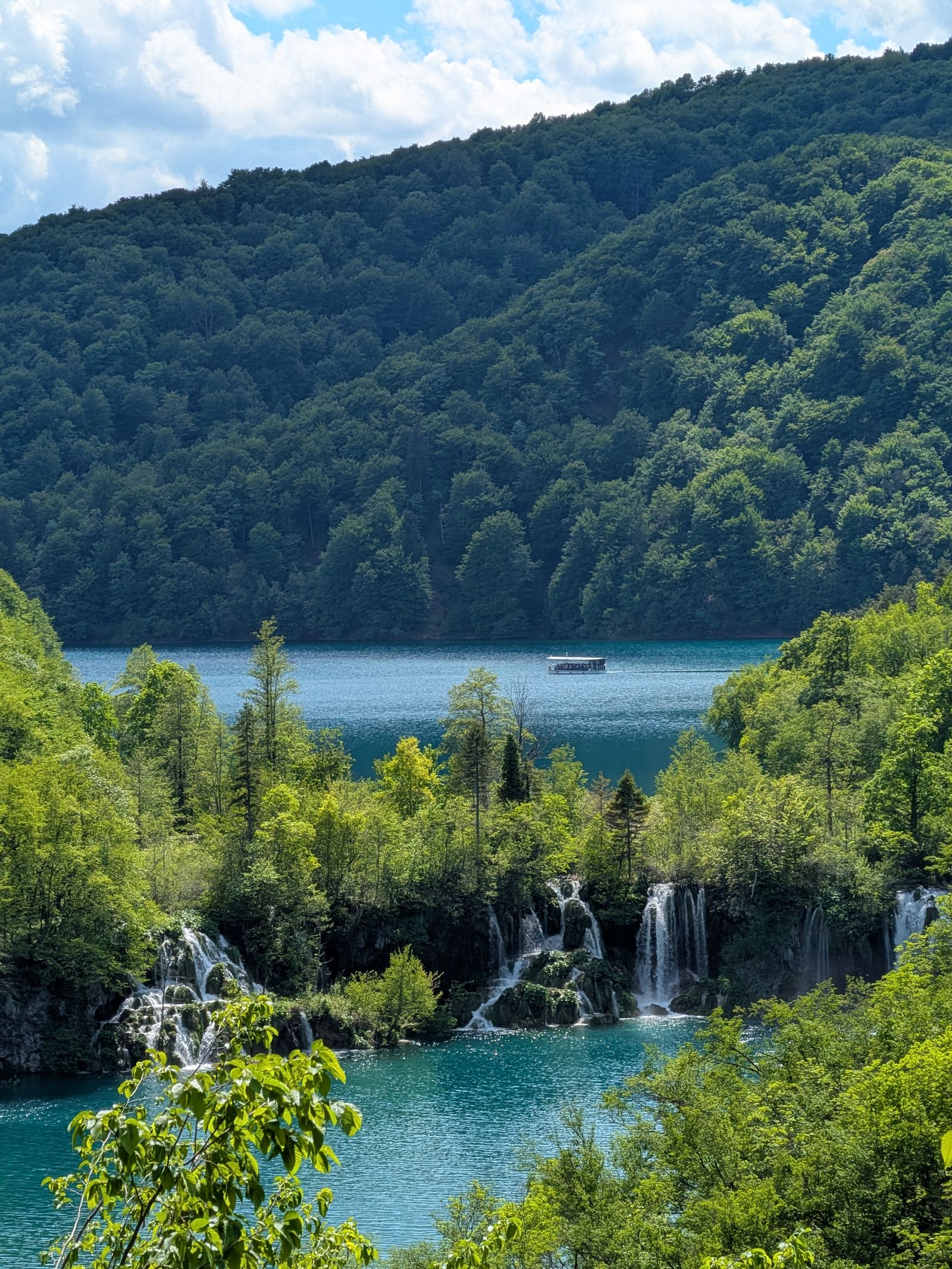
The transition from Split to Plitvice is the structural pivot of this itinerary.
For four days, the Adriatic has been the constant - walls above it, islands in it, a palace overlooking it, a boat cutting across it. The bus north leaves the coast and moves inland into a landscape that operates on entirely different logic: forest, limestone, water, and silence.
The guided tour at 13:00 navigates the system by combining walking trails (wooden boardwalks that run directly over the water), electric boat rides across the largest lakes, and a panoramic train that covers the distance between the upper and lower sections. The Great Waterfall - Veliki Slap, at 78 metres the tallest waterfall in Croatia - closes the lower lake section before the afternoon allows the park to breathe at its own pace.
The Upper Lakes. At Your Own Pace. Then Home.
The Upper Lakes of Plitvice operate on a different tempo than the guided tour that covered the lower section yesterday.
The guided tour delivers the framework - the geography, the cascade sequence, the sense of the system as a whole. The morning walk through the Upper Lakes delivers the detail. Smaller waterfalls. Narrower boardwalks. The specific quality of forest light at 08:00 when the mist is still sitting on the surface of the water and the day's visitor numbers have not yet arrived.
Buy the ticket at the entrance. Walk as much as the morning allows. The itinerary builds no further obligations into this time. That is a deliberate decision, not an oversight.
The afternoon transfer to the airport closes a trip that started with city walls above the Adriatic and ends with water falling through an ancient forest. Both are Croatia. Neither is sufficient to explain the other. That is precisely the point.