
There is a specific category of destination that resists being summarized.
China is the entire category.
The scale alone creates the problem. Beijing holds 3,000 years of imperial history in a city of 22 million people and expanding. Three hours south by bullet train, Zhangjiajie's sandstone columns rise through cloud cover in formations that inspired a science fiction film because reality was already too extreme for the imagination. The Yangtze River cruise passes through gorges that the ancient poets used as shorthand for the sublime. Shanghai closes the sequence as one of the world's most functional modern megacities - and then the lights come on at night and it becomes something else entirely.
A China travel guide that treats these locations as a list misses the point. This is not a list. It is a sequence - 15 days structured so that each city earns its position by making the next one land differently. The ancient and the modern. The natural and the engineered. The intimate and the monumental.
This Beijing to Shanghai itinerary connects China's most iconic destinations through a carefully planned route, linking imperial capitals, dramatic natural landscapes, legendary river journeys, and futuristic skylines into one continuous travel experience.
Whether you're exploring imperial capitals, dramatic mountain landscapes, or futuristic skylines, the right China tour package transforms these destinations into one seamless journey instead of disconnected stops.
This China tour package covers all of it. In the right order.
It is a destination that reveals itself across the sequence - and this itinerary is built to make every day of that sequence count.
Arrival. And the Temple That Made Emperors Answer to Heaven.
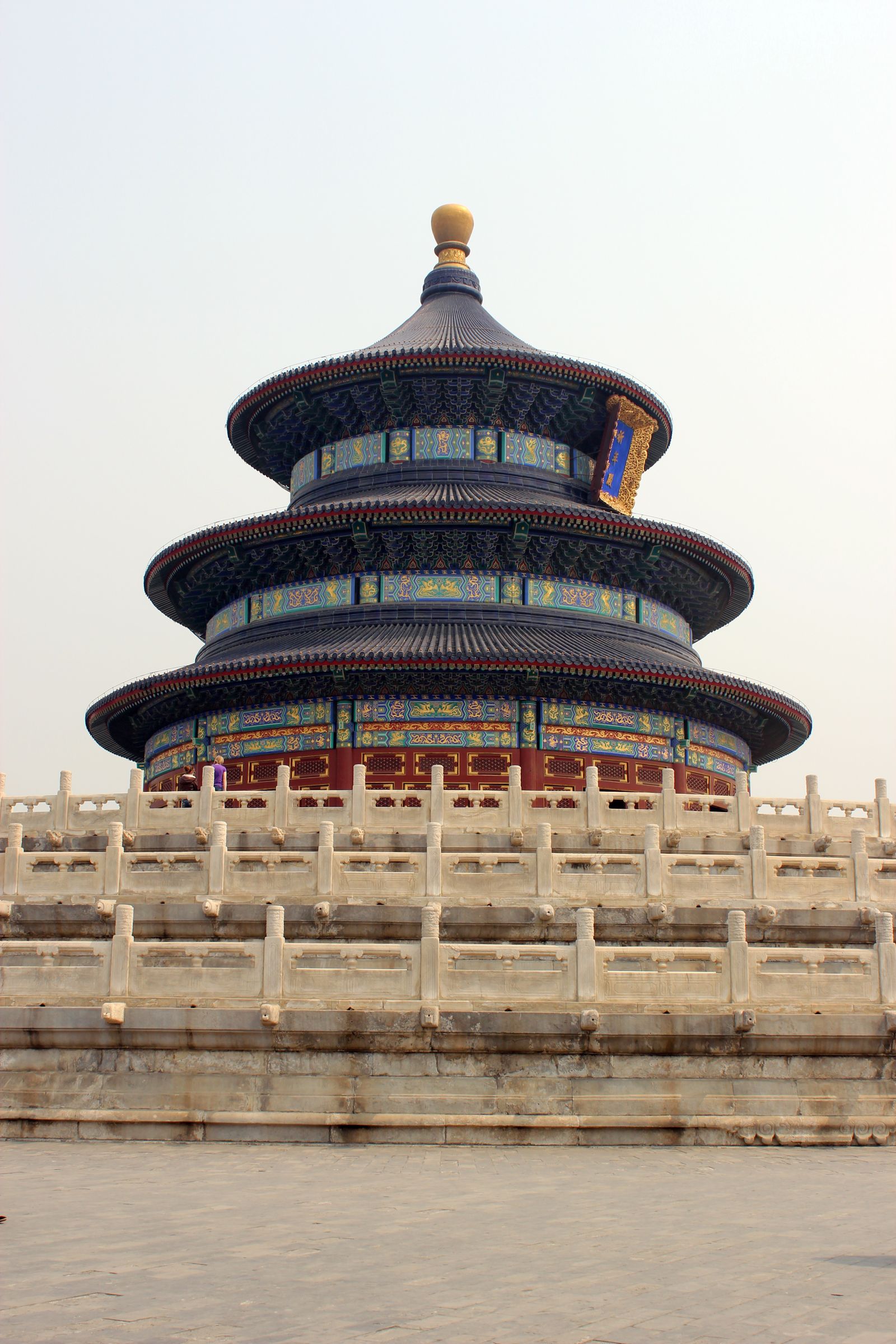
The Temple of Heaven was not built for tourists. It was built as a communication device between the Emperor and the cosmos - a place where the Son of Heaven came annually to pray for good harvests and confess the state of the empire. The architecture is calibrated to express the relationship between earth and sky: circular forms (heaven) set within square enclosures (earth), positioned on Beijing's southern axis with precision that the Ming dynasty did not leave to chance.
Landing at 07:15 and arriving at the temple the same evening is the correct instinct. Jet lag creates a specific kind of receptivity - the details land differently when the mind is not yet fully guarded. The Temple of Heaven, on the first evening of a 15-day China travel guide itinerary, earns that receptivity fully.
Private transfer to JW Marriott Central. Early check-in requested. Indian dinner, then rest.
Mutianyu. The Great Wall of China Tour That Deserves the Full Day.
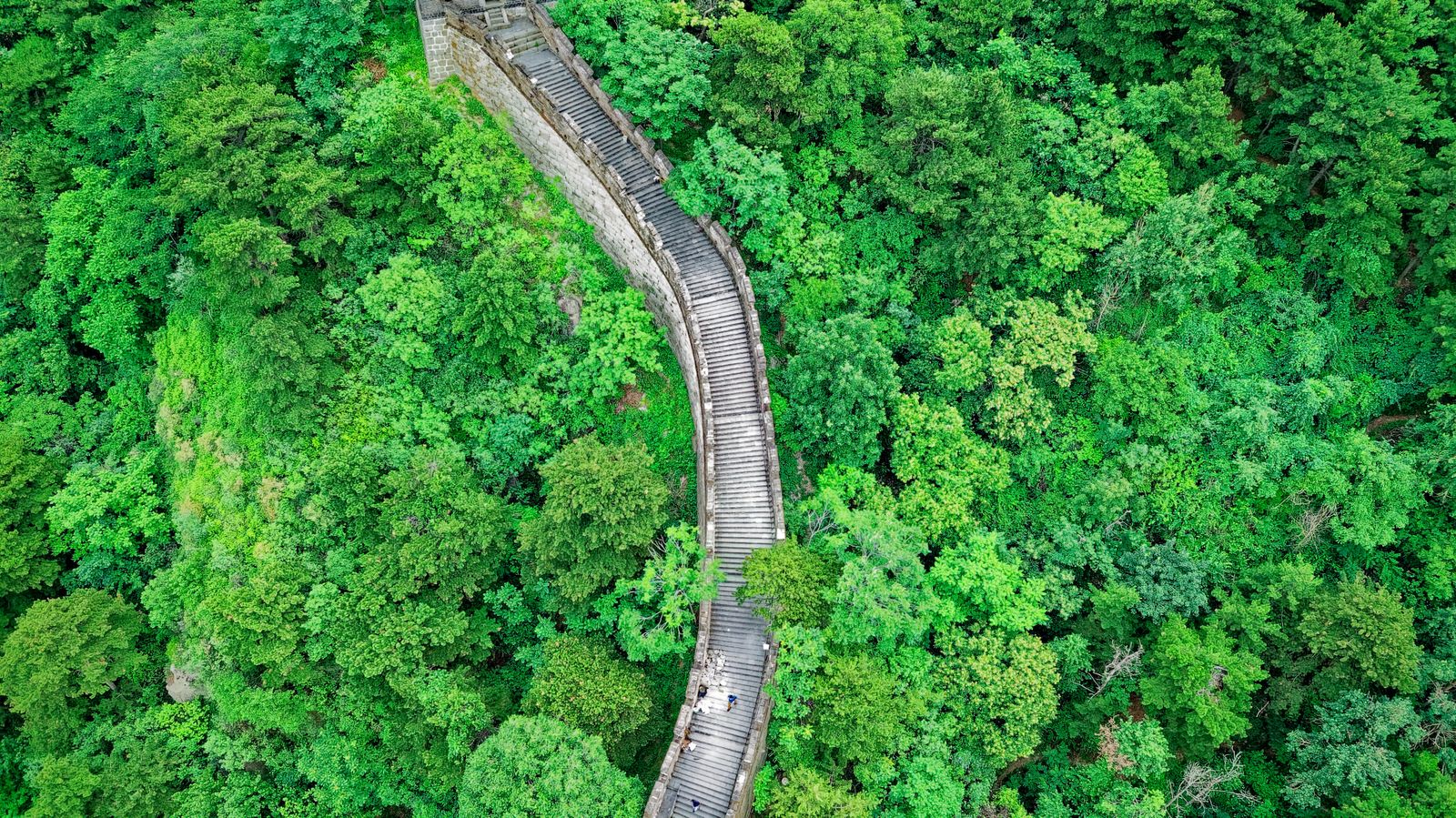
The question of which section of the Great Wall to visit is not trivial. The answer, for this itinerary, is Mutianyu - and the reason is structural rather than aesthetic.
Mutianyu sits 73 kilometres northeast of Beijing. The cable car removes the altitude problem. The crowds thin out compared to Badaling. The wall itself is in a condition that makes the scale legible - 21,196 kilometres of fortification built across 2,000 years, currently represented by a section of grey stone running across green mountain ridges in light that does not attempt to be modest about itself.
This is the Great Wall of China tour that delivers what the other sections promise. Walk as far as the body allows. Turn around and look at where the wall goes when it disappears over the ridge. The wall continues. You have a schedule.
The afternoon shifts to the Summer Palace - 290 hectares of imperial landscaping, Kunming Lake, and the Long Corridor running 728 metres along the water's edge, painted with 14,000 scenes from Chinese history. A different register entirely from the morning. Both necessary.
The Forbidden City in the Morning. Zhangjiajie by Nightfall.
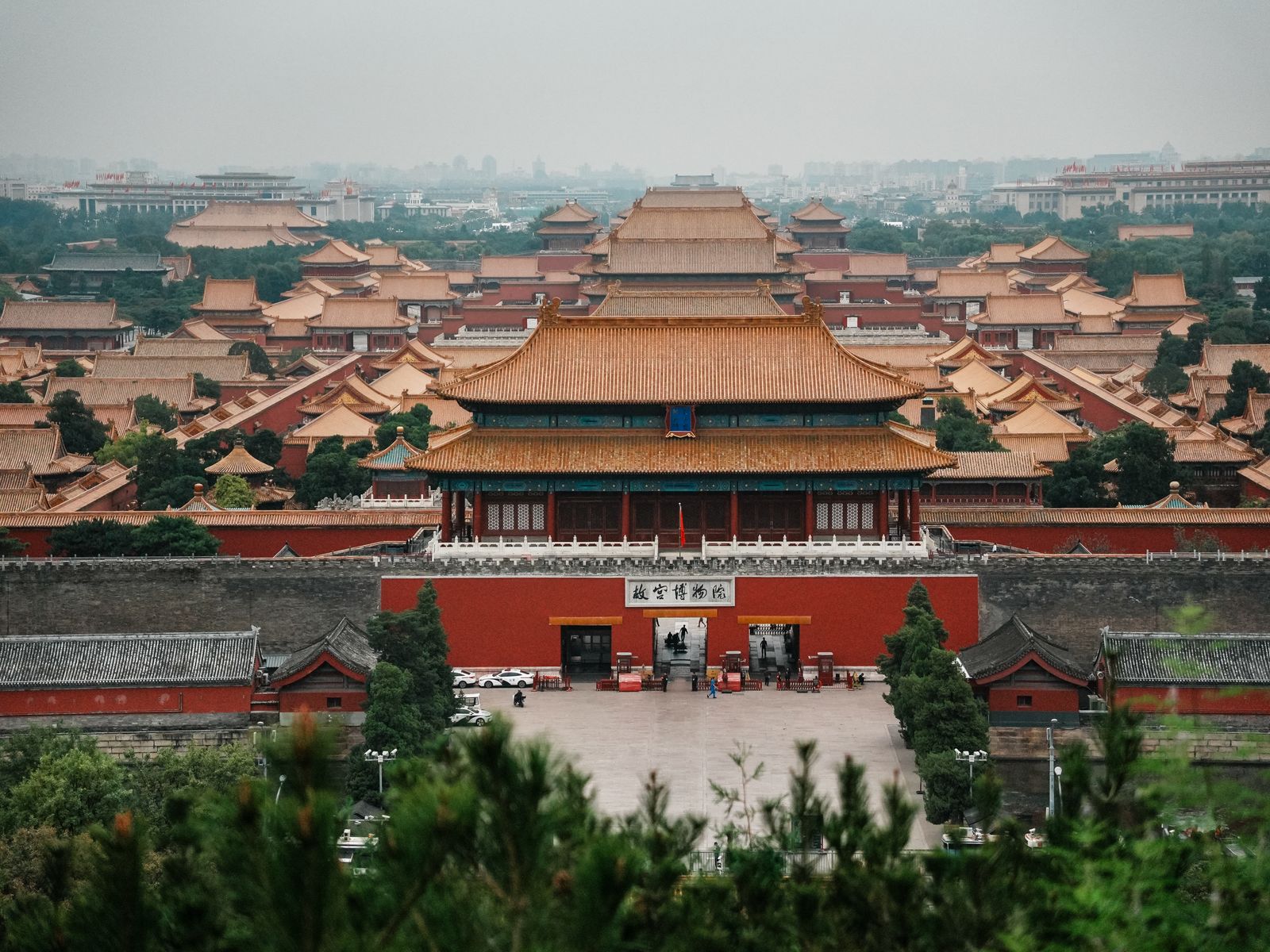
The Forbidden City contains 980 buildings across 72 hectares. Twenty-four emperors lived and governed here across five centuries. The name is literal - access to the general population was forbidden until 1925, when the Qing dynasty had been gone for thirteen years and the Palace Museum opened its gates to a country that had spent half a millennium being told the complex did not concern them.
A private guided tour of Tiananmen Square and the Forbidden City is the correct approach - not because the site is difficult to navigate, but because the layers of meaning within the architecture require context that the buildings themselves do not volunteer. The Hall of Supreme Harmony. The Palace of Heavenly Purity. The Imperial Garden. Each one earning its name in ways that become visible only when someone explains the cosmological framework that determined every design decision.
Zhangjiajie Tour: The Mountains That Made a Filmmaker Rethink What Was Possible.
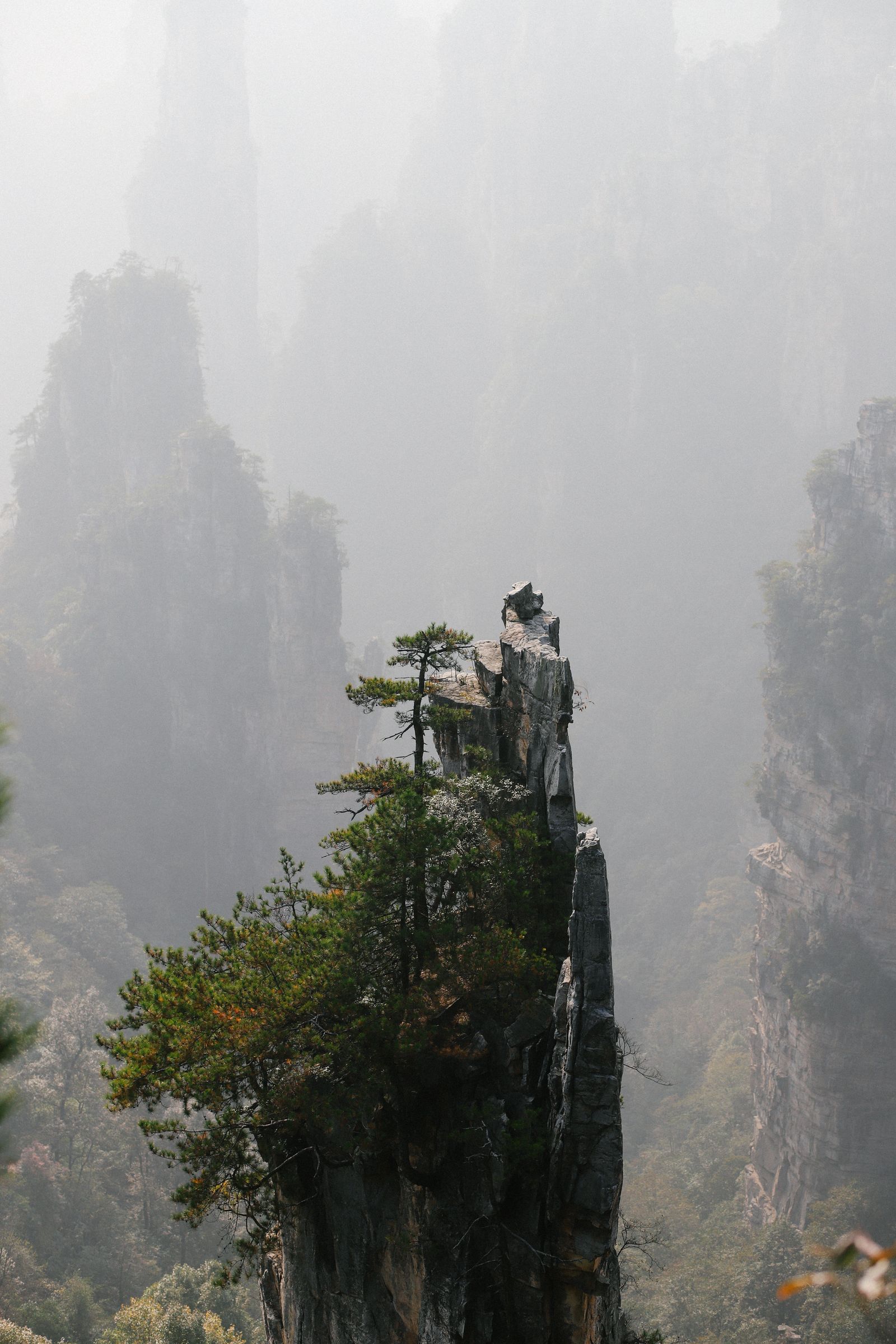
James Cameron scouted locations across the planet for Avatar. He chose Zhangjiajie's sandstone pillars as the visual reference for Pandora's Hallelujah Mountains - and then CGI-extended them because the reality was almost sufficient as it stood. Today, a Zhangjiajie tour Avatar mountains experience allows visitors to stand before the same breathtaking landscape that inspired one of cinema's most iconic worlds.
The Zhangjiajie tour into the National Forest Park places you inside that reality. The cable car to Tianzi Mountain ascends through cloud cover that operates independently of the weather below - arriving at the summit can mean either panoramic clarity across 3,000 square kilometres of peaks, or a white-out of mist that makes the pillars visible only as silhouettes. Both versions are worth the ascent. The silhouette version is the one the photographs cannot replicate.
The shuttle bus to the Hallelujah Mountains section follows. Standing at the edge of the viewing platform and looking across at columns of rock that have been growing at approximately 0.05 millimetres per year for 380 million years produces a specific recalibration of the traveler's sense of scale that Beijing's imperial history, for all its weight, cannot quite match. This Zhangjiajie tour Avatar mountains viewpoint is the defining moment of the park, where fiction and geology meet in unforgettable fashion.
This is where the China tour package earns its geographic range. The wall and the palace are human achievements. This is the planet's achievement. Both are necessary to understand what China actually is.
300 Metres of Glass Floor. Then a Lake That Earns the Afternoon.
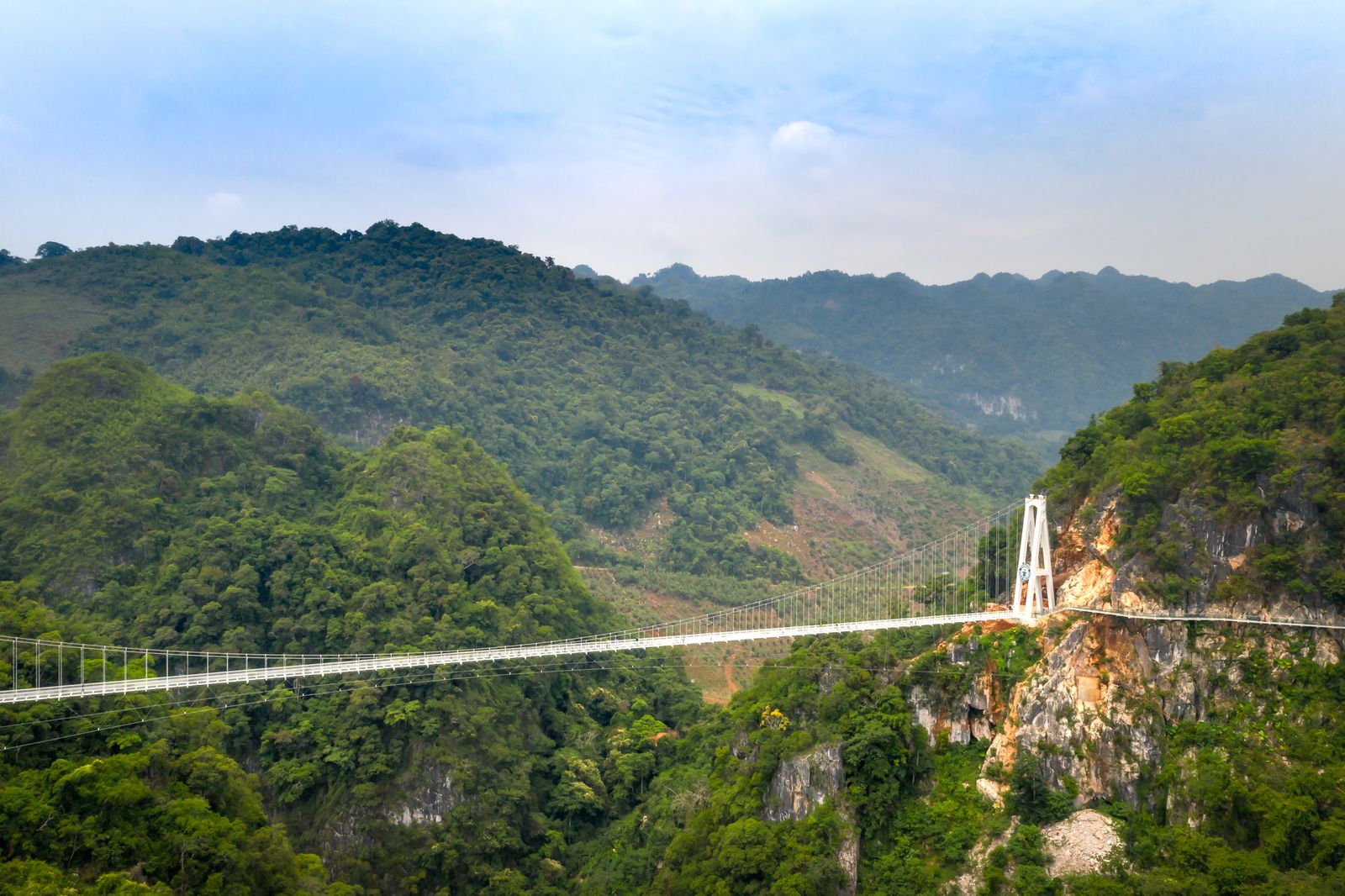
The Zhangjiajie Grand Canyon Glass Bridge is 430 metres long. The floor is transparent. The canyon below is 300 metres down.
The architects designed it to feel exactly as exposed as it is - the glass panels are structurally engineered to hold 800 people simultaneously, but the experience of standing on them communicates nothing of that reassurance. Your feet see the canyon. Your brain files an immediate objection. The engineering holds.
Walking across it at 09:00, before the crowd density reduces the exposure to something manageable, is the correct approach. By 11:00, the bridge fills. By 09:00, it is still the kind of empty that allows the vertigo to fully complete itself.
Baofeng Lake follows in the early afternoon - a boat ride on water enclosed by green cliffs, with folk music drifting from the opposite shore. It is quieter than the morning. That is the structural function it serves: the bridge provides the adrenaline, the lake provides the landing.
The Train South. Guilin's Underground World. Yangshuo by Nightfall.
The transition from Zhangjiajie to Guilin requires a train and a shift in register that is as significant as the geography.
Zhangjiajie is vertical - everything operates on altitude, on the relationship between base and summit, on what the mountains do to the sky. Guilin operates horizontally - the karst peaks here are lower, closer together, reflected in the Li River, and arranged in the kind of landscape that the Song dynasty painters used as proof that nature was making aesthetic decisions.
Porter service available at departure station: USD 2–3/bag
Reed Flute Cave in the afternoon: 240 metres of limestone cavern illuminated by coloured lights that operate on the logic that the formations - stalactites, stalagmites, columns - are sufficiently dramatic to deserve theatrical presentation. The cave has been visited continuously for 1,200 years, since Tang dynasty inscriptions on the walls record it. The lights are newer.
Transfer to Yangshuo. Indian dinner. Check in at Zen Garden Resort - positioned inside the karst landscape that the next two days will explore in full.
Ruyi Peak. Glass Skywalks, Love Ring Bridge, and the Karst From Above.
Ruyi Peak is Yangshuo's high point - literally and experientially.
The cable car ascends through the same karst scenery that defines the valley floor, but the perspective at the summit reverses the logic: instead of looking up at the peaks, you look across them, at a landscape that the Li River winds through in a pattern that makes sense only from height. The Song dynasty painters had it right - this is a landscape that requires the overview to become fully legible.
What Ruyi Peak Contains:
Cable car ascent · Glass-bottom skywalk over the karst valley · Love Ring Bridge - a suspension crossing that operates as both engineering and theatre · Mountain sculptures carved directly into the limestone faces · The afternoon, unscheduled, for Yangshuo town and the West Street that has been trading since the Tang dynasty.
Bamboo Raft. Yulong River. Then the Li River Performs at Night.
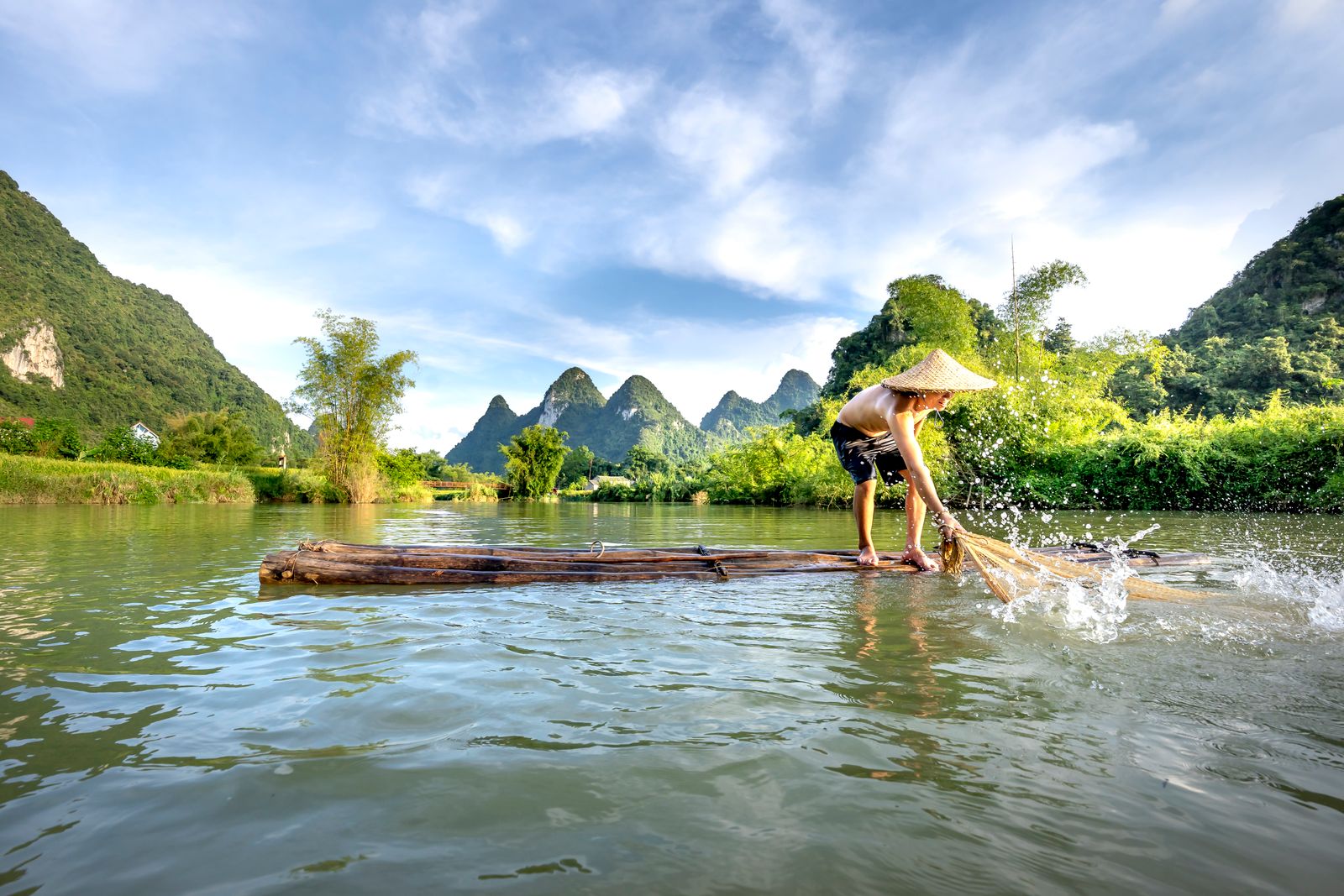
The Yulong River bamboo raft operates on a different principle than every other experience in this itinerary.
Everything else involves arrival, orientation, and deliberate movement through a site. The bamboo raft requires none of this. You sit. The raft-poler stands at the stern and navigates the current. The karst peaks drift past at walking pace. The water is shallow enough that the bottom is visible. The mist, if the morning is sufficiently humid, stays low across the river until 10:00.
The 40-minute crossing is the correct length. Long enough to settle. Short enough that the end arrives before it resolves into comfort.
The evening belongs to the Impression Sanjie Liu Light Show - Zhang Yimou's outdoor spectacle performed on the Li River itself, using the karst peaks as its backdrop and the water as its stage. 600 local performers. VIP B2 seats. Music, light, and choreography at a scale that makes the distinction between performance and landscape genuinely difficult to locate.
Chongqing. The Mountain City. Built on Rivers and Fog and Complete Self-Confidence.
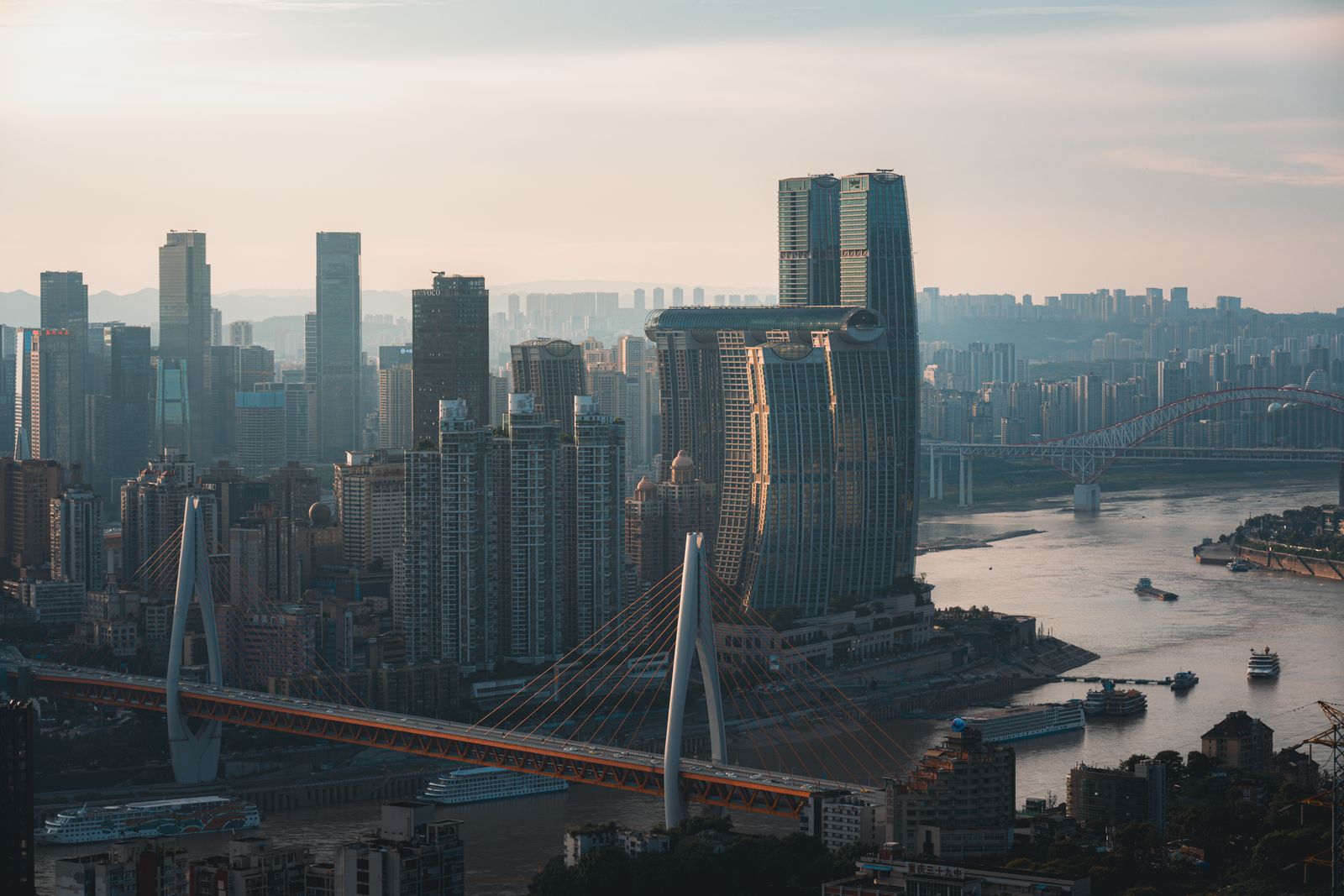
Chongqing is the largest municipality in China by population - 32 million people living across mountain ridges at the confluence of the Yangtze and Jialing rivers. The monorail passes through the middle of a residential building. The geography forced vertical solutions that the rest of China's flat-land cities never needed.
The city has its own register entirely - warmer than Beijing, spicier than anywhere, louder in the evenings, and lit in a way that the Hongya Dong riverside district makes fully explicit. The stilt houses - traditional wooden buildings on piles driven into the riverbank - have been converted into restaurant floors and walkways that extend five storeys above the water, each level progressively more illuminated until the reflection in the Jialing River becomes the main event.
Porter service at departure: USD 2–3/bag
Indian dinner. Overnight at Hyatt Regency Chongqing. Tomorrow the cruise begins.
Ancient Lanes in the Morning. The Yangtze River Cruise Boards at 16:30.
The morning earns the afternoon's embarkation.
Morning: Three Chongqing Sites That Don't Appear on Standard Itineraries
Ci Qi Kou Ancient Town - a Ming-Qing era riverside settlement where the cobbled lanes have been functioning as a commercial district for 1,700 years, currently selling tea, ceramics, and street food to people who use the same lanes the merchant class used in the Song dynasty. Mountain City Alley - a vertical urban environment where stairways serve as streets and the architecture operates on gradients that would make European city planners file formal complaints. Zhazi Dong Prison - a WWII-era detention facility where the history of the resistance to Japanese occupation is documented in the physical space where it happened.
The Yangtze River cruise covers the Three Gorges over 3 nights - the most dramatic section of a river that runs 6,300 kilometres from the Tibetan plateau to the East China Sea.
Fengdu Ghost City. The Yangtze's Mythology Made Architectural.
Optional Tai Chi on the sundeck at sunrise - the Yangtze at dawn, before the gorges begin, offers a specific quality of stillness that the rest of the day will not repeat.
Fengdu Ghost City is built into the face of Ming Mountain on the river's north bank. The temples and sculptures here represent the Chinese conception of the afterlife - not as abstraction, but as architecture. Eighteen layers of hell. The judges of the dead. The bridge that the virtuous cross safely and the guilty fall from into the river below. The complex has been under continuous development for 1,800 years, which means that every dynasty that believed in it added to it, and the result is a theology rendered in stone, tile, and paint at a scale that requires most of a day to fully navigate.
Optional evening: War Fire of Three Kingdoms show onboard.
Qutang Gorge. Wu Gorge. The Poets Were Not Exaggerating.
The Tang dynasty poets wrote about the Three Gorges the way people write about experiences they cannot believe they are having.
Li Bai described leaving the gorges as if the mountains were moving. Du Fu, stranded here by illness at the end of his life, wrote about the gorges with the particular clarity of someone who understood he might not leave them. The rivers of Chinese poetry run through this 204-kilometre section of the Yangtze the way the river itself runs through the gorges - confined, pressurized, and producing something that would not exist without the constraint.
Qutang Gorge is the shortest and most dramatic. Eight kilometres of vertical cliff walls rising 1,200 metres above the water - the narrowest point at the Kui Gate is barely 100 metres wide. Wu Gorge follows: 45 kilometres of mist-shrouded forest and the Twelve Peaks of Wushan rising above both banks. The commentary from the deck explains the geological history. The view does not need the explanation.
Shennv Stream: a small boat excursion into the tributary gorges where the calm is absolute and the hanging coffins of the ancient Ba people, wedged into cliff faces 30 metres above the water, demonstrate that every civilization eventually develops an approach to mortality that the next civilization finds inexplicable.
The Three Gorges Dam. Then the World's Fastest Scheduled Train Takes You to Shanghai.
The Three Gorges Dam is the largest hydroelectric project in human history: 2,335 metres wide, 185 metres high, generating 22,500 megawatts of electricity across 32 turbines. The scale is not readable in photographs. Standing in front of it, the wall of concrete takes up the entire visual field in a way that makes the surrounding landscape disappear.
The Ship Elevator is optional - a vertical transport that carries river vessels up and down the 40-metre height difference of the dam in a process that the engineers described as technically straightforward and that looks, from the observation deck, like something that should not be possible.
Porter at Yichang station: USD 2–3/bag · Luggage arrives by van
The Huangpu River cruise in the evening places the Pudong skyline in a frame that confirms Shanghai's basic argument about itself: that modernity, when pursued without reservation, produces a visual statement that 5,000 years of Chinese civilization did not see coming and has absorbed without losing composure.
Overnight at Mandarin Oriental Pudong - the correct hotel for a city that takes the question of where you stay as seriously as the question of what you do.
Zhouzhuang. The Water Town That Predates Shanghai by 900 Years.
Shanghai is 200 years old, architecturally speaking - the colonial-era Bund dates from the 1840s, the Pudong skyline from the 1990s. Zhouzhuang is 900 years older than the oldest building in Shanghai.
The day excursion drives one hour west to a canal town that has been continuously inhabited since the Northern Song dynasty. The canals are the streets. The stone bridges - eleven of them, several dating from the Yuan dynasty - are the intersections. The houses along the water have been repainted, restored, and photographed by everyone who has visited since the artist Chen Yifei put the town on a canvas in 1984 and sold it to Armand Hammer, but the water underneath the bridges is the same water that has been running through this town since the 12th century.
The Evening Lantern Boat Ride closes the day - paper lanterns on the canal, the reflection doubling the light, the old town operating in a register that daylight makes legible but evening makes genuinely beautiful.
Shanghai Tower at Dawn. Then the Maglev Takes You Back to the World.
The Shanghai Tower is 632 metres tall - the second tallest building in the world, and the one with the most considered relationship between its own height and the city below it. The observation deck at the 118th floor places the Huangpu River, Pudong, and the entire Bund in a single frame that resolves the spatial logic of Shanghai in a way that two days at street level cannot.
The afternoon moves through the layers of Shanghai that the tower's overview makes navigable: Yu Garden - the only surviving classical Chinese garden inside central Shanghai, built in 1559, surrounded by the Old City commercial district that has been selling the same categories of goods since the Ming dynasty. Jade Buddha Temple. Xin Tian Di - the restored Shikumen (stone-gate) neighborhood that the 1990s development wave almost eliminated and then decided to preserve as an upscale commercial district instead. Nanjing Road for the final afternoon of shopping.
The ERA Acrobatics Show in the evening is the correct closing performance for a trip that has spent 15 days demonstrating what human effort applied at sufficient scale and precision can produce. Section A seats. The acrobatics are extraordinary. The Chinese context makes them make sense.