
Every Japan itinerary you have read follows the same spine: bullet train from Tokyo to Kyoto, day trip to Nara, finish in Osaka. It works. It is also the reason every traveler comes home with the same photographs. This 14-day Japan road trip itinerary takes the other route - the one with a steering wheel.
Rent cars, and drive. Not because driving is faster - it isn't - but because the Japan between the cities is the Japan the bullet train was specifically engineered to skip. The Kiso Valley. Edo-era post towns. A highland plateau that looks borrowed from Switzerland. A UNESCO village of thatched farmhouses folded into the mountains.
The route runs Tokyo → Kiso Valley → Takayama → Kyoto → Hakone, which means the classic Tokyo to Kyoto journey happens overland, through the Japanese Alps, across two of the best self-drive Japan days you can put on a licence.
It was built for a large family group - grandparents to ten-year-olds - so every day balances the anime arcades against the onsen evenings, and the theme parks against the temples. If you are planning a family trip to Japan, the pacing here is the point.
Fourteen days. Five bases. One country, seen from the road.
This itinerary slows it down to walking pace exactly where it matters.
Land, Drop the Bags, and Let Nakano Broadway Make the First Impression.
Arrival days are usually written off. This one isn't. Land at Narita, clear immigration, collect the rental cars, and make the drive into Nakano - a west-Tokyo neighborhood that most itineraries never mention, which is precisely why it works as a base. The apartment-style rooms at Grandioso Nakano Fujimicho swallow a large group without the corridor-hotel feeling, and the neighborhood underneath it is the real Tokyo that Shinjuku's hotel towers only overlook.
The evening has exactly three assignments. First, Nakano Broadway - a four-storey covered arcade of anime cells, vintage toys, manga and collectibles that functions as a decompression chamber between the flight and the country. Kids surface hours later, changed. Second, dinner at a local izakaya, where the first meal in Japan sets the tone for thirteen more. Third, the convenience store ritual: snacks, water, and transit cards, performed at a 7-Eleven under fluorescent light. Every first-timer remembers it.
Then sleep. Tokyo begins properly tomorrow.
Shinjuku From Above, Shibuya at Street Level, teamLab After Dark.
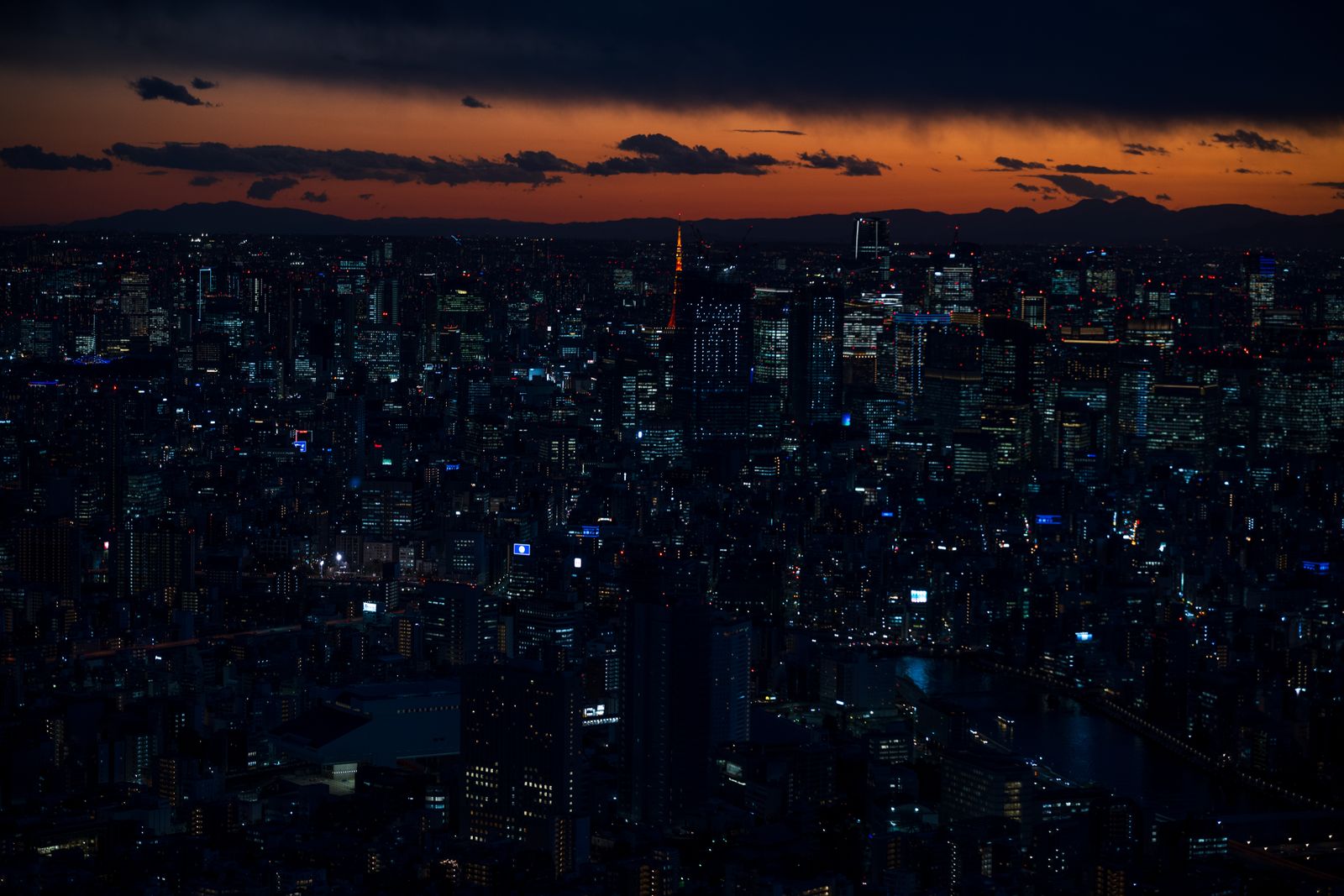
Day two is a vertical slice of the best things to do in Tokyo, sequenced by altitude. It starts high: the free observatory at the Tokyo Metropolitan Government Building in Shinjuku, where the city rolls out to the horizon in every direction and, on a clear morning, Mt Fuji floats behind it - a preview of where this itinerary ends. Most paid observation decks in Tokyo charge heavily for a lesser view.
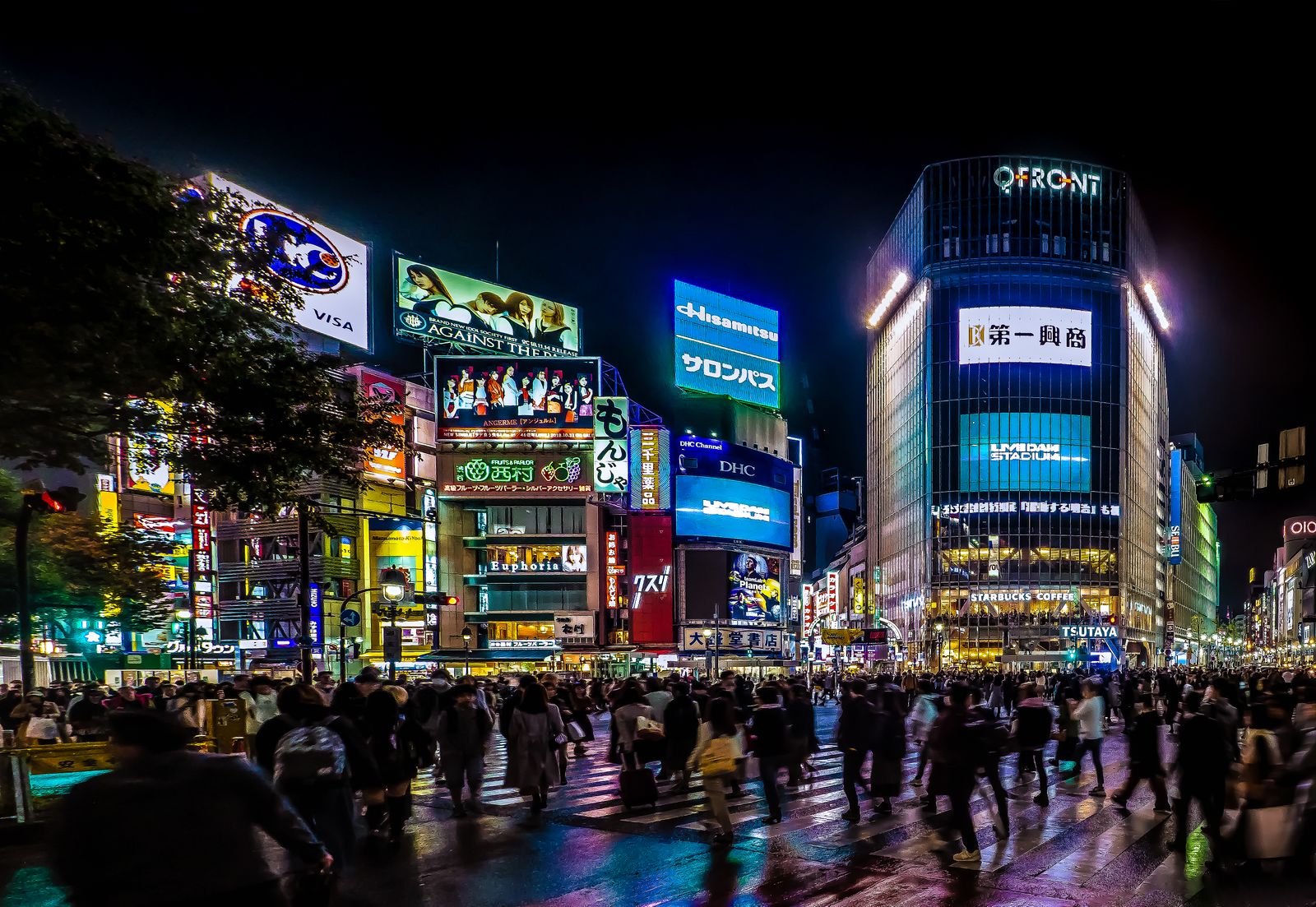
Then it drops to street level and goes sideways: Shimokitazawa, the vintage-clothing and vinyl-record quarter that Tokyo's own residents rank as the city's coolest neighborhood. Lunch happens here, between thrift racks. From there, the train to Shibuya - the Scramble Crossing, the Hachiko statue, MAG's Park rooftop for the aerial view of the crossing you just survived, and the retail gauntlet of Don Quijote and Uniqlo.
As the neon switches on, walk Omoide Yokocho - "Memory Lane" - a lantern-lit alley of six-seat izakayas grilling skewers a metre from your face. Dinner here is atmosphere first, menu second.
The day ends somewhere that does not feel like Earth: teamLab Planets in Toyosu, the barefoot, waist-deep-in-water digital art museum that has become Tokyo's single most reserved ticket. Give it the full evening slot it deserves - walking through it quickly is like fast-forwarding a film.
Harajuku, an Otter Café, and the Best Railway Museum in Japan.
If you are doing Japan with kids, this is the day the trip pays for itself. It opens in Harajuku on Takeshita Street - crepes, character stores, and fashion that operates under its own physics - followed by a booked session at an otter café, which is exactly what it sounds like and twice as popular. Arrive a few minutes early; the otters do not hold reservations open.
Mid-morning brings one of Tokyo's strangest and best experiences: a miniature figurine studio where you can be 3D-scanned and turned into a pocket-sized version of yourself. Allow real time for the scanning process - every generation of the group ends up doing it.
The afternoon belongs to the Railway Museum in Saitama, a cathedral of full-size locomotives, shinkansen cabs and driving simulators where children operate trains and adults quietly queue behind them. It closes earlier than you expect, so it gets the whole afternoon block, not a squeezed hour.
The evening slows down deliberately: Yanaka Ginza, the old-Tokyo shopping street where cats outnumber tourists and dinner is ramen or curry rice at local prices. Then one last stop on the way home - the giant 3D calico cat billboard in Shinjuku, which only makes sense after dark and still doesn't, quite.
Akihabara Arcades to Harry Potter Studios - Tokyo's Last Full Day.
Tokyo's farewell day starts in Akihabara, the electric town - retro arcades, gachapon capsule machines by the hundred, anime stores stacked six floors high, and a lunch of gyukatsu (deep-fried beef cutlet you finish grilling yourself at the table) that teenagers describe in religious terms.
The centrepiece of the day is the Warner Bros. Studio Tour Tokyo - the Making of Harry Potter, the largest indoor Potter attraction in the world. It needs a genuine three-plus hours: the Great Hall, the moving staircase, Diagon Alley, butterbeer. For any group containing a Potter reader, it is unmissable; for everyone else, it is merely astonishing.
The evening closes Tokyo in style: Ginza, the city's flagship shopping district, for the twelve-storey Uniqlo flagship and Onitsuka Tiger, then back to Nakano for one last pass through Broadway - this time for the vintage watch dealers, a collector's secret hiding above the anime floors - and a final neighborhood dinner. Four days, and Tokyo has shown you four different cities.
Leaving Tokyo: The Day the Japan Road Trip Actually Begins.
This is the day that justifies the rental cars. Leave Tokyo early on the expressway, and exit it at Kofu - because from Kofu onward, the road itself is the itinerary. A coffee stop among the vineyards. Lake Suwa, ringed by mountains and almost entirely ignored by foreign tourists. Then the Kiso Valley, where the road narrows, the cedar forest closes in, and lunch is the region's famous handmade soba with mountain vegetables and river fish.
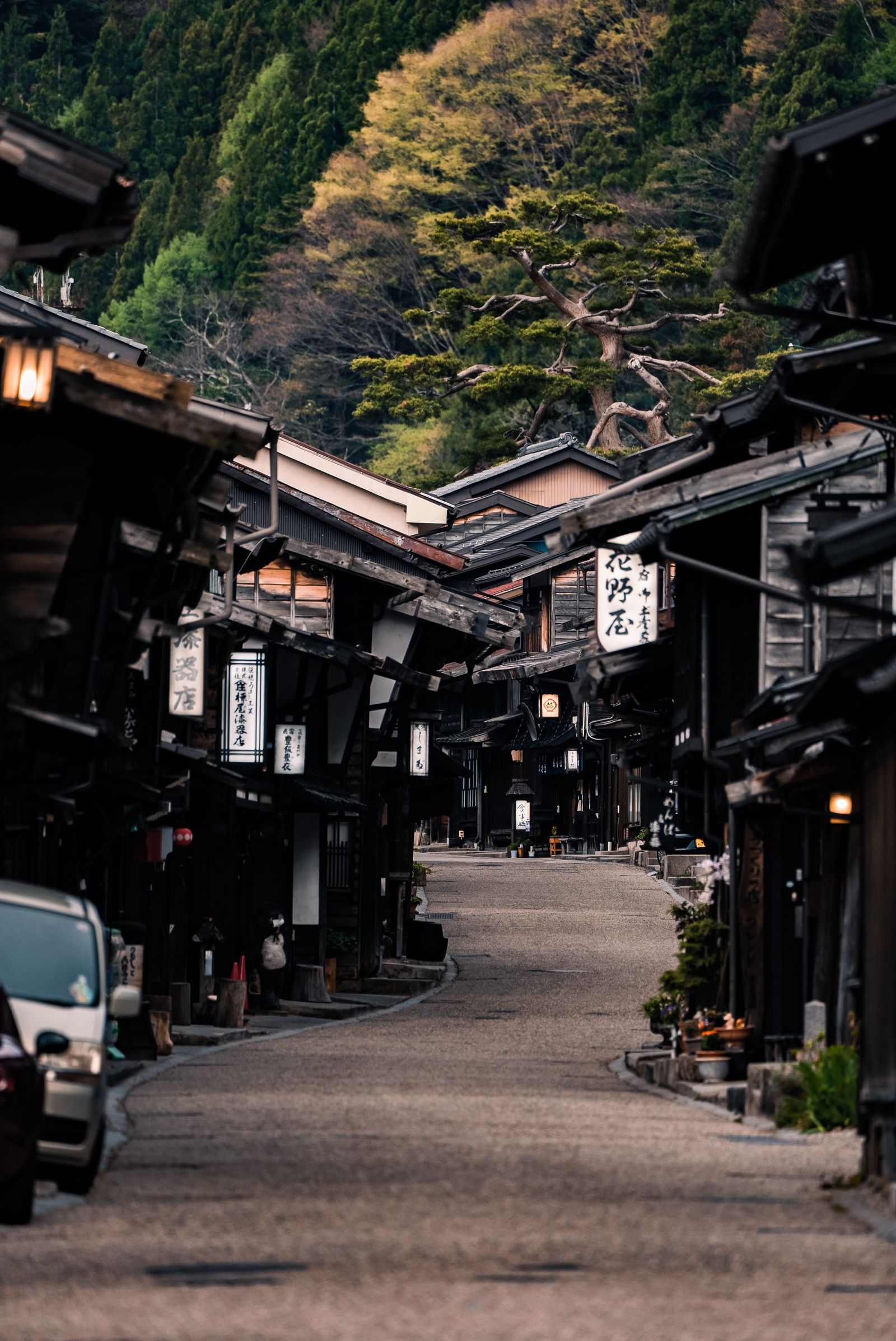
The afternoon delivers the day's centrepiece: Narai-juku, a preserved Edo-period post town of dark timber inns and lattice windows, stretched along a single kilometre of the old Nakasendo highway. It is quieter and less commercial than its famous neighbours, which is exactly its value. A short drive later, a preview walk through Magome village sets up tomorrow.
The night is the reward: a Japanese-style room at Hotel Hanasarasa in Nakatsugawa, an onsen soak, and dinner - the full ritual of rural Japan, twelve hours after leaving the world's largest city. No Japan road trip earns its name faster than this stretch.
Walk the Nakasendo Trail: Magome to Tsumago, Then Takayama by Night.
For four centuries, the Nakasendo was the inland highway between Edo and Kyoto, walked by samurai, merchants and pilgrims. The best-preserved stretch of it - Magome to Tsumago, about eight kilometres through forest, past waterfalls and farmhouses and two intact post towns - is today one of the great half-day walks in Asia, and it anchors this itinerary's finest day.
The strategy matters: park at Magome, walk downhill to Tsumago, and return by taxi or local bus rather than climbing back. Done this way, the trail is comfortably managed by every generation of a family group, and the walk arrives in Tsumago - where power lines are buried and shops hide their vending machines - feeling like a two-hour time slip.
The drive north through the Kiso Valley after lunch resists the expressway on purpose. It passes Kaida Kogen, a highland plateau under Mt Ontake that looks implausibly like Switzerland and appears in almost no English-language guidebook - stop for photographs and the local ice cream, both mandatory.
The evening lands in Takayama, the little mountain city whose old town, Sanmachi Suji, turns magical after sunset: dark timber merchant houses, paper lanterns, and three sake breweries - Funasaka, Harada, Hirase - within a five-minute walk of each other. Dinner is Hida beef sushi and skewers, eaten standing, followed by mitarashi dango from a street window.
Shirakawa-go: The UNESCO Village That Looks Invented.
The day begins the way every Takayama morning should: at the Miyagawa riverside market, grazing on Hida beef skewers, fresh rice crackers, Japanese pudding and local coffee while the old town is still quiet. Breakfast as a walking event.
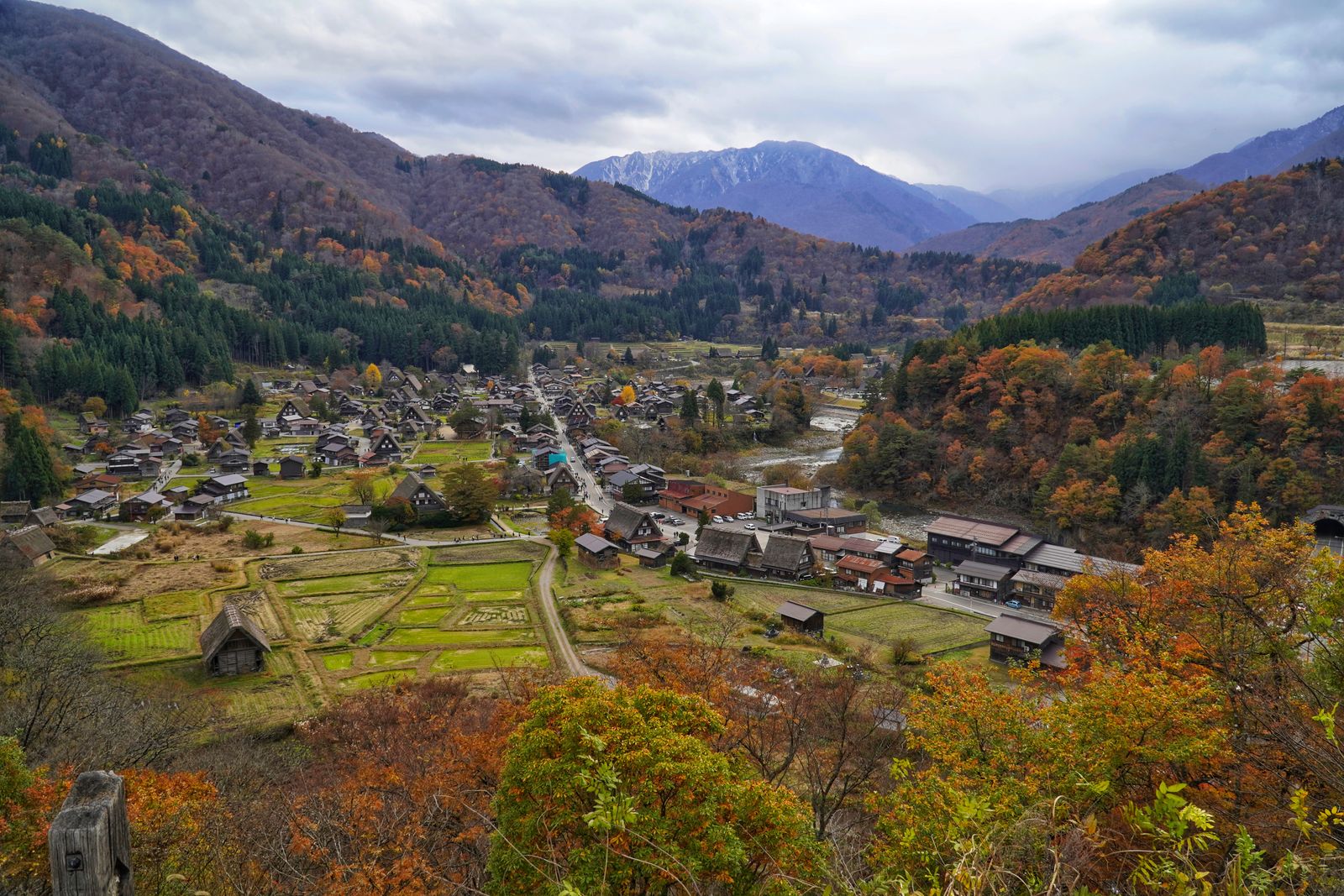
Then the mountain drive to Shirakawa-go, the UNESCO World Heritage village of gassho-zukuri farmhouses - steep thatched roofs built like hands in prayer, engineered centuries ago for snowfall that arrives by the metre. A guided tour of the village explains what the postcard can't: how the roofs are rethatched by communal labour, why the houses face the same direction, what the attics were for (silkworms).
Lunch is the meal of the entire trip: an irori farmhouse restaurant, where hoba miso, Hida beef and mountain vegetables are cooked over a sunken open hearth in a building older than most countries' constitutions. Afterwards, walk up to the Shiroyama Viewpoint for the whole-village panorama, then find Myozenji temple - the quietest, most photogenic corner of a village that has few bad angles.
The return drive to Takayama lands at golden hour, and the evening repeats the only itinerary Takayama needs: sake, Hida beef, lantern light. Deliberately unplanned.
La Collina, a Thousand Sacred Deer, and a Secret Cable Car Into Kyoto.
The overland route from Tokyo to Kyoto closes today, and it refuses to go quietly. First stop after the mountain expressway: La Collina in Omihachiman, a confectionery headquarters designed like a Studio Ghibli frame - a grass-roofed hall in the rice fields selling Baumkuchen cake and custard desserts that justify the detour on their own.
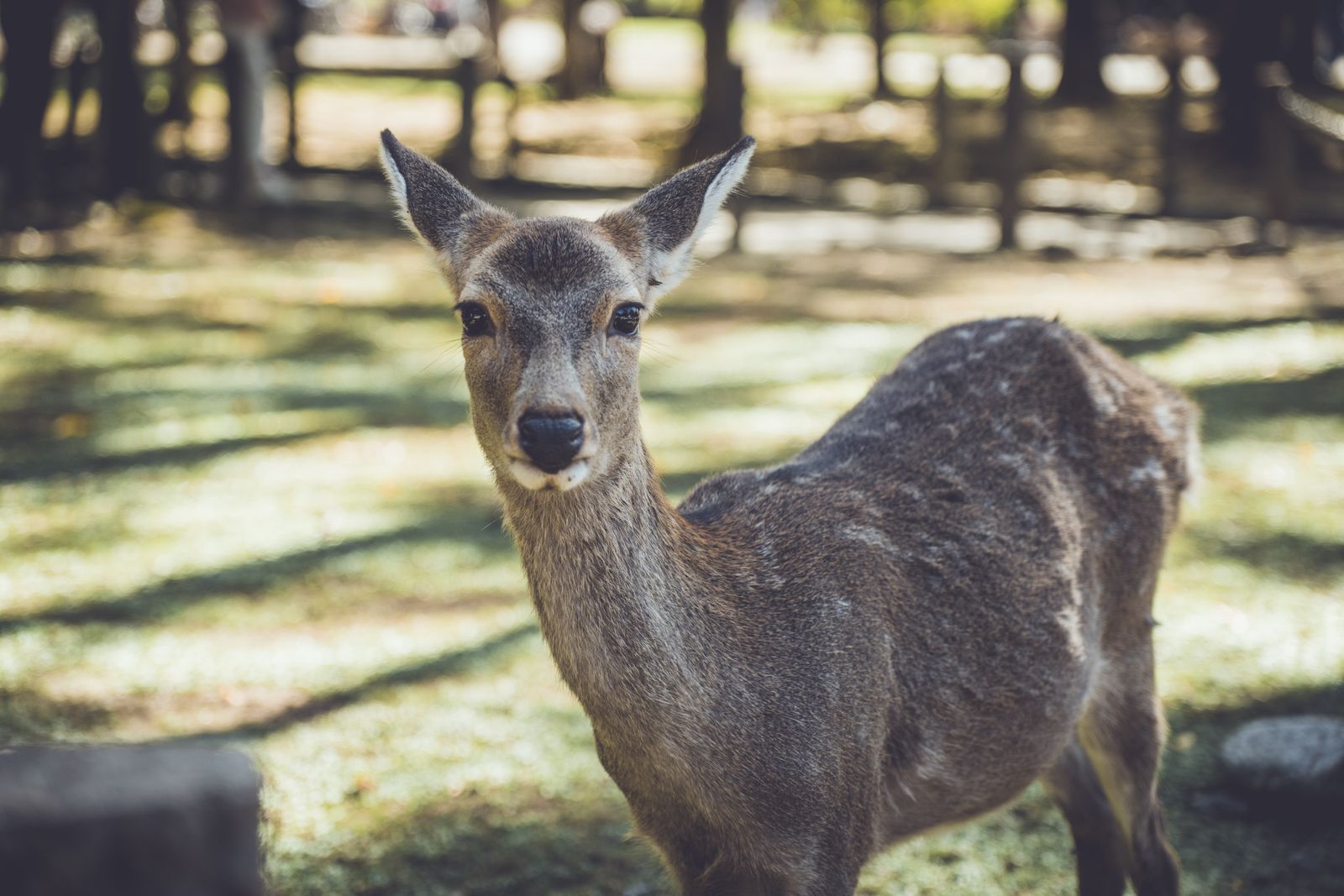
Then Nara, the eighth-century capital, where over a thousand sacred sika deer roam the park around Todaiji temple and have learned - through centuries of tourist encounters - to bow for rice crackers. Children do not recover from this for days. Keep it to a focused ninety minutes: deer, crackers, the temple's outer precinct, photographs, exit.
The day's hidden gem comes last: the Ikoma Cable Line, Japan's oldest funicular railway, running cartoon-themed carriages up a mountainside to sunset views over the Osaka plain. Almost no foreign visitors know it exists - which, by this point in the itinerary, is the standard being applied.
By evening, the cars roll into Kyoto and park at Resi Stay Brix, the base for the next four nights. Dinner in the neighborhood, unhurried. Kyoto rewards arrival humility.
Kyoto Mornings, Osaka Nights - Two Opposite Cities in One Day.
Kyoto and Osaka sit forty minutes apart and could not disagree more about what a city is for. This day uses both, in the correct order.
The morning is Kyoto at its quietest: the Adashino bamboo grove in far Arashiyama - taller, emptier and more atmospheric than the famous grove everyone photographs - followed by coffee at % Arabica overlooking the river, and a slow stroll along the Kamo. No queueing, no checklist. Kyoto's whole argument is texture, and texture requires slowness.
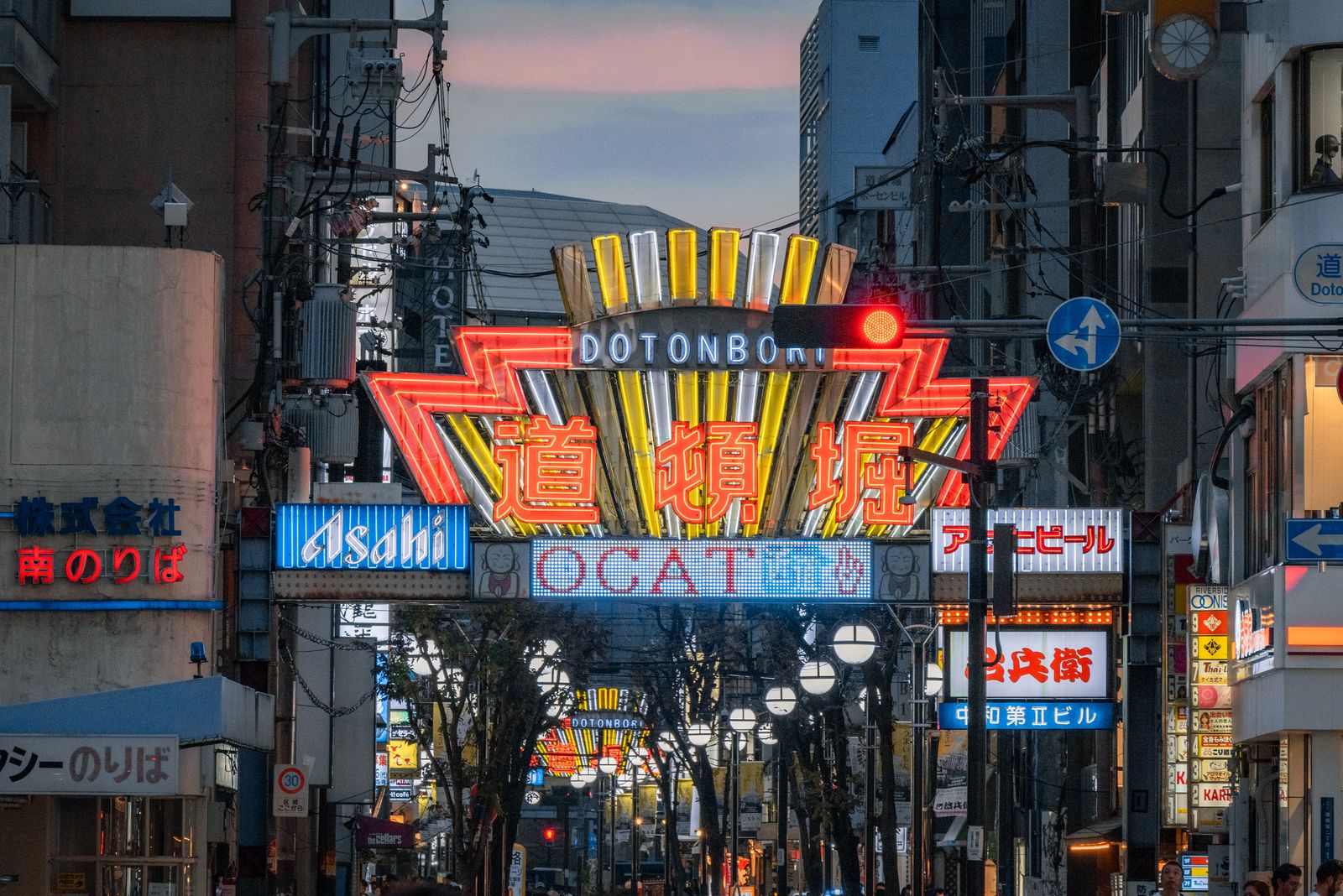
Then the pivot: park the cars at Kyoto Station and take the scenic train to Osaka, because driving into Dotonbori is a mistake nobody makes twice. The afternoon and evening run on Osaka's energy instead - the Shinsaibashi arcades, Amerikamura's street fashion, the Don Quijote ferris wheel at sunset, and a boat ride down the neon canal as the city switches to full brightness. Dinner is a food crawl, not a restaurant: takoyaki, kushikatsu, whatever the queue recommends.
The train back to Kyoto closes the loop. Two cities, one day, zero compromise.
The Cat Train Day: Japan's Most Wholesome Attraction.
Every long itinerary needs a low-gear day, and this one is built around the single most wholesome thing in Japan: the Tama cat train of the Wakayama Electric Railway. A local rail line saved from closure by appointing a calico cat as stationmaster now runs cat-themed carriages to Kishi Station, where Tama's feline successors continue to hold office, complete with stationmaster caps. It is absurd, sincere and completely irresistible - for children most of all, but nobody is immune.
The drive south from Kyoto is easy, and the day stays coastal after lunch (Wakayama's seafood or its famous ramen - both defensible): Wakayama Marina City and Porto Europa, a Mediterranean-styled harbor quarter with seaside cafés, followed by a golden-hour stroll along the waterfront as the sun drops into the sea.
This is the day that looks lightest on paper and gets remembered longest - the itinerary equivalent of an exhale before Universal Studios tomorrow.
Universal Studios Japan, With a Strategy.
Universal Studios Japan is home to Super Nintendo World - the most technologically ambitious theme park land ever built - and it is not a place you improvise. This itinerary treats it as a military operation with churros.
The strategy: leave Kyoto very early, arrive before the gates open, and walk directly to Nintendo World - Mario Kart, Power-Up Bands, the whole interactive mushroom kingdom - because its crowds build fastest. Midday belongs to the Minions and the Jurassic Park and JAWS classics at a flexible pace. The Wizarding World of Harry Potter is deliberately saved for late afternoon, when Hogsmeade's crowds thin and the castle starts to glow.
Then - and this is the discipline the day depends on - leave the park with energy still in reserve. The train to Namba puts you in Dotonbori for one final Osaka evening: the food crawl, the Glico sign, the last arcade. Riding a theme park to closing time and skipping Osaka's best night is the rookie error this paragraph exists to prevent.
Kyoto to Hakone: River Tubing, the Mishima Skywalk, and First Sight of Fuji.
The final leg of the Japan road trip begins with a contrast play: after a week of cities and villages, the morning is spent on the water at Lake Biwa, Japan's largest lake, river-tubing and generally behaving like the outdoors exists. It is the itinerary's one purely physical morning, and it lands at exactly the right moment in a self-drive Japan route this long.
The long expressway stretch that follows is the trade that buys the evening. It ends at the Mishima Skywalk - Japan's longest pedestrian suspension bridge, four hundred metres of cable and air - where, at golden hour, Mt Fuji makes its first proper appearance of the trip, filling the northern sky as if it had been waiting.
From there the road climbs into Hakone and turns cinematic: switchbacks, cedar forest, drifting mist, the smell of volcanic springs. Check-in at Villa Hakone Stage, then the correct Hakone evening - onsen, dinner, mountain air, early night. The last full day of the itinerary needs everyone rested, because it is the best one.
Hakone and Mt Fuji: Ropeways, Pirate Ships, and the Photo You Came For.
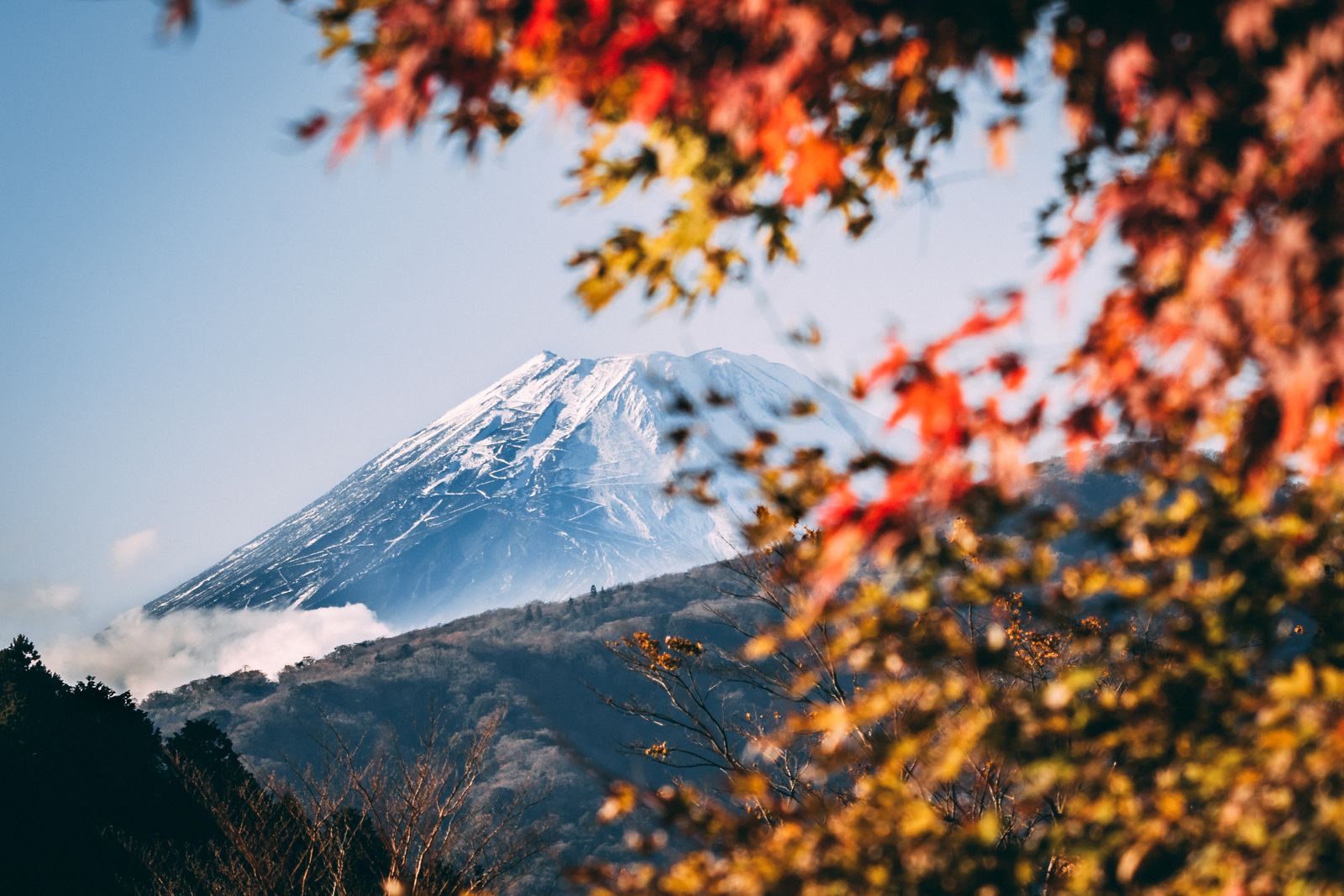
Fuji rewards the early riser - visibility is a morning phenomenon - so the finale starts at first light with the Hakone Ropeway over the Owakudani volcanic valley: sulphur vents steaming below the cable car, and the famous black eggs (boiled in the springs, each one said to add seven years to your life) waiting at the top station.
Down at Lake Ashi, a full-rigged pirate ship - Hakone's gloriously unexplained choice of public transport - crosses the caldera lake with Fuji over the bow. Then the cars point north for the best self-drive roads of the entire trip: the Fuji lakes circuit, the Shimoyoshida viewpoints where the mountain rises behind torii gates and shopping streets in the composition every photographer chases, lunch on the Kawaguchiko lakeshore, and the Fuji-Q ferris wheel for the view of the mountain from mid-air.
The trip's final act is its most exhilarating: an open-top go-kart style drive at sunset with Fuji as the backdrop - the videos alone will outlive every other souvenir. Then back over the pass to Hakone for the farewell ritual: one last onsen, one last dinner, one long exhale. Fourteen days, closed properly.
The Last Morning: Tokyo One More Time, Then Home.
Departure days on a road trip itinerary are logistics problems, and this one is solved in advance. Breakfast in the mountains, then the drive back to Tokyo - luggage into the large coin lockers at Shinjuku Station, and a final unhurried lap of the city: duty-free shopping, Takashimaya, Don Quijote for the last suitcase-fillers of snacks and sake, and one final bowl of ramen or plate of sushi chosen purely on sentiment.
Then the expressway to Narita, cars returned, check-in made with time to spare. The margin is the plan: Hakone to central Tokyo is a solid two-hour drive and the airport is another ninety minutes beyond it, so the shopping window closes early and firmly. A fourteen-day itinerary that ends in a sprint was mis-planned on day one. This one ends at walking pace, which is how it began - just 3,000 kilometres more experienced.